

The Engineering Backbone of the Borough
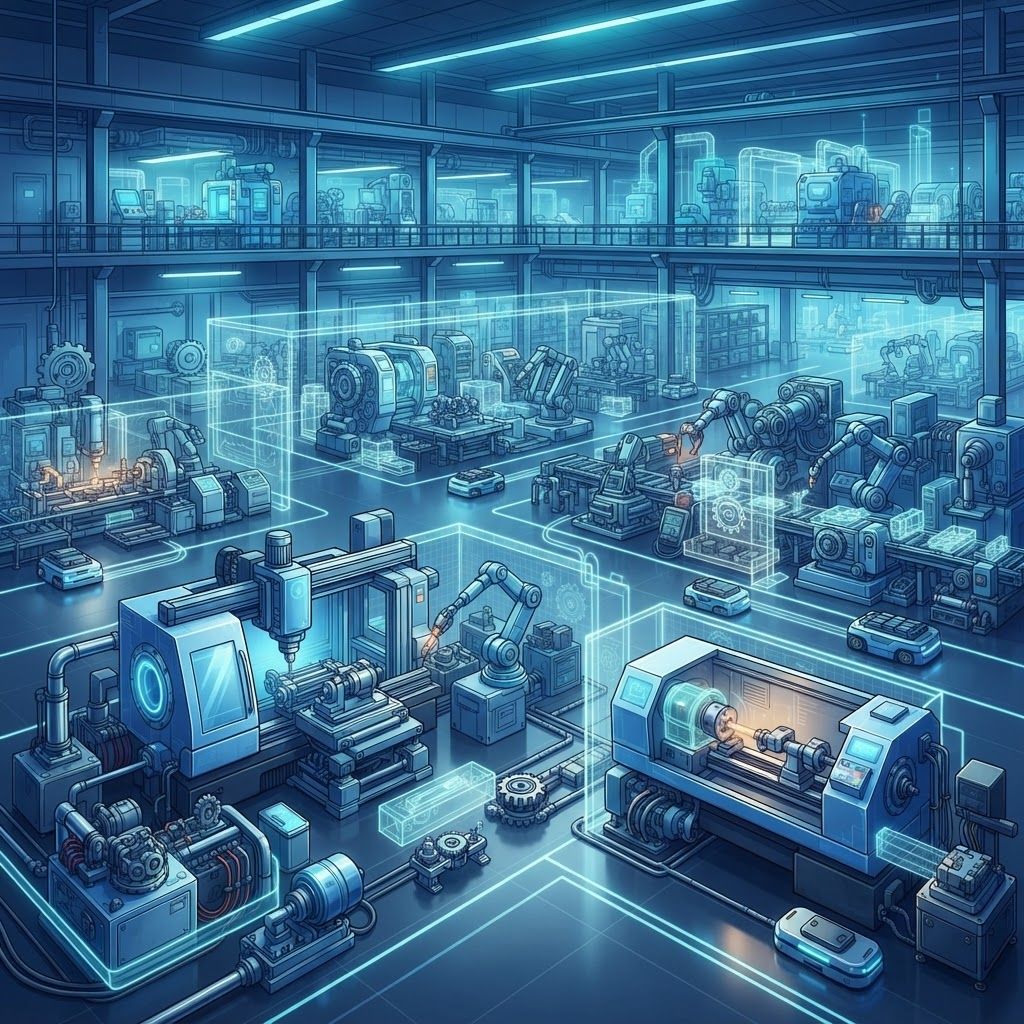
Machinery manufacturing is one of those industries most people never think about until something breaks. Yet almost every product consumed in Britain passed through machinery designed and built by specialist engineering firms, and Tonbridge and Malling hosts a meaningful concentration of them. These businesses design, fabricate, assemble, program and commission equipment ranging from single-purpose handling rigs to complete automated production lines.
West Kent's industrial estates provide the workshop space, crane capacity and power supply that machine building requires, while the proximity to London, the wider South East manufacturing base and the Channel ports supports both domestic and export sales. Many of these firms are small to medium enterprises with deep technical knowledge accumulated over decades, often serving a defined industry niche extremely well.
What Distinguishes a Capable Machinery Builder
Machine building is fundamentally about turning a process requirement into reliable hardware, and the best firms manage that translation carefully. The starting point is a proper user requirement specification followed by a functional design specification, so both parties agree exactly what the machine will do before metal is cut.
Regulatory compliance is not optional. Machinery placed on the market must satisfy applicable safety requirements, carry appropriate conformity marking, be supplied with a declaration of conformity and a technical file, and come with clear instructions. Risk assessment, guarding design, safety-related control system performance levels and emergency stop architecture all need to be handled by people who genuinely understand the standards.
Look also at aftercare. A machine is a long-term asset, and spare parts availability, remote diagnostic support, planned maintenance provision and operator training determine whether it delivers value for fifteen years or becomes a source of constant frustration.
Ten Leading Machinery Manufacturers Serving the Borough
Medway Machine Engineering designs and builds bespoke production machinery for manufacturing clients, taking projects from concept through mechanical design, fabrication, control system integration and site commissioning.
Aylesford Automation Systems specialises in robotic cells and automated handling, integrating industrial robots with vision systems, conveyors and safety enclosures for palletising, machine tending and assembly applications.
Kings Hill Process Equipment manufactures process plant including mixing vessels, dosing systems, heat exchangers and pipework skids for food, pharmaceutical and chemical customers, working to hygienic design principles where required.
Tonbridge Precision Machinery produces high-accuracy machine tools, jigs, fixtures and test rigs, serving aerospace, medical and scientific clients where dimensional stability and repeatability are paramount.
Weald Conveyor Systems designs and installs conveying and material handling solutions including belt, roller, chain and modular systems, along with the controls and sortation logic that make them work as a network.
Snodland Hydraulics and Pneumatics builds hydraulic power packs, cylinders, pneumatic actuation systems and control manifolds, and also provides repair and refurbishment for existing plant.
Malling Packaging Machinery manufactures filling, capping, labelling and end-of-line packaging equipment, with particular strength in flexible machines that handle multiple pack formats without lengthy changeover.
North Downs Agricultural Machinery produces and adapts equipment for farming and horticulture, including handling, grading and irrigation machinery suited to Kent's fruit and arable enterprises.
Borough Green Machine Controls focuses on the electrical and software layer, building control panels and developing programmable logic controller and supervisory control software, including retrofit upgrades that modernise older machines.
Larkfield Industrial Fabrication provides the heavy fabrication underpinning many machinery projects, including structural frames, platforms, guarding, hoppers and pressure-retaining components, with certified welding procedures.
Trends in Industrial Machinery
Automation demand continues to grow, driven less by cost reduction than by labour availability and consistency. Manufacturers who struggle to recruit for repetitive roles increasingly automate those tasks, and the falling cost and rising ease of use of collaborative robots have brought automation within reach of much smaller operations than a decade ago.
Connectivity is transforming machinery into a data source. Modern equipment reports cycle times, downtime causes, energy consumption and condition indicators, which enables predictive maintenance and evidence-based improvement rather than guesswork. Machine builders that offer good data interfaces and dashboards differentiate themselves clearly.
Energy efficiency has become a specification requirement rather than an afterthought. Variable speed drives, regenerative braking, compressed air reduction and intelligent standby modes all reduce running cost and carbon footprint, and buyers increasingly evaluate lifetime energy cost alongside purchase price.
Retrofit and life extension is a substantial market. Rather than replace a mechanically sound machine, many operators upgrade controls, drives, safety systems and human machine interfaces, achieving much of the benefit of new equipment at a fraction of the cost and lead time.
How to Commission Machinery Successfully
Invest time in the specification. Define throughput, product variants, changeover expectations, utilities available, footprint constraints, access for maintenance, and the environment the machine will operate in. Ambiguity at this stage becomes expensive later.
Agree acceptance criteria in writing. A factory acceptance test at the builder's works followed by a site acceptance test after installation gives both parties a clear basis for sign-off. Define what output rate and quality level constitutes success, and over what duration.
Plan for the human side. Operator and maintenance training, clear documentation, and a spares holding agreed at handover all determine how quickly the machine reaches steady-state performance. Confirm support response times and whether remote access for diagnostics is possible.
Final Thoughts
Machinery manufacturers in Tonbridge and Malling supply the equipment that makes other industries productive. The firms profiled here cover bespoke machine design, robotics, process plant, conveying, hydraulics, packaging, agricultural equipment, controls and heavy fabrication. Choosing a builder who engages properly with your process, takes compliance seriously and commits to long-term support is far more important than the lowest quotation, and the local cluster offers plenty of genuine engineering capability to draw on.
Want your brand featured in front of decision-makers? Publish a guest post or get a link insertion in our guides through AAMAX's guest post and link insertion service.
Helpful Links
 SponsoredAAMAX — Full-Service Digital Agency
Write for Us
Share your expertise with our readers. We welcome guest contributions from industry specialists.
Pitch your idea

