

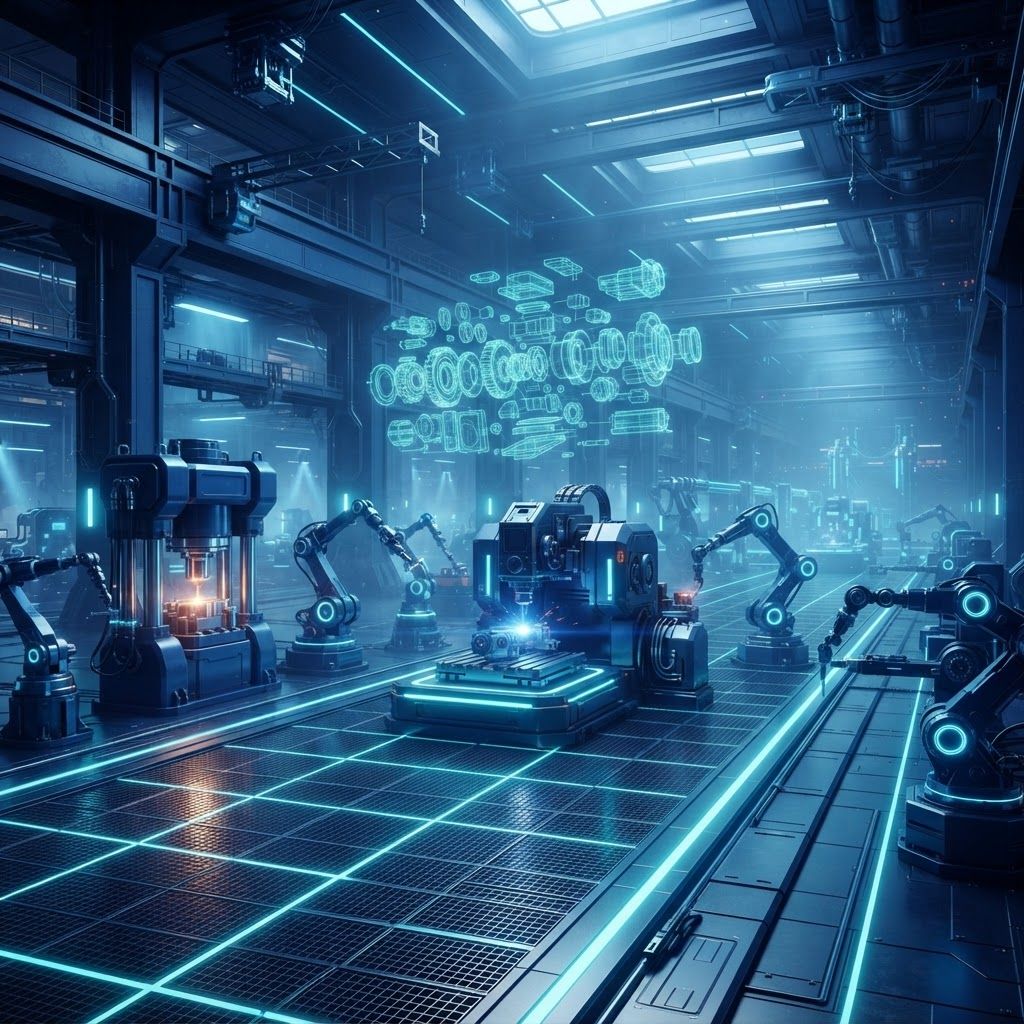
Why Machinery Manufacturing Matters in Sutton
Machinery manufacturing is the industry behind other industries. Every packaged product, machined part, filled bottle and assembled device passes through equipment that someone designed and built. In Sutton, this capability is concentrated in a group of engineering firms that produce bespoke and semi-standard machinery for food production, pharmaceuticals, packaging, materials handling, testing and general manufacturing.
The borough suits this work well. Machinery builders need workshop space, skilled fitters, design engineers and reasonable access to customer sites. Sutton offers industrial estates within reach of central London, the M25 corridor and the south coast, allowing engineers to reach installations across the South East within a working day. That responsiveness is decisive when a customer's production line is stopped.
The Ten Machinery Manufacturers Leading the Field
1. Sutton Industrial Machinery designs and builds turnkey production systems, integrating conveying, processing, inspection and packing into single lines. Projects typically begin with a process study, progress through mechanical and control design, and conclude with factory acceptance testing before installation. Its strength is systems thinking rather than individual machines.
2. Carshalton Automation Engineering specialises in robotic cells and automated handling. Pick-and-place systems, palletising cells, machine tending and vision-guided placement are core capabilities, and the company has become a route for local manufacturers taking their first steps into automation.
3. Cheam Special Purpose Machines builds one-off machines for problems that no catalogue product solves. Assembly rigs, test stands, forming equipment and bespoke tooling are developed collaboratively with customers, often replacing labour-intensive manual operations with repeatable automated processes.
4. Wallington Packaging Systems manufactures filling, capping, labelling and cartoning machinery. Food and personal care customers dominate its order book, and hygienic design, tool-free changeover and washdown-rated construction are standard requirements in its work.
5. Beddington Materials Handling produces conveyors, elevators, hoppers, chutes and transfer systems. Bulk handling is unglamorous but technically demanding: material flow characteristics, wear rates and blockage prevention all determine whether a system performs reliably over years of operation.
6. Belmont Precision Machine Tools refurbishes, retrofits and builds machine tools, including control system upgrades that give older machines modern accuracy and connectivity. Retrofitting frequently delivers most of the benefit of new equipment at a fraction of the capital cost.
7. Worcester Park Test Equipment designs mechanical and environmental test rigs for manufacturers who must verify product durability. Fatigue rigs, load frames, climatic chambers and instrumented fixtures are produced with data acquisition integrated from the outset.
8. Rosehill Process Plant fabricates tanks, mixers, dosing skids and pipework assemblies for liquid and semi-solid processing. Stainless fabrication to hygienic standards, including polished welds and drainable design, is a core competence.
9. Sutton Green Machinery Services supports the installed base with maintenance, spare parts manufacture, overhauls and upgrades. Its reverse-engineering capability keeps older machines productive when original manufacturers no longer supply parts.
10. Sutton Controls and Instrumentation Works builds control panels, safety systems and human-machine interfaces for machinery builders and end users alike. As machinery becomes more connected, its work on functional safety and remote monitoring has grown steadily.
Trends Driving Machinery Investment
Labour availability is the single largest driver of machinery demand. Manufacturers unable to recruit reliably are automating tasks they previously staffed, particularly repetitive handling, packing and inspection roles. Machinery builders are responding with more modular, quicker-to-deploy systems rather than monolithic bespoke lines.
Energy efficiency has moved from a secondary consideration to a specification requirement. Servo drives replacing pneumatics, regenerative braking, right-sized motors and improved thermal insulation all reduce running costs, and buyers increasingly evaluate lifetime energy consumption alongside purchase price.
Connectivity and data are transforming machine value. Modern equipment reports performance, downtime causes and maintenance needs, enabling predictive intervention rather than reactive repair. Sutton builders offering structured data output and secure remote access give customers measurable operational advantages.
Flexibility is also rising in importance. Shorter product lifecycles and greater product variety mean machinery must accommodate frequent changeover. Quick-change tooling, recipe-driven controls and adjustable formats are now expected rather than premium extras.
Selecting the Right Machinery Manufacturer
Begin with process understanding, not machine specification. The best machinery suppliers ask extensive questions about materials, throughput variability, upstream and downstream constraints and operator skill levels before proposing anything. A supplier who quotes immediately without understanding the process is quoting a guess.
Insist on clear acceptance criteria. Throughput, uptime, reject rates, changeover times and product quality tolerances should be documented and testable before delivery. Ambiguity here is the most common source of disputes in capital equipment projects.
Evaluate lifetime support seriously. A machine may run for fifteen years or more, during which spare parts availability, control system supportability and engineering response times matter enormously. Ask about parts stocking policy, response time commitments and whether control software and documentation will be provided to the customer.
Review compliance and safety design. Machinery must satisfy safety requirements including guarding, emergency stop performance, risk assessment and appropriate conformity documentation. Suppliers who treat safety as an integral design activity rather than an afterthought produce equipment that is both safer and easier to operate productively.
Finally, consider project management capability. Capital equipment projects involve design reviews, long-lead components, site preparation, installation windows and commissioning. Suppliers with structured project management and honest progress reporting cause far fewer disruptions than technically competent firms with weak coordination.
Outlook
Machinery manufacturing in Sutton is positioned for steady growth, supported by automation demand, reshoring of production and the need to modernise ageing equipment across the South East. The borough's builders compete on engineering judgement, responsiveness and long-term support rather than commodity pricing, which is exactly what buyers of capital equipment should value most. For businesses planning investment in production capability, the machinery expertise available locally is a genuine strategic asset.
Want your brand featured in front of decision-makers? Publish a guest post or get a link insertion in our guides through AAMAX's guest post and link insertion service.
Helpful Links
 SponsoredAAMAX — Full-Service Digital Agency
Write for Us
Share your expertise with our readers. We welcome guest contributions from industry specialists.
Pitch your idea

