

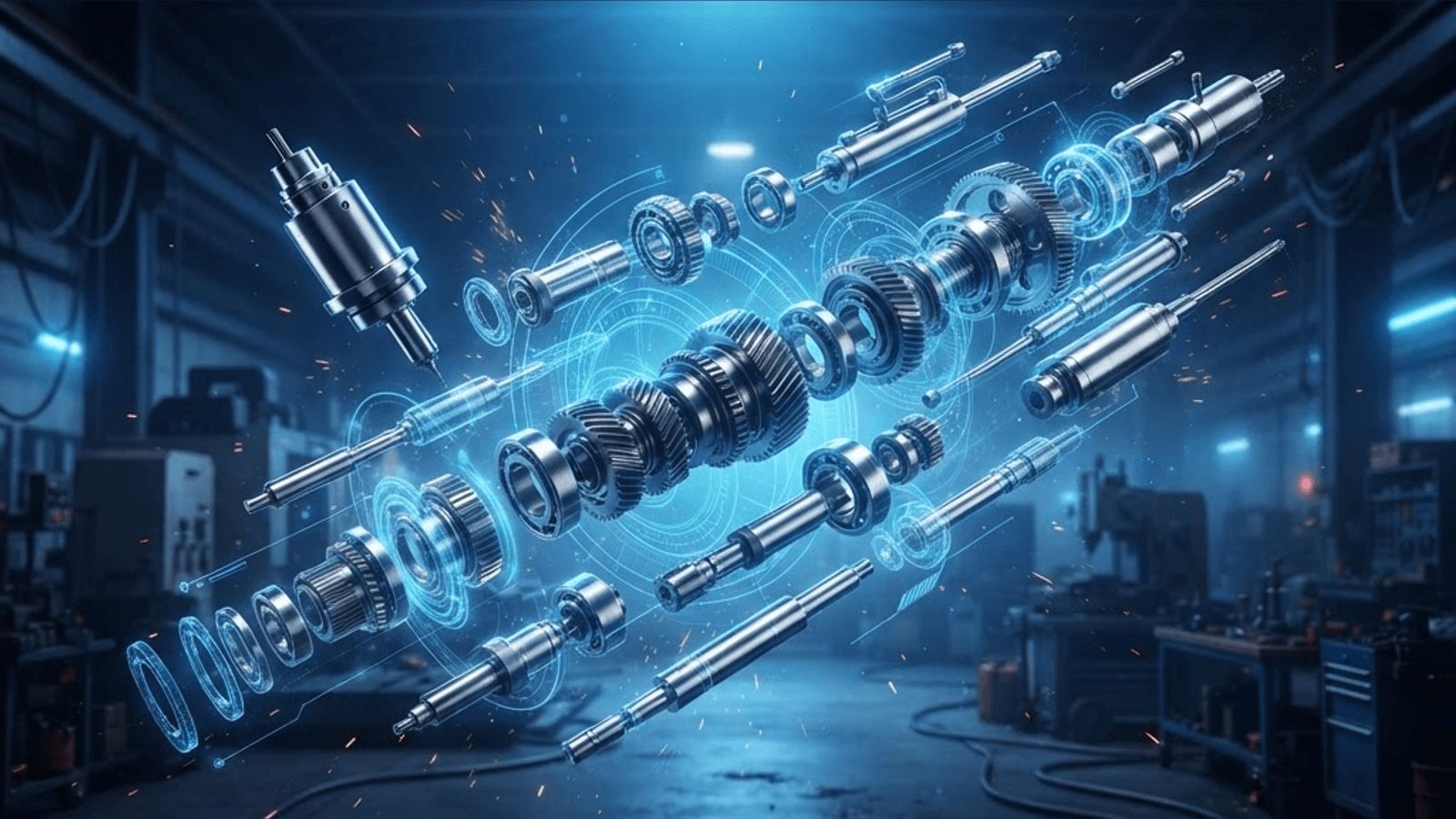
Machine Building in an Engineering Town
Every industrial town develops a machine-building trade, because factories need equipment that no catalogue supplies. St. Helens developed a particularly strong one. Glassmaking demanded specialist handling, cutting and annealing machinery; collieries demanded winding gear, conveyors and hydraulics; chemical works demanded mixing, dosing and materials-handling plant. The engineers who built and maintained that equipment created a deep local reservoir of mechanical skill that survives in the borough's machinery manufacturers today.
Modern machinery manufacturing in St. Helens is largely bespoke and low-volume. These are not firms stamping out identical products; they design and build one-off or small-batch systems to solve a specific production problem. That model rewards engineering judgement, fabrication craft and controls expertise rather than sheer scale, and it explains why relatively small companies here compete successfully for national contracts.
What Machinery Manufacturers Actually Deliver
A capital equipment project is far more than a machine. It typically involves specification and concept design, mechanical and electrical design, fabrication and machining, control system programming, assembly and factory acceptance testing, installation on the customer's site, commissioning, operator training, documentation and ongoing spares and service support. Weakness in any one of those stages undermines the whole investment.
The most common cause of disappointing capital projects is not poor engineering but poor specification. Machines built to solve a vaguely defined problem tend to solve it vaguely. The best machinery manufacturers therefore invest heavily in the early stages, spending time on the customer's shop floor understanding throughput targets, product variation, upstream and downstream constraints, and how operators actually work rather than how procedures say they should.
The Ten Leading Machinery Manufacturers in St. Helens
1. Ravenhead Engineering Works — A bespoke machine builder with in-house design, fabrication, machining and assembly. Its background in glass and process industry equipment gives it particular strength in handling hot, abrasive or fragile products, and it is frequently engaged for problems where standard equipment has already failed.
2. Mersey Conveyor Systems — Designs and manufactures belt, roller, chain and modular conveyors plus complete handling lines for warehousing, food processing and manufacturing. With distribution operations expanding across the region, conveyor and sortation work has become a substantial and growing market.
3. Sutton Hydraulics & Pneumatics — Builds hydraulic power packs, cylinders, presses and pneumatic systems, and provides repair, hose manufacture and on-site breakdown support. Hydraulic failures halt production instantly, so a manufacturer that also offers rapid local service is doubly valuable.
4. Haydock Special Purpose Machines — Focuses on automated assembly, test and inspection machines: pick-and-place cells, leak testers, gauging stations and robot-integrated workcells. It targets manufacturers automating a repetitive manual operation, where cycle time and reliability determine the payback period.
5. Newton Materials Handling — Manufactures cranes, hoists, lifting frames, tipping units and bulk-handling equipment such as hoppers, screw feeders and vibratory conveyors. Handling equipment sits at the intersection of mechanical engineering and safety compliance, and this firm's documentation and inspection regime reflects that responsibility.
6. Rainford Packaging Machinery — Supplies and builds filling, capping, labelling, case-packing and palletising equipment for food, chemical and consumer goods producers. Packaging lines are notoriously sensitive to product and pack variation, so machines built with real changeover flexibility outperform theoretically faster alternatives.
7. Earlestown Machine Tools & Rebuilds — Refurbishes, rebuilds and retrofits existing production machinery, including replacing obsolete controls with modern PLCs and drives. Rebuilding a sound mechanical machine often delivers most of the performance of a new one at a fraction of the cost and carbon, which has made retrofit work increasingly popular.
8. Thatto Heath Fabrication & Plant — A heavy fabrication specialist producing frames, tanks, chutes, guarding, platforms and structural steelwork for machinery and process plant. Quality of welding and accuracy of fabrication determine whether a machine runs true, making this an underrated but decisive link in the chain.
9. Merseyside Automation Engineering — Combines machine building with control and software engineering, delivering PLC and HMI programming, robot integration, safety systems and data capture for production monitoring. As manufacturers pursue better production visibility, the ability to instrument a machine properly has become a core requirement rather than an extra.
10. St. Helens Industrial Services — Provides mechanical installation, machine moves, alignment, preventive maintenance and emergency repair across the borough's factories. It is the practical partner that keeps other manufacturers' machinery running, and its familiarity with local plant makes response times short.
How to Specify Capital Equipment Well
Write a specification around outcomes rather than mechanisms. State required throughput in realistic units, the full range of products or variants the machine must handle, acceptable changeover time, quality tolerances, available floor space and services, and target availability. Let the manufacturer propose the mechanism; if you over-prescribe the design, you also own the risk of it not working.
Insist on a documented factory acceptance test with agreed pass criteria before the machine leaves the builder's premises, and a site acceptance test after installation using your real product. Define what constitutes handover and what triggers final payment. Agree spares lists, lead times for critical components and response-time commitments for support at contract stage rather than after a breakdown.
Ask hard questions about controls. Who owns the PLC program and will you receive the source code? Are the drives, sensors and components industry-standard and available from multiple distributors, or proprietary? A machine dependent on a single supplier's obsolete controller becomes a liability long before it wears out mechanically.
Compliance, Safety and Documentation
New machinery supplied in the UK must be safe by design and properly documented, with risk assessment, guarding, emergency stop provision, appropriate conformity marking and a technical file. Reputable manufacturers treat this as integral engineering rather than paperwork added at the end. If you are modifying existing machinery substantially, remember that responsibility for compliance can shift, so involve the manufacturer in assessing the implications.
Operator and maintenance documentation is worth scrutinising before handover. Clear manuals, electrical schematics, mechanical drawings, lubrication schedules and spares part numbers dramatically reduce lifetime cost. Machines with poor documentation cost more to maintain regardless of build quality.
Trends Shaping the Sector Locally
Automation demand continues to grow, driven less by labour cost than by labour availability and the desire for consistent quality. Retrofit and rebuild work is expanding as businesses weigh capital constraints and sustainability against new-build purchases. Remote monitoring and condition-based maintenance are becoming standard expectations rather than premium features. And energy efficiency now features in machine specifications, with variable-speed drives, regenerative braking and reduced compressed-air dependence all under scrutiny.
For manufacturers in St. Helens and the wider North West, the advantage of buying machinery locally is practical rather than sentimental. A machine builder twenty minutes away can visit during design, respond quickly during commissioning and be on site the morning after a failure. Over a fifteen-year equipment life, that proximity is usually worth more than any initial price difference.
Want your brand featured in front of decision-makers? Publish a guest post or get a link insertion in our guides through AAMAX's guest post and link insertion service.
Helpful Links
 SponsoredAAMAX — Full-Service Digital Agency
Write for Us
Share your expertise with our readers. We welcome guest contributions from industry specialists.
Pitch your idea

