

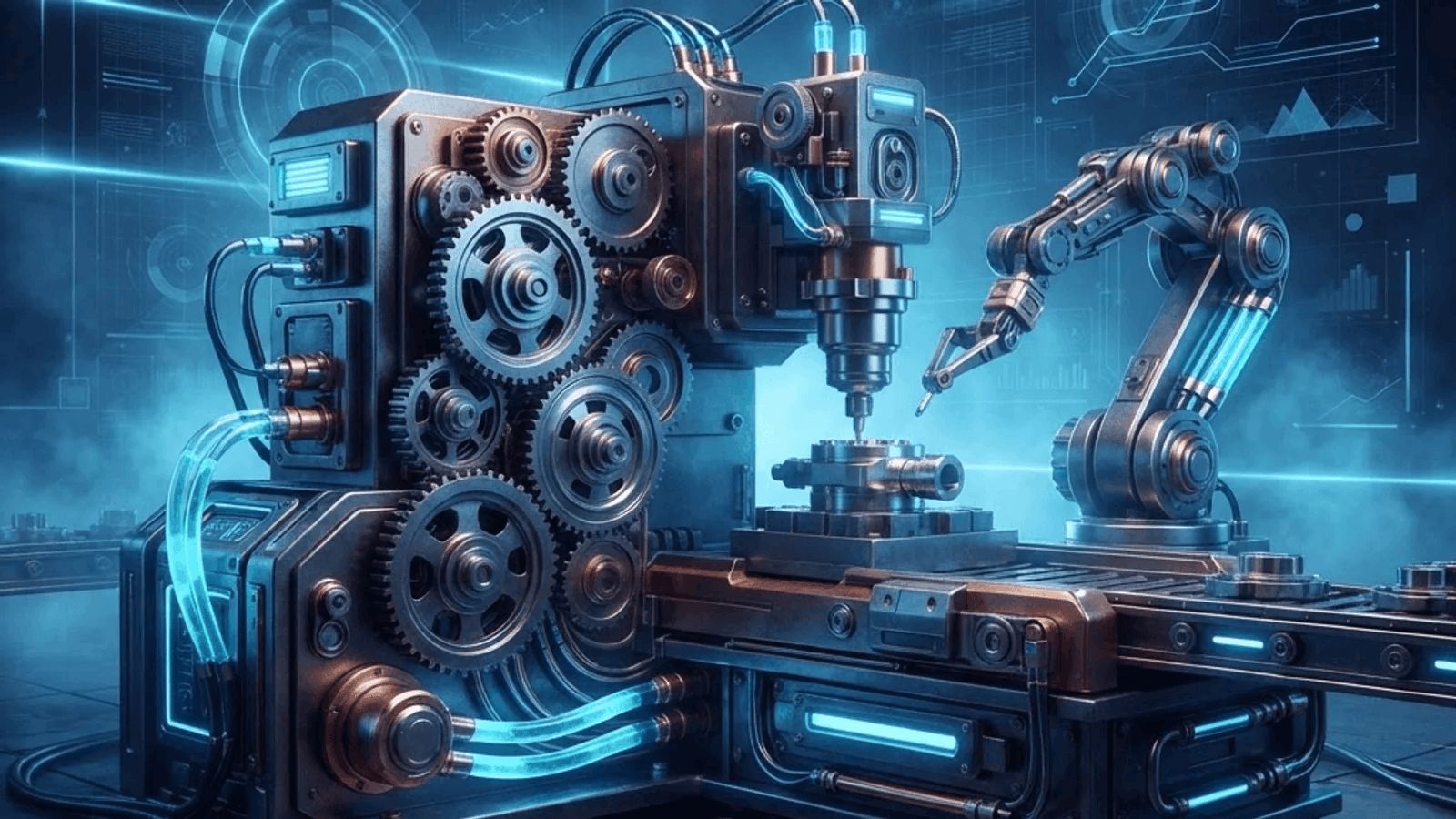
Machine Building in Hertfordshire: Precision Over Volume
Machinery manufacturing is one of those industries that operates almost invisibly until something stops working. The equipment that fills bottles, sorts parcels, tests components, machines metal, packages food and assembles products has to be designed, built, installed and maintained by somebody, and around St Albans a network of engineering firms does exactly that. Their output ranges from single bespoke machines built to solve one customer's specific production problem to standard equipment ranges sold across Europe.
The competitive logic here mirrors other advanced manufacturing sectors in southern England. Nobody in Hertfordshire is competing to build the cheapest generic machine tool. Instead, local firms compete on engineering capability, customisation, commissioning support and the speed with which they can respond when a production line is down. A packaging machine that stops running costs a food manufacturer thousands of pounds an hour, and having the machine builder reachable within two hours has real, quantifiable value.
Categories of Machinery Produced Locally
Special purpose machinery is the most distinctive category. These are one-off or small-batch machines engineered to perform a specific task that no catalogue product addresses: testing a particular medical component, assembling a specific product variant, or handling an awkward material. Building them requires mechanical design, pneumatics, motion control, electrical design, safety engineering and software, all coordinated to a fixed delivery date.
Automation and robotics integration forms a rapidly growing category. Rather than building machines from scratch, integrators combine industrial robots, vision systems, conveyors, grippers and control software into working cells. The engineering value lies in system design, cycle time optimisation, safety assessment and programming rather than in metal cutting.
Packaging and processing machinery serves the region's substantial food, beverage, pharmaceutical and consumer goods manufacturers. Filling, capping, labelling, cartoning, wrapping and end-of-line palletising equipment all require hygienic design, changeover flexibility and reliable high-speed operation.
Precision machining and subcontract engineering underpins everything else, supplying the machined components, fabrications and assemblies that machine builders require.
Ten Notable Machinery Manufacturers and Engineering Specialists
1. Renishaw manufactures precision measurement and calibration equipment, machine tool probing systems and additive manufacturing machines. Its metrology products are fundamental to quality control across global manufacturing.
2. Spirax Sarco designs steam system equipment, control valves and thermal energy management products used throughout process industries, combining fluid engineering with control technology.
3. Weir Group produces heavy-duty pumps, valves and processing equipment engineered for abrasive and demanding industrial environments, with a strong focus on wear life and serviceability.
4. Rockwell Automation supplies industrial control platforms, drives, safety systems and manufacturing software that form the control backbone of machinery built by regional integrators.
5. Festo provides pneumatic and electric automation components, actuators and motion technology, and supports machine builders with application engineering and training that materially raise local capability.
6. SMC manufactures pneumatic and industrial automation components across an exceptionally broad catalogue, valued by machine builders for availability and consistent quality.
7. Bosch Rexroth delivers drive, control, linear motion and hydraulic technology that underpins heavy and precision machinery, alongside engineering support for system design.
8. Sealed Air and comparable packaging equipment specialists supply protective packaging and end-of-line systems to regional distribution and food operations, combining machinery with consumable materials.
9. Bespoke automation and special purpose machine builders across the Hertfordshire business parks deliver custom assembly, inspection and handling machines for medical device, electronics and consumer goods manufacturers on project timescales.
10. Independent precision subcontract machinists in the region provide CNC turning, milling, grinding and fabrication to tight tolerances, forming the essential local supply base that allows machine builders to iterate designs quickly.
Trends Transforming Machinery Manufacturing
Industrial connectivity has moved from marketing concept to standard specification. Customers now expect machines to expose performance data, log faults, support remote diagnostics and integrate with factory information systems. This has changed machine building from a mechanical discipline into a mechatronic and software discipline, and firms without software capability struggle to compete.
Labour scarcity is driving automation demand more powerfully than cost saving ever did. Manufacturers across the region report genuine difficulty recruiting for repetitive production roles, which makes automation a capacity question rather than an efficiency question. Collaborative robots that work safely alongside people have opened automation to smaller operations that could never justify caged robot cells.
Energy efficiency has become a purchasing criterion. Servo drives replacing pneumatic actuation, regenerative braking on high-inertia axes, and intelligent standby modes reduce running costs measurably, and customers increasingly evaluate lifetime energy consumption when comparing machines.
Additive manufacturing has quietly changed machine design. Printed grippers, custom fixtures, tooling and low-volume parts can be produced in days rather than weeks, accelerating development and enabling geometries that machining cannot achieve.
How to Select a Machinery Manufacturer
Start with a genuine specification of the problem rather than a specification of the machine. The best machine builders will challenge your assumptions and may propose a fundamentally different approach that costs less and performs better. A supplier who simply quotes your drawing without questions is not adding engineering value.
Insist on clarity about acceptance testing. Define throughput, uptime, changeover time, reject rate and tolerance requirements, and agree how these will be demonstrated at the factory before shipment and again after installation. Ambiguity here is the most common source of dispute in capital equipment projects.
Examine lifetime support seriously. Ask about spare parts availability over ten years, control platform obsolescence policy, engineer response times and whether software source code or documentation is provided. A cheap machine from a supplier who cannot support it becomes expensive very quickly.
Final Thoughts
Machinery manufacturers around St Albans succeed by solving production problems that no off-the-shelf product addresses, then standing behind those solutions for years. As automation demand rises and connected, energy-efficient equipment becomes the norm, the combination of mechanical, electrical and software engineering available in the Hertfordshire corridor gives local manufacturers a genuinely valuable resource on their doorstep.
Want your brand featured in front of decision-makers? Publish a guest post or get a link insertion in our guides through AAMAX's guest post and link insertion service.
Helpful Links
 SponsoredAAMAX — Full-Service Digital Agency
Write for Us
Share your expertise with our readers. We welcome guest contributions from industry specialists.
Pitch your idea

