

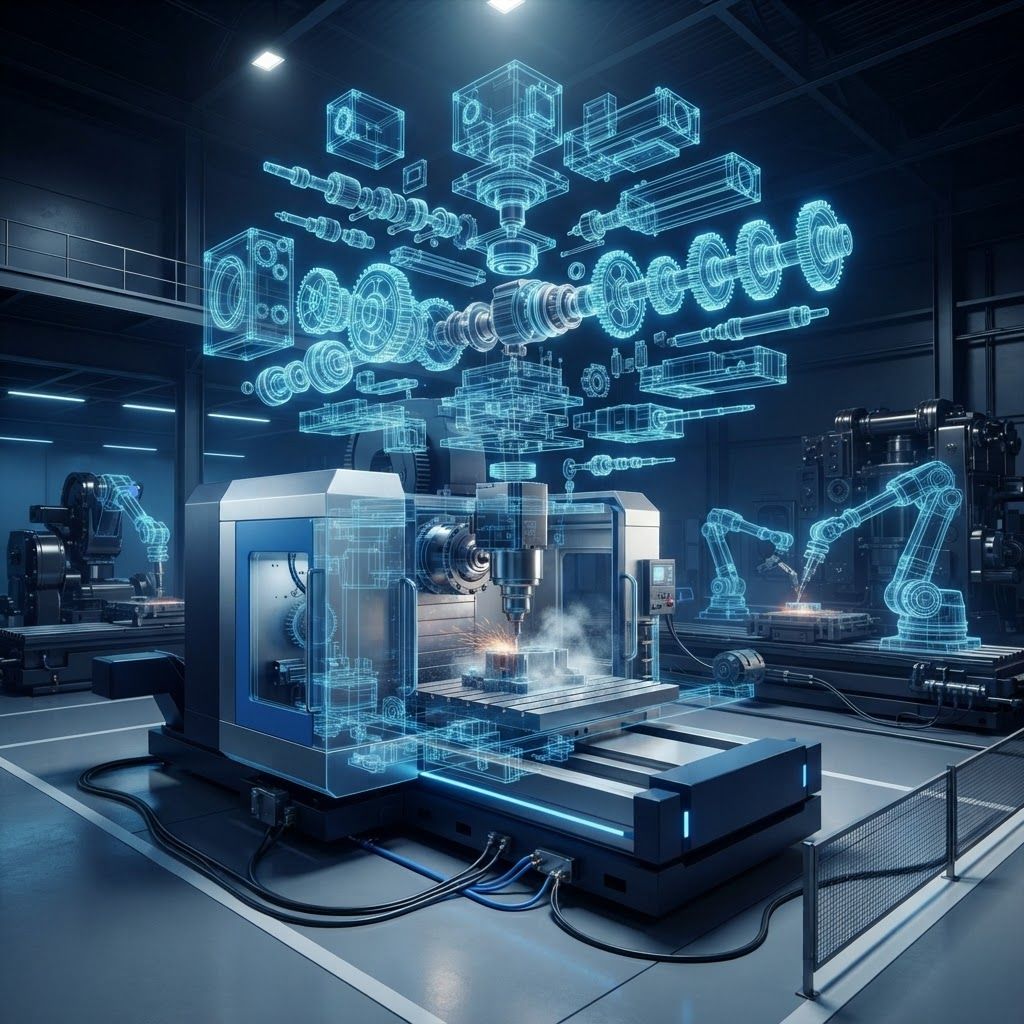
An Engineering Tradition That Never Left
Machinery manufacturing is one of the most enduring industrial activities in the West Midlands, and Solihull retains a healthy share of it. The sector here is characterised less by mass-produced standard equipment than by bespoke and semi-bespoke machines built to solve specific production problems. That specialisation is a direct consequence of serving demanding local customers in automotive, aerospace, food processing and general manufacturing.
The borough's advantages are practical. Skilled labour drawn from a long engineering heritage, excellent motorway access for shipping large assemblies, proximity to the NEC for exhibitions and customer demonstrations, and a dense network of subcontract machinists, fabricators and control specialists that lets machine builders scale their capacity without carrying fixed overhead.
What Machinery Manufacturers Actually Do
The term covers a wider range of activity than many buyers expect. Special purpose machinery involves designing and building a machine that does not exist commercially, typically for assembly, testing, marking or handling a specific product. Automation and robotics integration combines standard robots, vision systems and conveyors into working production cells.
Other significant categories include machine tools and their refurbishment, materials handling equipment such as conveyors and lifting systems, process plant for mixing, filling and packing, and precision subcontract engineering that supplies components to other machine builders. Many Solihull firms operate across several of these categories.
The Ten Best Machinery Manufacturers in Solihull
1. Solihull Special Purpose Machinery. Designs and builds bespoke assembly and test machines from concept through to installation and validation. Its integrated mechanical design, controls and commissioning capability means responsibility does not fragment across multiple suppliers.
2. Arden Automation Systems. A robotics integrator building automated cells using industrial and collaborative robots, machine vision and safety-rated control architecture. Strong on cycle time analysis and on justifying automation investment with credible throughput modelling.
3. Midlands Precision Engineering. Multi-axis CNC machining of complex components to tight tolerances, supported by CMM inspection and full material certification. It supplies both finished parts and machined assemblies to other equipment builders.
4. Blythe Materials Handling. Manufactures conveyors, elevators, transfer systems and bespoke handling equipment for production and warehouse environments, with expertise in accumulation, diverting and gentle product handling.
5. Elmdon Hydraulics and Pneumatics. Builds hydraulic power packs, presses, clamping systems and pneumatic circuits, and provides servicing and seal replacement for existing plant. Practical, responsive and well regarded for breakdown support.
6. Knowle Machine Tools. Supplies, retrofits and refurbishes machine tools, including CNC control upgrades on mechanically sound older machines. This route often delivers capability at a fraction of new machine cost.
7. Meriden Process Equipment. Manufactures mixing, dosing, filling and packing machinery for food, chemical and cosmetic producers, with hygienic stainless steel construction and washdown-rated design.
8. West Midlands Fabrication and Frames. Heavy fabrication, welding and machining of machine bases, frames, guarding and structural assemblies, with coded welders and in-house surface finishing.
9. NEC Control Systems. Designs PLC, HMI and SCADA systems, builds control panels to relevant standards and delivers software for machine and line control, including retrofit of obsolete control platforms.
10. Solihull Maintenance Engineering. Provides planned and reactive maintenance, machine relocation, alignment and refurbishment. Its value lies in maximising the working life of installed capital equipment.
Compliance: Machinery Safety Is Not Optional
Any machine placed into service in the UK must satisfy the Supply of Machinery Safety Regulations, requiring risk assessment, appropriate guarding and interlocking, a technical file, instructions and UKCA marking with a declaration of conformity. Employers separately hold duties under PUWER to ensure equipment in use remains safe and suitable.
Functional safety standards such as ISO 13849 govern the reliability of safety-related control systems, expressed as performance levels. Reputable machine builders discuss these requirements at design stage rather than treating safety as a bolt-on. Buyers should insist on seeing risk assessments and safety circuit documentation before acceptance, because retrofitting compliance after installation is expensive and disruptive.
Trends Shaping Machinery Demand
Labour availability is currently the strongest driver of automation investment. Manufacturers struggling to recruit are automating tasks that were previously manual, particularly repetitive handling, inspection and packing. Collaborative robots have widened the range of applications where automation is viable at modest volumes.
Digitalisation is the second theme. Machines are increasingly expected to report their own condition, with vibration and current monitoring feeding predictive maintenance systems, and to integrate with MES and ERP platforms for production tracking. Energy efficiency has also become a specification item, with servo drives, regenerative braking and pneumatic leak reduction all scrutinised.
How to Buy Machinery Well
Write a specification that defines outcomes, not just mechanisms. State required throughput, product variants, quality tolerance, available floor space, utilities, uptime expectation and interface requirements. Ambiguity at this stage is the single largest cause of disputes at commissioning.
Insist on a factory acceptance test before delivery and a site acceptance test after installation, with clearly defined pass criteria linked to payment milestones. Confirm spares availability, lead times for critical components and the response time for support. Ask who owns the control software and whether you receive source code, since dependence on a single supplier for future changes can prove costly.
Finally, weigh total lifetime cost rather than purchase price. A machine that runs reliably for fifteen years with accessible parts and clear documentation will almost always outperform a cheaper alternative that consumes maintenance attention and produces unplanned downtime. The best machinery manufacturers in Solihull understand this and sell accordingly.
Want your brand featured in front of decision-makers? Publish a guest post or get a link insertion in our guides through AAMAX's guest post and link insertion service.
Helpful Links
 SponsoredAAMAX — Full-Service Digital Agency
Write for Us
Share your expertise with our readers. We welcome guest contributions from industry specialists.
Pitch your idea

