

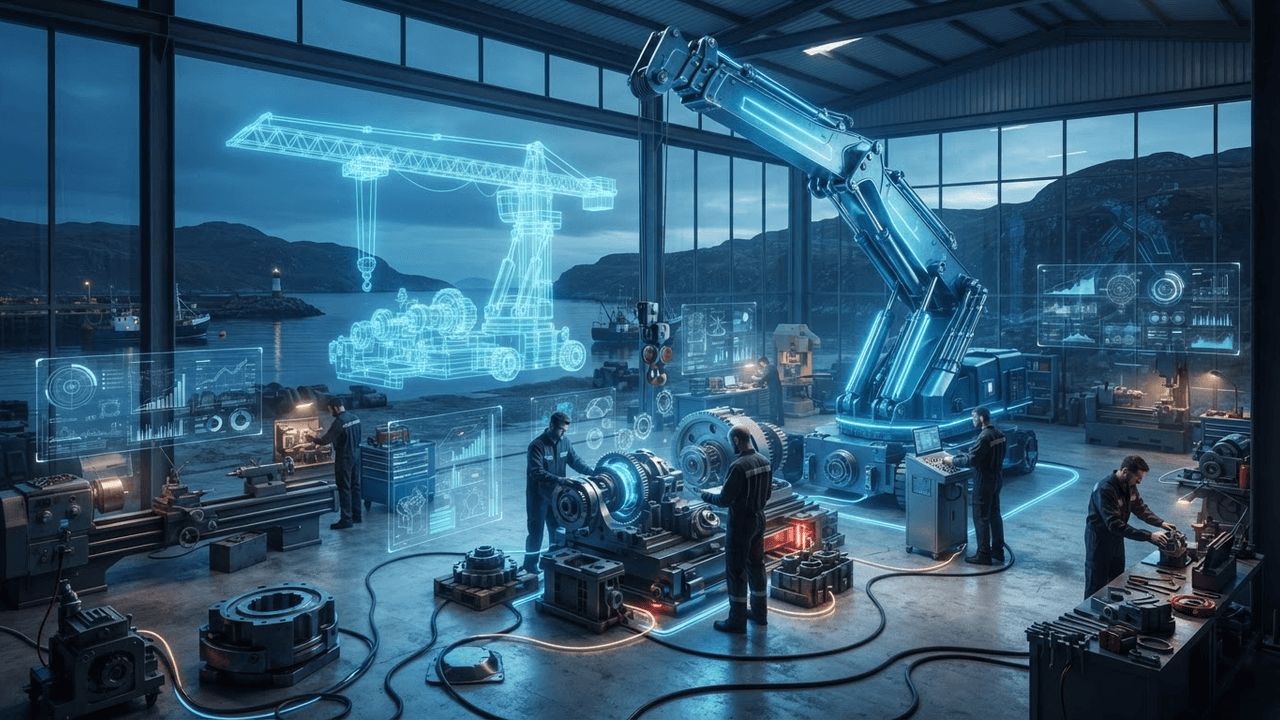
The Machinery Behind Shetland's Economy
The economy of the Shetland Islands runs on hard physical work. Cargo is lifted at Lerwick harbour, decommissioned oil platforms are dismantled at Dales Voe, new roads and homes are built, salmon farms are serviced and wind farms are maintained. All of this depends on heavy machinery that can perform reliably in one of the most exposed climates in Britain.
Shetland is not a centre for mass machinery production, but it has a demanding customer base and a strong network of local engineering firms. These firms install, adapt, repair and sometimes fabricate machinery for island conditions. This guide highlights ten machinery manufacturers and engineering specialists whose equipment and expertise are most valued in Shetland.
Selection Criteria
We considered how common each brand is on Shetland sites, how well its equipment suits harsh marine and rural conditions, how easily parts and servicing can be obtained, and each company's broader reputation for quality and innovation. Local engineering firms are included because they are essential to keeping machinery running far from the mainland.
The Top 10 Machinery Manufacturers in Shetland Islands
1. Caterpillar
Caterpillar excavators, wheel loaders, generators and marine engines are found throughout Shetland, from quarries to vessels to backup power installations. The brand's global reputation for durability and its extensive dealer support network make it a dependable choice for heavy-duty island work.
2. JCB
JCB's backhoe loaders, telehandlers and compact excavators are a familiar sight on Shetland building sites and crofts. Their versatility suits the small and medium-sized projects common on the islands, and the brand's British engineering heritage keeps parts readily available.
3. Volvo Construction Equipment
Volvo's articulated haulers, excavators and loaders are respected for operator comfort, fuel efficiency and safety. They are often chosen for larger infrastructure projects such as road improvements and wind farm construction.
4. Liebherr
Liebherr builds some of the world's most capable cranes and material handling machines. Its mobile and harbour cranes support heavy lifting at port facilities and on major construction projects, including work linked to offshore decommissioning.
5. Hiab
Hiab loader cranes mounted on trucks are essential for delivering building materials, aquaculture equipment and heavy goods to remote island locations. Their ability to lift and place loads without separate crane hire is a major advantage in Shetland's scattered communities.
6. Palfinger
Palfinger supplies knuckle-boom cranes for trucks and vessels. Its marine cranes are widely used on aquaculture workboats and fishing vessels, where compact, powerful lifting equipment is critical for handling nets, moorings and feed.
7. Atlas Copco
Atlas Copco compressors, generators and power tools are used in construction, quarrying and industrial maintenance. Their portable air and power solutions are especially useful on remote sites without easy access to mains supply.
8. Kubota
Kubota's compact excavators and engines are valued for their reliability and fuel efficiency. They are well suited to the tight access and smaller-scale groundwork common on crofts and residential projects across the islands.
9. Malakoff
Malakoff is one of Shetland's leading engineering companies. From its Lerwick base it provides machinery repair, fabrication and installation for marine, industrial and energy clients. Its workshop capabilities let island businesses fix and modify equipment locally instead of shipping it south.
10. Ocean Kinetics
Ocean Kinetics offers mechanical engineering, machining and repair services for vessels, aquaculture sites and industrial machinery. Its skilled team helps keep critical equipment working and keeps costly downtime to a minimum for Shetland businesses.
Challenges of Operating Machinery in Shetland
Machinery on the islands faces corrosion from salt spray, high winds that limit crane operations, and long distances from specialist dealers. Breakdowns can be expensive if parts have to come from the mainland by ferry or air. Choosing proven brands with strong parts networks, and building relationships with capable local engineers, is essential for keeping operations running.
Machinery Trends in the Islands
- Electrification of plant: Electric and hybrid compact machines are emerging as renewable electricity becomes more available.
- Telematics: Remote monitoring lets owners track machine health, fuel use and location from anywhere.
- Decommissioning demand: Large-scale dismantling projects require specialised cutting and lifting equipment.
- Aquaculture mechanisation: Fish farms are investing in advanced cranes, feeding systems and net handling machinery.
- Rental growth: Plant hire helps smaller businesses access expensive equipment without large capital outlay.
How to Choose the Right Machinery
Think about the conditions your equipment will face, how often it will be used and how quickly you can get support if something goes wrong. Ask suppliers about corrosion protection, service intervals and parts stock. For many Shetland operators, the best strategy combines a trusted global brand with a dependable local engineering partner who can carry out routine maintenance and emergency repairs.
Conclusion
The machinery used in the Shetland Islands has to be tough, adaptable and well supported. The manufacturers and engineering firms on this list provide the lifting, digging, powering and repair capabilities that keep island industries moving. Whether you are building a new home, running a salmon farm or handling cargo on the quayside, these ten names are the most trusted partners for machinery in Shetland.
Want your brand featured in front of decision-makers? Publish a guest post or get a link insertion in our guides through AAMAX's guest post and link insertion service.
Helpful Links
 SponsoredAAMAX — Full-Service Digital Agency
Write for Us
Share your expertise with our readers. We welcome guest contributions from industry specialists.
Pitch your idea

