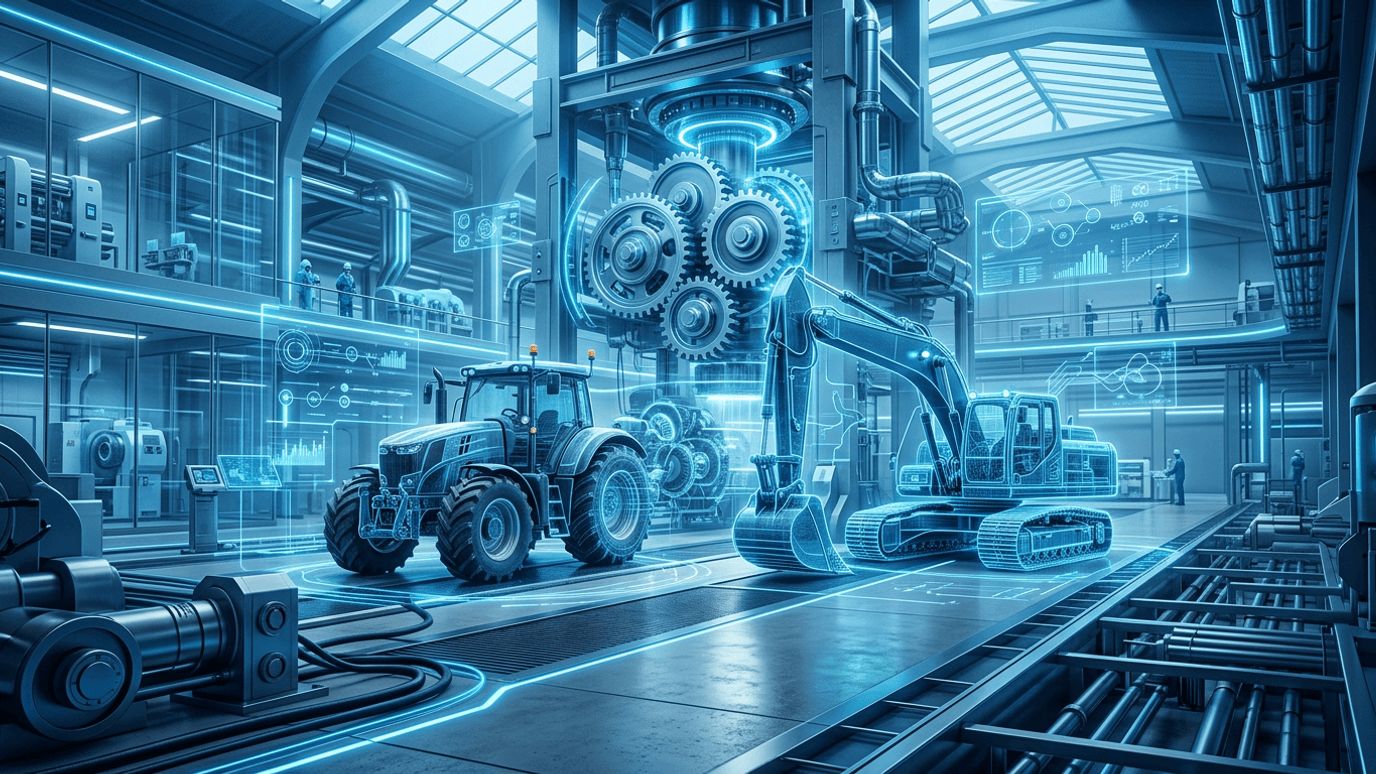
Engineering Roots That Never Left
Rochdale's textile mills required machines, and the town developed a machinery building industry to supply them. Spinning frames, looms, carding engines, boilers, steam plant and the countless bespoke fixtures that kept mills running were designed and built locally. When cotton declined, that engineering capability did not vanish. It redirected towards general machinery, process plant, materials handling, packaging equipment, automation and precision fabrication.
This is why Rochdale today hosts a disproportionate concentration of machine builders, toolmakers, fabricators and automation integrators relative to its size. The skills, the workshops, the heavy lifting capability and the supplier network for castings, gears, bearings, hydraulics and control systems all remain within reach.
What Machinery Manufacturers Provide
The sector covers a broad range. Bespoke machine builders design and construct one-off or small-batch equipment to a customer's process requirement, handling mechanical design, electrical and control engineering, fabrication, assembly, programming, factory acceptance testing, installation and commissioning. Standard equipment manufacturers produce catalogue machines such as mixers, conveyors, presses, filling lines or size reduction equipment. Automation integrators combine robots, vision systems, controllers and conveyors into working production cells. Toolmakers produce jigs, fixtures, press tools and moulds. Service specialists handle refurbishment, upgrades, spares and preventive maintenance.
The Leading Machinery Manufacturers Serving Rochdale
Crawford and Russell style process plant engineers aside, Kason Europe and comparable process equipment manufacturers serve northern processing industries with screening, sieving and size reduction machinery, an application area with strong Rochdale-region presence.
Winkworth Machinery style mixer specialists have regional counterparts, and locally Weir Minerals maintains substantial North West engineering capability in pumps, hydrocyclones and mineral processing equipment, supplying demanding abrasive and corrosive duties.
Sandvik Rock Processing and regional heavy equipment operations support quarrying and recycling industries across the Pennines with crushing and screening plant, drawing on northern fabrication and machining supply chains.
Bühler Group UK operations serve food, feed and advanced materials processing with plant and machinery, and work with regional fabricators and machinists including firms in the Rochdale area.
Hyde Group is a significant Greater Manchester precision engineering and machine building group, providing complex machining, fabrication, assembly and tooling for aerospace, energy and industrial customers, with capability that Rochdale machine builders both compete with and complement.
Bradman Lake Group designs and manufactures packaging machinery including cartoners, collators and end-of-line automation, serving food and consumer goods producers across the North West.
Riggs Autopack supplies filling and depositing machinery for food manufacturers, a relevant capability given the food production presence across Greater Manchester and Lancashire.
Sepha and regional automation integrators aside, PP Control and Automation provides outsourced control system manufacture and machine build services to original equipment manufacturers, a model that allows machinery designers to scale production without expanding their own assembly capacity.
Mills CNC and machine tool suppliers support the borough's engineering base with turning centres, machining centres and automation, alongside applications engineering and service, which underpins the precision capability of local machine builders.
ABB Robotics and Fanuc UK complete the picture, supplying the industrial robots and controllers that Rochdale-area integrators build into automated cells for handling, welding, palletising and machine tending.
Technical Capabilities to Assess
A capable machine builder should offer mechanical design using modern three-dimensional computer-aided design with finite element analysis where loads demand it, electrical schematic design, programmable logic controller and human machine interface programming, robot programming, in-house fabrication including welding to recognised procedures, precision machining, assembly bays with appropriate lifting capacity, and full documentation including operation and maintenance manuals, risk assessments and declarations of conformity.
Compliance is not optional. Machinery placed on the market must meet applicable safety requirements, with risk assessment, guarding design, safety-rated control systems, emergency stop provision and appropriate conformity marking. Buyers should confirm that a builder genuinely understands functional safety rather than treating it as paperwork.
Trends in Machinery Manufacturing
Automation demand continues to rise as labour availability tightens and wage costs increase. Collaborative robots have lowered the entry barrier for smaller manufacturers, enabling automation of tasks that previously could not justify a fully guarded cell.
Digital integration is now expected. Machines are specified with data logging, remote diagnostics, condition monitoring and connectivity to manufacturing execution systems, allowing predictive maintenance and real-time performance visibility.
Energy efficiency has become a purchasing criterion, with variable speed drives, regenerative braking, servo replacement of pneumatics and heat recovery all reducing operating cost and emissions.
Digital twin and simulation techniques allow machine performance to be validated virtually before steel is cut, reducing commissioning risk on complex projects.
Retrofit and life extension work has grown substantially, as upgrading control systems, safety and drives on structurally sound existing machinery often delivers better returns than full replacement.
Choosing a Machine Builder
Ask for references on comparable projects, ideally with a site visit to see equipment running. Clarify project management arrangements including design review gates and factory acceptance testing. Confirm who holds responsibility for conformity marking and safety documentation. Discuss spares availability and lead times, plus response times for breakdown support. Understand the payment structure against milestones, and ensure intellectual property in bespoke designs is addressed clearly.
Final Thoughts
Rochdale's machinery sector is a direct descendant of the engineering that powered the cotton industry, and it remains genuinely capable. For manufacturers needing bespoke plant, automation or precision fabrication, having experienced builders within the borough and its immediate surroundings is a meaningful competitive advantage.
Want your brand featured in front of decision-makers? Publish a guest post or get a link insertion in our guides through AAMAX's guest post and link insertion service.
Helpful Links
 SponsoredAAMAX — Full-Service Digital Agency
Write for Us
Share your expertise with our readers. We welcome guest contributions from industry specialists.
Pitch your idea