

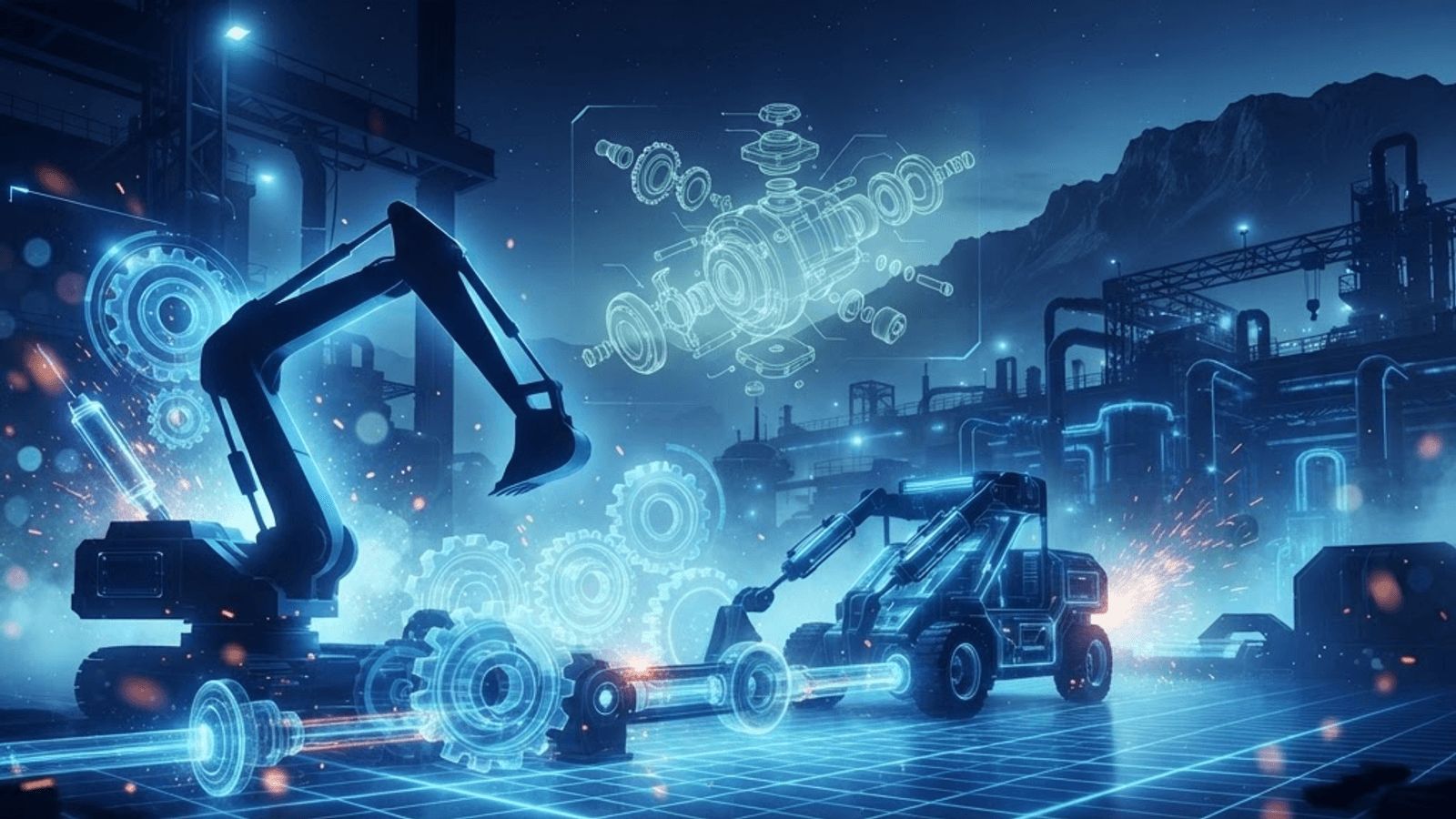
Heavy Engineering Excellence in South Down
Northern Ireland has achieved a genuinely remarkable global position in mobile crushing, screening and materials handling machinery. A cluster of manufacturers concentrated in the region produces a significant share of the world's mobile quarrying and recycling equipment, exporting to every continent. Newry, Mourne and Down sits within and adjacent to this cluster, contributing manufacturing capacity, component supply, fabrication capability and skilled engineering labour.
The origins are practical. County Down and the surrounding counties have long histories of quarrying granite and aggregate, and agricultural machinery repair created a foundation of fabrication and hydraulics skill. Local engineers built equipment to solve local problems, then discovered those solutions had international demand. Successive generations of businesses have emerged from that base, often founded by engineers who trained at established firms.
The district's machinery sector today spans mobile crushers and screens, conveyors and materials handling, agricultural equipment, waste and recycling plant, quarry processing systems, and precision engineered components supplying these manufacturers. It represents one of Northern Ireland's most successful export industries.
Evaluating a Machinery Manufacturer
Engineering capability is the primary consideration. Look for in-house design teams, structural and finite element analysis capability, hydraulic and control system design, and prototyping and testing facilities. Manufacturers who genuinely engineer rather than copy produce equipment that performs and lasts.
Build quality shows in details: weld quality and welder certification, material specification and traceability, machining tolerances, surface preparation and coating systems, and the quality of bought-in components such as bearings, hydraulic pumps and engines. Reputable manufacturers specify quality components rather than the cheapest available.
Safety compliance is essential. Machinery must meet applicable safety directives and standards, with proper risk assessment, guarding, emergency stop systems, noise and vibration data and comprehensive documentation. Manufacturers should provide declarations of conformity and thorough operating manuals.
Support infrastructure determines value over a machine's life. Parts availability, dealer networks, field service capability, technical support responsiveness and training provision all matter. Heavy machinery downtime is extremely costly, so a manufacturer's ability to get a machine running again quickly is worth paying for.
The Top 10 Machinery Manufacturers Serving the District
1. Terex Materials Processing — A global leader with major Northern Ireland manufacturing, producing mobile crushing, screening and washing equipment sold worldwide. Its engineering resources, testing facilities and international dealer network set a benchmark, and its operations have trained a substantial share of the region's heavy engineering workforce.
2. McCloskey International Northern Ireland Operations — A significant name in mobile crushing and screening equipment with strong regional manufacturing links. Its product range covers jaw and cone crushers, impactors, trommels and stackers, and it has built a reputation for robust machines suited to demanding quarry and recycling duty.
3. Sandvik Mobile Crushers and Screens — With Northern Ireland manufacturing operations producing mobile processing equipment, Sandvik combines global engineering resources with regional manufacturing skill. Its machines serve aggregate, mining and recycling markets internationally.
4. CDE Global — A Northern Ireland manufacturer specialising in wet processing systems for sand and aggregates, mining, and construction waste recycling. Its engineered plant solutions involve complex water management, cyclone technology and materials separation, and it exports substantial systems worldwide.
5. Telestack — A Northern Ireland manufacturer of mobile bulk material handling equipment including ship loaders, stackers and conveying systems. Its products serve ports — a market directly relevant to Warrenpoint — as well as quarries and mines, and involve substantial structural and conveying engineering.
6. Newry Engineering and Fabrication — A district-based heavy fabrication and machinery manufacturing business producing conveyors, hoppers, structural steelwork and bespoke plant. It serves quarrying, recycling and process industry customers, and provides subcontract fabrication to larger machinery manufacturers.
7. Mourne Agricultural Machinery — A south Down manufacturer of agricultural equipment including trailers, feeders, slurry handling and livestock handling systems. Its products are developed with direct input from Mourne and south Down farmers, and are engineered for steep, wet, difficult ground conditions.
8. Warrenpoint Hydraulic Systems — A specialist producer of hydraulic power packs, cylinders and control systems supplying machinery manufacturers and end users. Hydraulic engineering is central to mobile plant performance, and specialist suppliers of this type are essential to the cluster.
9. Down Precision Machining — A precision engineering business supplying machined components, shafts, housings and assemblies to machinery manufacturers across the region. Tight tolerance CNC machining, quality documentation and reliable scheduling make it a valued tier supplier to the heavy plant sector.
10. Kilkeel Heavy Fabrication — Drawing on the harbour town's engineering heritage, this operation produces heavy structural fabrication, machine frames and marine engineering assemblies. Its capability in large-scale welding and corrosion-resistant construction serves both machinery and marine customers.
Trends Driving the Machinery Sector
Electrification and hybrid drives are advancing rapidly in mobile plant. Diesel-electric and fully electric crushers and screens reduce fuel cost, emissions and noise, and enable operation in urban recycling sites with air quality restrictions. Manufacturers are investing heavily in these powertrains, which changes machine architecture significantly.
Telematics and remote monitoring have become standard. Operators expect production data, fuel consumption, wear monitoring, fault diagnostics and location tracking delivered to a dashboard. This has made software and connectivity engineering a core machinery competence, and it enables predictive maintenance that reduces unplanned downtime substantially.
The circular economy has created strong demand. Construction and demolition waste recycling, soil washing, and recovery of aggregates from waste streams all require processing equipment, and tightening landfill policy across Europe continues to expand this market. Northern Ireland manufacturers were early into recycling applications and retain strong positions.
Automation and operator assistance are advancing, with automatic feed regulation, blockage detection, remote setup and semi-autonomous operation reducing skill dependency and improving consistency. Given skilled operator shortages, these features have real commercial value.
Servitisation is changing business models. Manufacturers increasingly offer equipment with service contracts, guaranteed availability, or output-based arrangements rather than simple sales. This aligns manufacturer and customer interests around uptime and performance.
Buying and Operating Machinery Wisely
Define your application precisely. Feed material, required output, product specification, site constraints, mobility needs and operating hours all determine the correct machine. Manufacturers can specify accurately only with accurate information, and mismatched equipment underperforms regardless of quality.
Test with your material where possible. Reputable manufacturers offer trials or can demonstrate on similar feedstock. Material behaviour — abrasiveness, moisture, clay content, size distribution — affects throughput and wear dramatically, and paper specifications rarely capture it.
Budget for wear parts and maintenance realistically. Crushing and screening equipment consumes liners, screens, belts and wear plates, and these costs often exceed fuel over a machine's life. Compare wear part pricing and expected life between manufacturers.
Invest in operator training. Correctly operated machinery produces more, breaks down less and lasts longer. Manufacturers offering thorough training deliver better outcomes than those simply handing over keys.
Consider residual value. Well-known brands with strong dealer support and parts availability hold value considerably better, which matters if you replace equipment periodically. The manufacturers connected to Newry, Mourne and Down listed above have built international reputations precisely because their machines earn money reliably for years — a standard set by decades of engineering in this district.
Want your brand featured in front of decision-makers? Publish a guest post or get a link insertion in our guides through AAMAX's guest post and link insertion service.
Helpful Links
 SponsoredAAMAX — Full-Service Digital Agency
Write for Us
Share your expertise with our readers. We welcome guest contributions from industry specialists.
Pitch your idea

