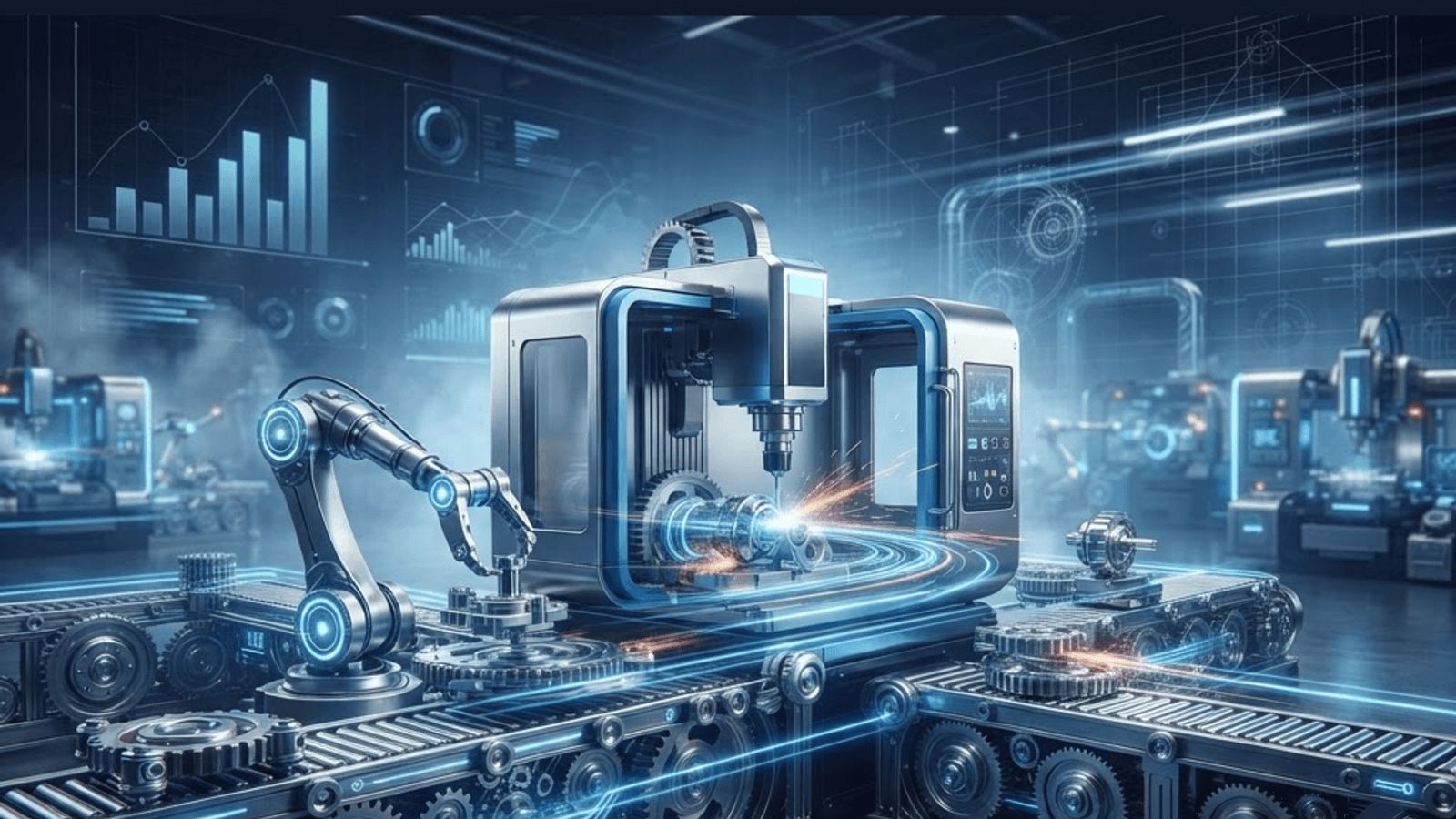
Machine Building in a Manufacturing Borough
Machinery manufacturing is the industry that makes other industries possible. Every packaging line, conveyor system, automated assembly cell and specialist production machine begins as a set of requirements handed to an engineering company capable of turning them into working equipment. In Hinckley and Bosworth, that capability has deep roots, originally serving the hosiery trade and later broadening across food processing, automotive, logistics and general manufacturing.
The borough's machine builders occupy a distinctive niche. They rarely produce catalogue equipment in volume. Instead they design and build bespoke or heavily customised machinery for specific processes, often solving problems that standard equipment cannot address. This demands a blend of mechanical design, electrical engineering, controls programming and hands-on fabrication skill in the same organisation.
Assessment Criteria
Firms were considered on design engineering depth, in-house manufacturing capability, controls and automation expertise, safety and compliance standards, installation and commissioning support, and long-term aftercare including spares availability.
The Top 10 Machinery Manufacturers
1. Bosworth Machine Systems — A full-service special purpose machinery builder covering concept design, mechanical engineering, controls, build, factory acceptance testing and site commissioning. It is particularly strong on automated assembly and inspection cells where cycle time and repeatability are critical.
2. Hinckley Precision Engineering — A subcontract machining business supplying high-tolerance components to machine builders and equipment manufacturers. Multi-axis milling and turning, in-process measurement and full inspection reporting underpin its reputation.
3. Watling Conveyor Technologies — Designs and manufactures conveying, sortation and material handling systems for warehousing and production environments, a natural specialism given the concentration of logistics operations around the borough.
4. Sketchley Automation — Focused on robotic integration, pick and place systems, machine vision and programmable controls. It retrofits automation onto existing equipment as well as building complete new cells, which suits manufacturers upgrading incrementally.
5. Mallory Hydraulics and Pneumatics — Manufactures and services hydraulic power packs, cylinders, pneumatic circuits and associated control systems. Its repair capability keeps ageing plant running when original suppliers have withdrawn support.
6. Earl Shilton Fabrication Works — Heavy fabrication specialists producing machine frames, guarding, hoppers, tanks and structural assemblies in steel and stainless steel, with coded welding and pressure testing available.
7. Ambion Packaging Machinery — Builds filling, capping, labelling and case packing equipment for food, beverage and consumer goods producers, with hygienic design and washdown construction where the application requires it.
8. Triumph Tool and Die — Designs and manufactures press tools, moulds, jigs and fixtures. Tooling accuracy determines the quality ceiling for every part produced from it, making this discipline central to the wider manufacturing base.
9. Leicestershire Machine Maintenance — Provides planned maintenance, breakdown response, machine relocation, alignment and refurbishment services. Extending the life of capital equipment is often more economical than replacement, and this firm builds its business on that logic.
10. Bosworth Field Engineering Design — A design consultancy offering mechanical design, finite element analysis, simulation and compliance documentation for clients who manufacture elsewhere but need rigorous engineering input first.
Automation and Productivity
British manufacturing has historically lagged comparable economies in robot density, which paradoxically makes automation one of the largest available productivity opportunities. Across the borough, manufacturers are automating not to reduce headcount but because skilled staff are difficult to recruit and repetitive tasks are better handled by machines.
The most successful automation projects share common features. They target a clearly defined bottleneck rather than attempting wholesale transformation. They involve operators in design so the resulting system is usable. They include realistic allowances for commissioning and debugging. And they account for the ongoing maintenance skills the equipment will require.
Safety and Compliance
Machinery placed into service must meet stringent safety requirements. This includes risk assessment, guarding design, emergency stop systems, interlocking, safety-rated control circuits and technical documentation. A competent builder treats safety as an integral part of design rather than an addition at the end, since retrofitted guarding is almost always more awkward and less effective.
Buyers should confirm that the supplier will provide a complete technical file, conformity documentation, operating and maintenance manuals, and training for the staff who will run the equipment. Missing documentation creates liability that transfers to the operator.
Digital Manufacturing and Condition Monitoring
Modern machinery increasingly generates data as well as product. Vibration sensors, current monitoring, thermal sensing and cycle counting allow maintenance to shift from fixed schedules to condition-based intervention. For manufacturers running continuous processes, detecting a failing bearing weeks before it seizes avoids unplanned downtime worth far more than the monitoring hardware.
Simulation has also changed the design process. Digital models let builders test cycle times, verify reach and clearance, and identify collision risks before any metal is cut, reducing expensive late-stage changes.
Selecting a Machine Builder
Judge candidates on the questions they ask rather than the specification they propose. A serious builder will interrogate your process thoroughly: throughput requirements, product variants, changeover frequency, upstream and downstream equipment, available floor space, utilities and operator skill level. Vague requirements produce disappointing machines, and the best suppliers refuse to proceed until the brief is genuinely clear.
Also examine aftercare. Machinery runs for fifteen or twenty years, and the availability of spares, software support and engineers who understand the build will matter long after installation.
Conclusion
Machinery manufacturers in Hinckley and Bosworth provide the engineering backbone that keeps regional industry productive. The ten firms profiled here cover bespoke machine building, precision machining, conveying, robotics, hydraulics, fabrication, packaging equipment, tooling, maintenance and design consultancy. For any business facing a production constraint that standard equipment cannot solve, the capability to engineer a proper answer exists within the borough.
Want your brand featured in front of decision-makers? Publish a guest post or get a link insertion in our guides through AAMAX's guest post and link insertion service.
Helpful Links
 SponsoredAAMAX — Full-Service Digital Agency
Write for Us
Share your expertise with our readers. We welcome guest contributions from industry specialists.
Pitch your idea