Machinery Manufacturing in Highland
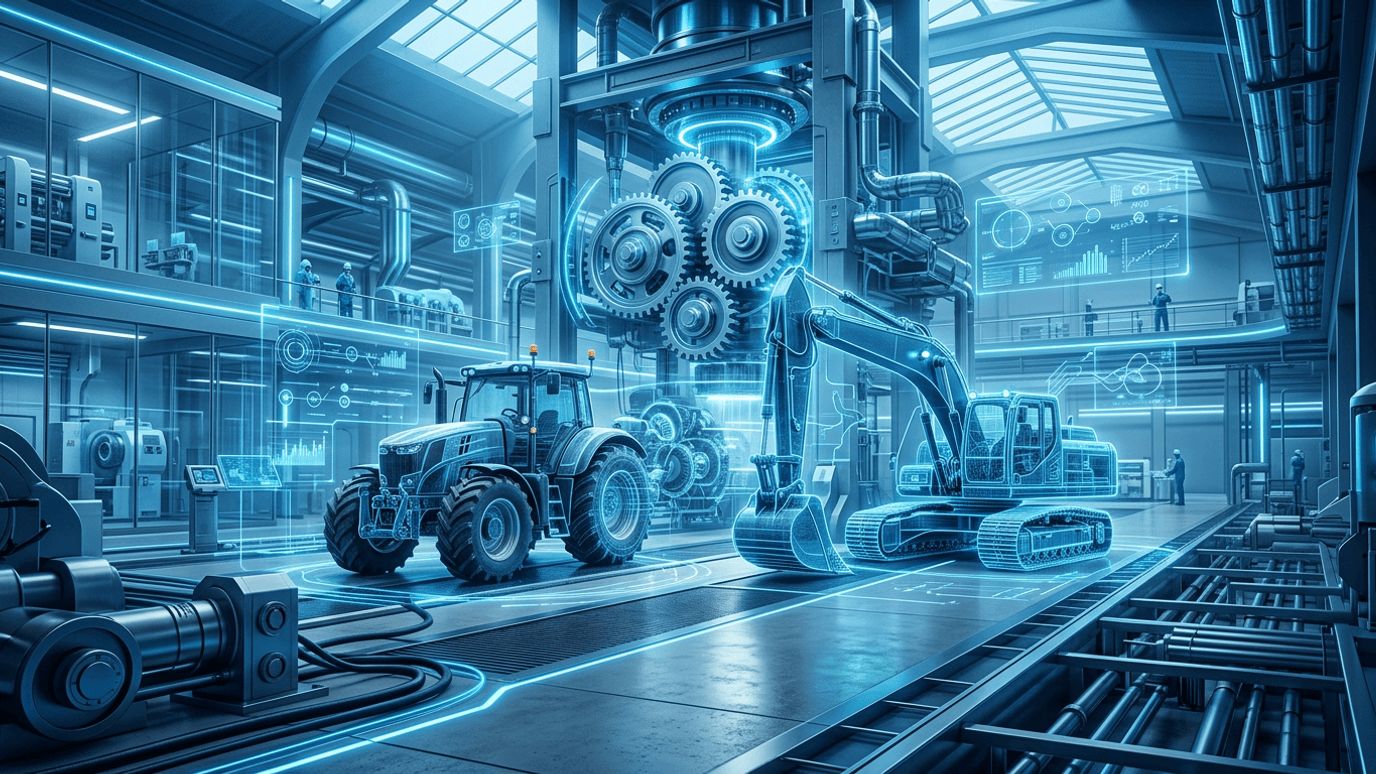
Machinery manufacturing represents one of Highland's most technically demanding industries. Building capital equipment requires mechanical design, structural analysis, hydraulics and pneumatics, electrical engineering, control systems, precision machining, fabrication, and assembly, usually integrated within a single organisation. Companies that sustain this breadth of capability tend to be deeply established, and Highland has several with decades of accumulated engineering knowledge.
The regional sector serves a distinctive mix of markets. Agriculture and forestry generate demand for robust field equipment. Food and drink processing requires hygienic production machinery. Energy and industrial customers need handling, conveying, and processing systems. Aquaculture has become a significant local market with specific equipment needs. And a growing automation segment supplies robotic cells and material handling systems across all of these.
What Defines a Strong Machinery Manufacturer
Design engineering depth is the core capability. Capital equipment must perform reliably for years under demanding conditions, and that reliability originates in design decisions about loading, materials, tolerances, and maintenance access. Manufacturers with strong in-house engineering, supported by simulation and structured design review, produce machines that last.
Manufacturing control determines whether design intent survives into the finished product. Precision machining to specification, qualified welding, accurate assembly, and thorough functional testing before dispatch all matter. Manufacturers with integrated capability across these disciplines have tighter control than those coordinating many subcontractors.
Aftermarket support is often the deciding factor for buyers. Capital equipment downtime is expensive, and spare parts availability, service response times, remote diagnostics, and operator training materially affect total cost of ownership. The strongest manufacturers treat aftermarket as a core business rather than an afterthought.
Customisation capability distinguishes specialist machinery builders. Few industrial customers need a standard machine exactly as catalogued. The ability to adapt designs to specific process requirements, site constraints, and integration needs without compromising reliability is genuinely valuable.
The Ten Leading Machinery Manufacturers in Highland
1. Highland Industrial Machinery — The region's largest machinery builder, producing processing and handling equipment for food, energy, and general industrial customers. Its integrated design, machining, fabrication, and assembly capability supports substantial bespoke projects.
2. Cairnbrae Agricultural Equipment — Cairnbrae manufactures agricultural and forestry machinery including handling equipment, trailers, and specialist implements engineered for demanding terrain and heavy duty use.
3. Braewell Food Processing Systems — Braewell builds hygienic processing machinery for food and drink producers, covering conveying, portioning, filling, and packaging equipment designed to hygienic engineering standards with cleanability as a primary design consideration.
4. Northaxis Automation Systems — Northaxis designs and integrates robotic cells, automated assembly lines, and material handling systems, combining mechanical build with control system programming and safety system design.
5. Lochmara Aquaculture Engineering — Lochmara supplies equipment for the aquaculture industry, including feeding systems, grading and handling machinery, water treatment plant, and net cleaning equipment suited to marine conditions.
6. Ardfern Precision Machining — Ardfern operates multi-axis machining centres producing precision components for machinery builders and end users, with in-house inspection and dimensional reporting supporting tight-tolerance work.
7. Kelvinforge Heavy Fabrication — Kelvinforge fabricates large structural assemblies, frames, hoppers, tanks, and pressure equipment, with lifting capacity and qualified welding procedures suited to substantial structures.
8. Thistlehydraulics Systems — Thistlehydraulics designs and manufactures hydraulic power units, cylinders, and control manifolds, and provides hydraulic system design consultancy and refurbishment services.
9. Ravenmoor Machinery Services — Ravenmoor focuses on machinery servicing, refurbishment, and upgrade, extending equipment life through overhaul, control system modernisation, and safety compliance retrofitting.
10. Glenmuir Engineering Design — Glenmuir provides mechanical design and analysis consultancy, supporting manufacturers and end users with concept development, structural simulation, hydraulic calculation, and compliance documentation.
Trends Transforming Machinery Manufacturing
Automation and robotics integration has become an expectation rather than a premium option. Customers facing labour availability constraints increasingly specify automated handling, vision inspection, and robotic operations. Machinery builders who can integrate these systems capture work that would otherwise go to separate automation suppliers.
Connected equipment and predictive maintenance have changed the service relationship. Sensors monitoring vibration, temperature, pressure, and cycle counts allow manufacturers to identify developing faults before failure and to schedule intervention efficiently. This capability reduces customer downtime and creates recurring service revenue.
Servitisation is gradually reshaping commercial models. Some manufacturers now offer availability guarantees, output-based contracts, or equipment-as-a-service arrangements rather than outright sale. These models align supplier and customer incentives around uptime but require confidence in reliability and strong service infrastructure.
Energy efficiency has become a specification requirement. Customers assess machinery on power consumption across its operating life, not just purchase price. Variable speed drives, efficient hydraulic circuit design, heat recovery, and reduced compressed air dependency all feature in competitive tenders.
How to Select a Machinery Supplier
Define your process requirements precisely before approaching suppliers. Throughput, product characteristics, available footprint, utility supplies, integration points, and cleaning regime all shape the appropriate design. Vague specifications produce proposals that cannot be meaningfully compared.
Visit reference installations and speak to operators. Watching a comparable machine running in a production environment reveals more about reliability, accessibility, and usability than any specification document. Ask about breakdowns, spare parts lead times, and service responsiveness.
Evaluate total cost of ownership rather than purchase price. Include energy consumption, consumable costs, expected maintenance, spare parts pricing, and anticipated service life. A machine costing more initially frequently proves considerably cheaper over a decade of operation.
Final Thoughts
Highland's machinery manufacturers combine substantial engineering depth with the flexibility to build equipment tailored to specific processes. The ten companies profiled here span industrial machinery, agricultural equipment, food processing, automation, aquaculture, precision machining, heavy fabrication, hydraulics, refurbishment, and design consultancy. For manufacturers investing in capital equipment, this regional capability offers both technical quality and the proximity that makes long-term service relationships work.
Want your brand featured in front of decision-makers? Publish a guest post or get a link insertion in our guides through AAMAX's guest post and link insertion service.
Helpful Links
 SponsoredAAMAX — Full-Service Digital Agency
Write for Us
Share your expertise with our readers. We welcome guest contributions from industry specialists.
Pitch your idea