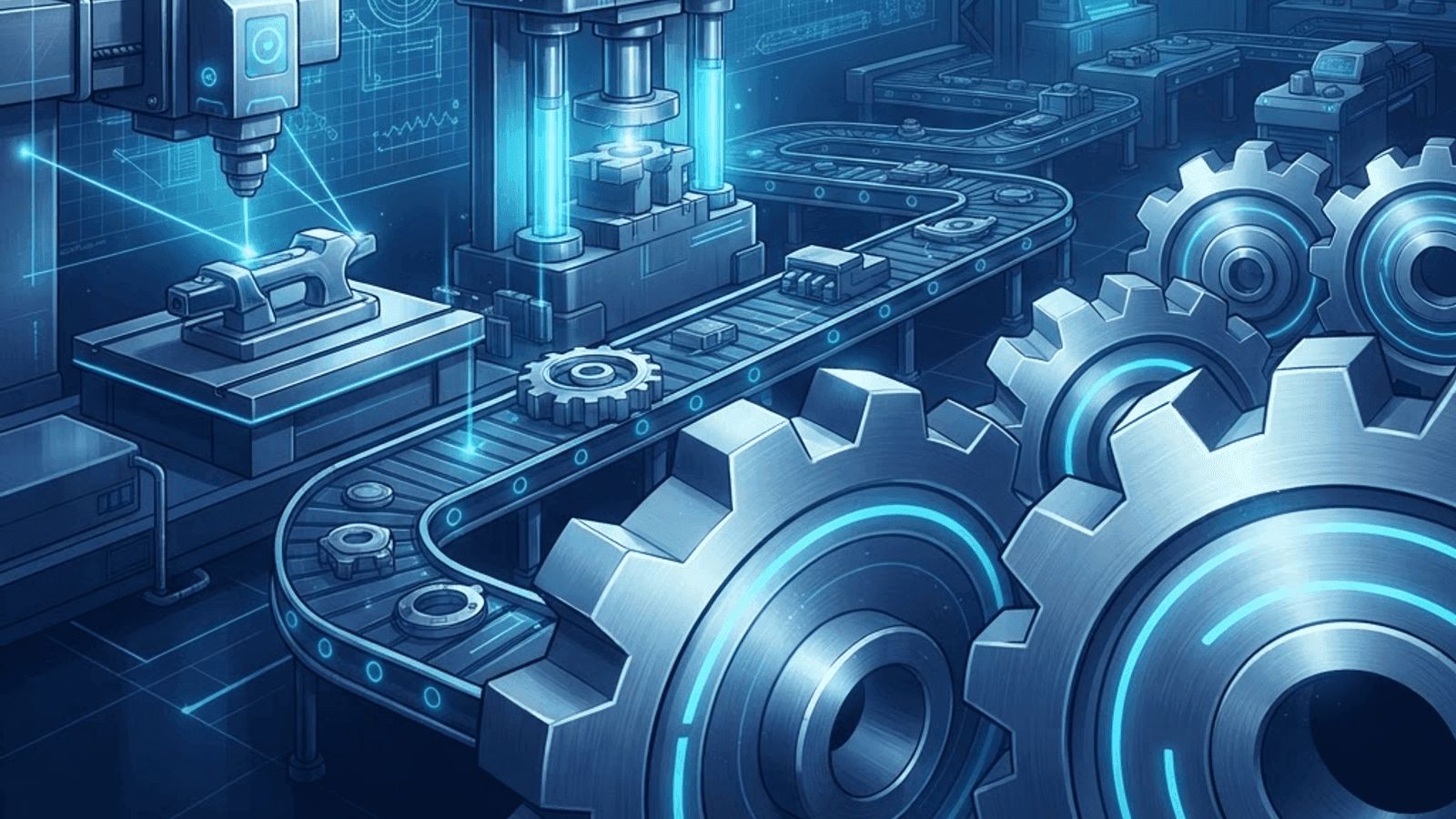
Machinery Building in a Traditional Engineering Town
Chorley's industrial character was shaped by machinery long before it was shaped by anything else. The mills that once dominated the skyline needed engineers to build, install and maintain their equipment, and that engineering culture never disappeared. Today the borough hosts machine builders producing bespoke production equipment, materials handling systems, packaging machinery and specialist tooling for customers across the United Kingdom and overseas.
Machinery manufacture is fundamentally a problem-solving business. Most projects begin with a customer describing a production challenge rather than specifying a machine, and the manufacturer translates that into a mechanical, electrical and software design. The best firms combine mechanical engineering depth with control systems expertise and a pragmatic understanding of how equipment behaves on a busy factory floor.
1. Chorley Machine Engineering
A bespoke machine builder delivering complete automated systems from concept through to installation and commissioning. Projects typically include mechanical design, control system programming, safety assessment and operator training. The company is known for thorough factory acceptance testing, running machines under realistic conditions before shipment so that on-site commissioning is brief and predictable.
2. Astley Conveyor Systems
Specialising in materials handling, Astley Conveyor Systems designs and manufactures belt, roller, chain and modular conveyors alongside sortation and accumulation equipment. Its systems serve distribution centres, food producers and manufacturers. Layout design is supported by simulation, allowing throughput to be verified before steel is cut, which prevents the costly bottlenecks that afflict poorly planned installations.
3. Yarrow Packaging Machinery
Producing filling, capping, labelling and end-of-line packaging equipment, this manufacturer serves food, beverage, cosmetics and household product companies. Machines are designed for quick changeover between product formats, reflecting the shorter production runs that characterise modern consumer goods. Hygienic design and washdown capability are standard for food applications.
4. Northgate Special Purpose Machines
When no standard equipment exists for a process, Northgate Special Purpose Machines builds it. Past work includes assembly machines, leak test rigs, automated inspection systems and robotic handling cells. Each project is genuinely bespoke, and the company's engineering team spends significant time on site understanding the process before proposing a design.
5. Buckshaw Precision Tooling
This manufacturer produces press tools, jigs, fixtures and moulds for production customers. Precision tooling determines the quality of everything made with it, and the company's investment in measurement equipment reflects that responsibility. It also offers tool maintenance and refurbishment programmes that keep existing tooling producing accurate parts for far longer.
6. Coppull Hydraulic Systems
Designing and building hydraulic power packs, presses and actuation systems, Coppull Hydraulic Systems serves manufacturing, construction equipment and marine customers. Services extend to hose assembly, cylinder repair and system troubleshooting. Its engineers frequently diagnose problems on equipment built by others, an area where deep hydraulic knowledge is increasingly scarce.
7. Botany Bay Automation
Focused on robotics and control integration, Botany Bay Automation retrofits automation onto existing production lines as well as building new cells. Applications include palletising, machine tending, pick and place and vision-guided handling. The company emphasises realistic return on investment analysis, helping customers identify which processes genuinely benefit from automation and which do not.
8. Duxbury Process Equipment
Manufacturing mixers, vessels, heat exchangers and process skids for chemical, food and pharmaceutical customers, this company works to hygienic and pressure equipment standards. Fabrication in stainless steel and specialist alloys is complemented by documented welding procedures and full material certification, which regulated customers require as a matter of course.
9. Lancashire CNC Manufacturing
A subcontract machining specialist supporting other machine builders and equipment manufacturers, Lancashire CNC Manufacturing produces complex machined components from prototype to batch quantities. Multi-axis capability allows complicated geometries to be produced in single setups, improving accuracy and reducing lead times. Rapid quotation turnaround has made it a preferred supplier for urgent requirements.
10. Market Street Maintenance Engineering
Machinery requires support throughout its life, and this company provides planned maintenance, breakdown response, spare part manufacture and machine relocation services. Reverse engineering of obsolete parts is a particular strength, keeping older but otherwise serviceable equipment running when original suppliers have long since disappeared.
Trends Shaping Machinery Manufacture
Connected machinery is now an expectation rather than a novelty. Customers want equipment that reports output, downtime causes and condition data to factory systems, enabling predictive maintenance and meaningful performance measurement. Modular design has grown in importance, allowing machines to be reconfigured as products change rather than replaced entirely.
Energy efficiency has become a specified requirement, driving adoption of variable speed drives, regenerative braking and intelligent standby modes. Safety standards continue to evolve, and manufacturers must demonstrate compliance through formal risk assessment and appropriate protective systems. Meanwhile, skills shortages across mechanical and control engineering have made apprenticeship programmes a strategic priority for many local firms.
How to Choose a Machinery Manufacturer
Write a clear specification covering throughput, product variants, available floor space, utilities, interface requirements and acceptance criteria before approaching suppliers. Ask to see comparable machines in operation, ideally speaking to those customers directly. Clarify who is responsible for safety compliance documentation. Agree a factory acceptance test protocol in the contract, along with payment tied to performance milestones. Discuss spare parts availability and support response times, since a machine that cannot be repaired quickly becomes very expensive during a production stoppage.
Final Thoughts
Machinery manufacture in Chorley reflects generations of accumulated engineering knowledge applied to modern automation, controls and materials. Whether you need a conveyor system, a bespoke assembly cell or precision tooling, the town offers builders with the technical depth to solve genuinely difficult production problems. Time invested in specification and supplier selection consistently pays for itself over the life of the equipment.
Want your brand featured in front of decision-makers? Publish a guest post or get a link insertion in our guides through AAMAX's guest post and link insertion service.
Helpful Links
 SponsoredAAMAX — Full-Service Digital Agency
Write for Us
Share your expertise with our readers. We welcome guest contributions from industry specialists.
Pitch your idea