

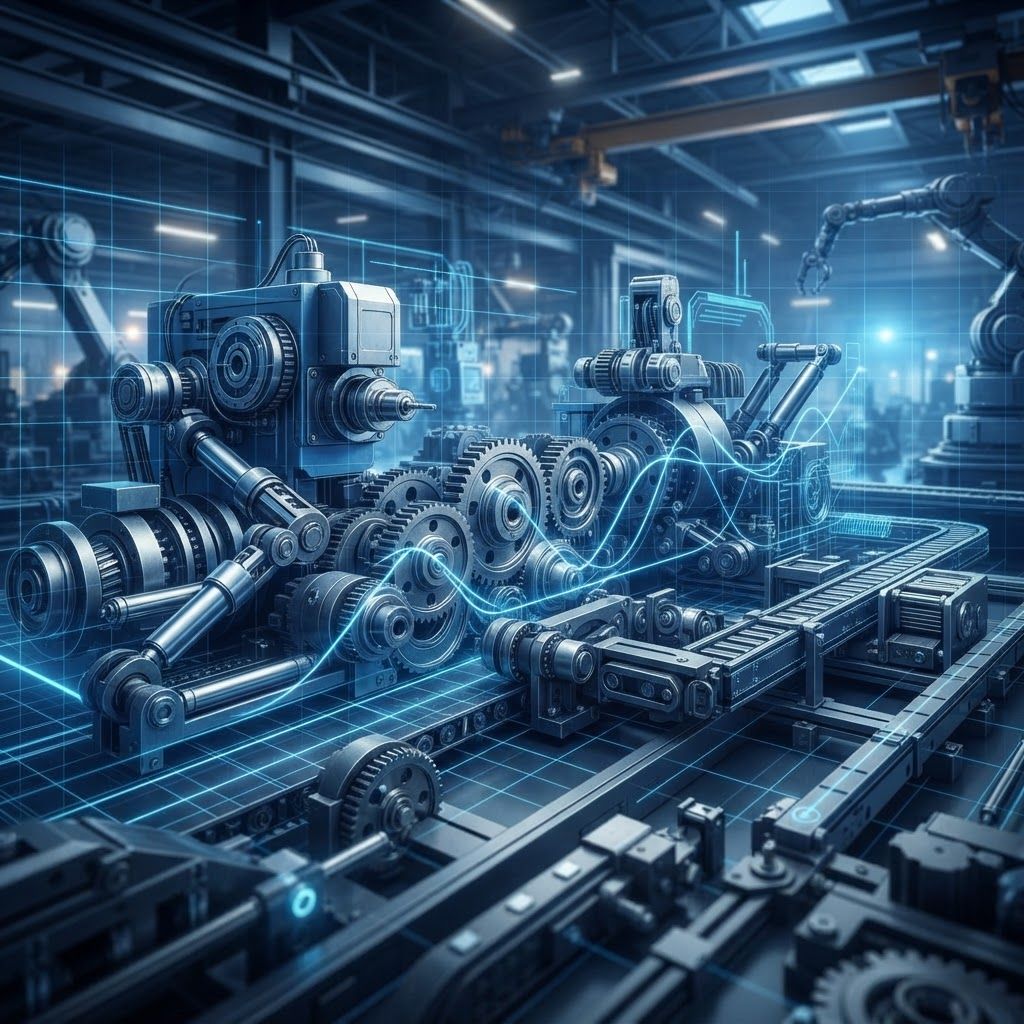
Machinery Manufacturing in a Heritage Engineering District
Bath and North East Somerset occupies an interesting position in British machinery manufacturing. The Georgian city of Bath itself is a World Heritage Site with strict planning controls, which means heavy industry has largely relocated to the surrounding towns and business parks. Keynsham, Midsomer Norton, Radstock, Paulton and Peasedown St John host the majority of the district's engineering workshops, while the former Somerset coalfield left behind a legacy of mechanical skills that still shapes the local labour market.
Machinery manufacture in the area is dominated by specialist and low volume production rather than mass output. Firms here typically build bespoke process equipment, fluid power systems, test rigs, handling equipment and precision sub assemblies for larger original equipment manufacturers. The proximity of the Bristol and Gloucestershire aerospace cluster, the defence corridor around Wiltshire and the nuclear new build programme at Hinkley Point in Somerset provides a broad and technically demanding customer base within a short drive.
What Separates a Strong Machinery Manufacturer
Buyers of capital equipment are judging far more than the machine itself. Design capability is the first differentiator: the best firms offer full mechanical and electrical design, three dimensional modelling, finite element analysis and control system programming rather than simply fabricating to a supplied drawing. This turnkey capability shortens project timelines and reduces integration risk for the customer.
Compliance is the second. Machinery placed on the UK market must satisfy the Supply of Machinery (Safety) Regulations, carry appropriate UKCA or CE marking, and be supported by a technical file, risk assessment and declaration of conformity. Manufacturers working in pharmaceuticals, food or nuclear supply chains face additional layers of validation, documentation and materials traceability. ISO 9001 is effectively a minimum expectation, often accompanied by ISO 14001 and ISO 45001.
The third differentiator is lifecycle support. Capital equipment is expected to run for decades, so spare parts availability, planned maintenance programmes, remote diagnostics, retrofit and refurbishment services carry enormous commercial weight. A manufacturer that can upgrade a twenty year old machine with modern drives, guarding and controls is frequently more valuable to a client than one that only sells new units.
Industry Trends Shaping the Local Sector
Automation and robotics adoption is accelerating as manufacturers respond to persistent skilled labour shortages. Collaborative robots, vision systems and automated inspection cells are increasingly specified even in low volume environments, because they improve consistency and free skilled staff for higher value work.
Digitalisation is the second major trend. Condition monitoring sensors, programmable logic controller data logging and cloud connected dashboards allow predictive maintenance and continuous improvement. Customers now routinely request data access as part of the machine specification.
Energy efficiency and electrification also influence design decisions. Variable speed drives, energy recovery systems, servo electric actuation in place of pneumatics, and heat recovery on process equipment all reduce operating costs and support corporate carbon reduction commitments. Meanwhile reshoring of supply chains after recent global disruption has increased enquiries for UK built equipment where lead time certainty and engineering support matter more than headline price.
The Ten Leading Machinery Manufacturers
1. Rotork
Bath is the global headquarters of Rotork, one of the world's foremost manufacturers of valve actuators and flow control equipment. The company designs and builds electric, pneumatic and hydraulic actuators, gearboxes and control systems used in oil and gas, water treatment, power generation and process industries across more than one hundred countries. Its reputation rests on ruggedness, long service life and a comprehensive global support network, and its presence anchors a substantial local engineering skills base.
2. Horstman Group
Also headquartered in Bath, Horstman is a specialist in suspension and running gear systems for tracked and wheeled military vehicles. The business designs and manufactures hydrogas suspension units, dampers, track tensioners and complete running gear packages, with a strong record in in service support and upgrade programmes. Its engineering depth in high energy damping and durability testing makes it a recognised authority in its niche.
3. Herman Miller Bath
The Bath manufacturing operation of Herman Miller combines furniture production with substantial in house machinery, tooling and automation engineering. The plant is widely cited as a British example of lean manufacturing practice, and its internal engineering teams develop bespoke assembly lines, jigs and handling systems. The site is also notable for its sustainability performance and its influence on regional manufacturing best practice.
4. Vaughan Sanders Engineering
Operating from the Midsomer Norton and Radstock area, Vaughan Sanders Engineering is representative of the district's precision subcontract sector. The firm provides computer numerically controlled milling and turning, fabrication and assembly for machinery builders, aerospace suppliers and industrial clients. Its strengths are tight tolerance work, responsive small batch delivery and close collaboration with customer design teams.
5. Somerset Fluid Power
Serving the former coalfield towns and wider Somerset region, Somerset Fluid Power specialises in hydraulic system design, cylinder manufacture, power pack build and on site commissioning. Hydraulics remain essential in construction, agriculture, waste handling and marine applications, and the company's combination of manufacture, breakdown repair and hose services makes it a practical single source for industrial operators.
6. Keynsham Precision Engineering
Based in Keynsham, this precision engineering business supports machinery builders with turned parts, machined housings, shafts and complete sub assemblies. It works across stainless steels, aluminium alloys and engineering plastics, and offers inspection reporting suited to regulated supply chains. Its position between Bath and Bristol gives it access to both cities' industrial customers.
7. Wessex Process Equipment
Wessex Process Equipment designs and builds stainless steel process plant for food, beverage and pharmaceutical clients, including mixing vessels, conveying systems, clean in place skids and hygienic pipework. Hygienic design demands specialist welding qualifications, surface finish control and full material certification, and the firm's documentation standards are a significant part of its appeal to regulated manufacturers.
8. Avon Valley Machinery Services
Focused on agricultural, groundcare and estate machinery across the Chew Valley and rural Bath hinterland, Avon Valley Machinery Services combines manufacture of trailers, handling attachments and bespoke implements with a substantial repair and refurbishment operation. Its understanding of the district's mixed farming and land management needs underpins long standing customer relationships.
9. Radstock Automation and Controls
Radstock Automation and Controls delivers control panel build, programmable logic controller programming, human machine interface development and robotic cell integration for machinery manufacturers and end users. As automation adoption spreads through smaller manufacturers, integrators of this kind have become essential partners, translating production requirements into reliable, safe and maintainable automated systems.
10. Paulton Industrial Fabrications
Paulton Industrial Fabrications provides structural steel fabrication, machine frames, guarding, platforms and heavy weldments to machinery builders and construction clients. Coded welding, protective coating and site installation capability allow it to handle projects from single frames to complete plant structures, and its flexibility makes it a dependable partner for local original equipment manufacturers.
Choosing the Right Machinery Partner
Selecting a machinery manufacturer should begin with a clear specification covering throughput, product variability, footprint, utilities, integration points and maintenance expectations. Sharing this early allows suppliers to propose genuinely comparable solutions rather than differently scoped guesses.
Ask for evidence of relevant sector experience, request a factory visit to assess workshop discipline and inspection practice, and clarify how conformity documentation, operator training, commissioning and warranty will be handled. Discuss spare parts strategy and obsolescence planning at the quotation stage rather than after installation.
Above all, evaluate total cost of ownership rather than purchase price. Energy consumption, changeover time, uptime, consumable costs and the practical availability of support engineers will determine the real economics of a machine over its life.
Conclusion
Machinery manufacturing in Bath and North East Somerset is a story of specialisation. Global names such as Rotork and Horstman sit alongside precision machinists, hydraulic specialists, process equipment builders and automation integrators who together form a capable and interconnected supply chain. For businesses seeking bespoke equipment, technical partnership and dependable long term support, the district offers depth of engineering talent that belies its heritage city image.
Want your brand featured in front of decision-makers? Publish a guest post or get a link insertion in our guides through AAMAX's guest post and link insertion service.
Helpful Links
 SponsoredAAMAX — Full-Service Digital Agency
Write for Us
Share your expertise with our readers. We welcome guest contributions from industry specialists.
Pitch your idea

