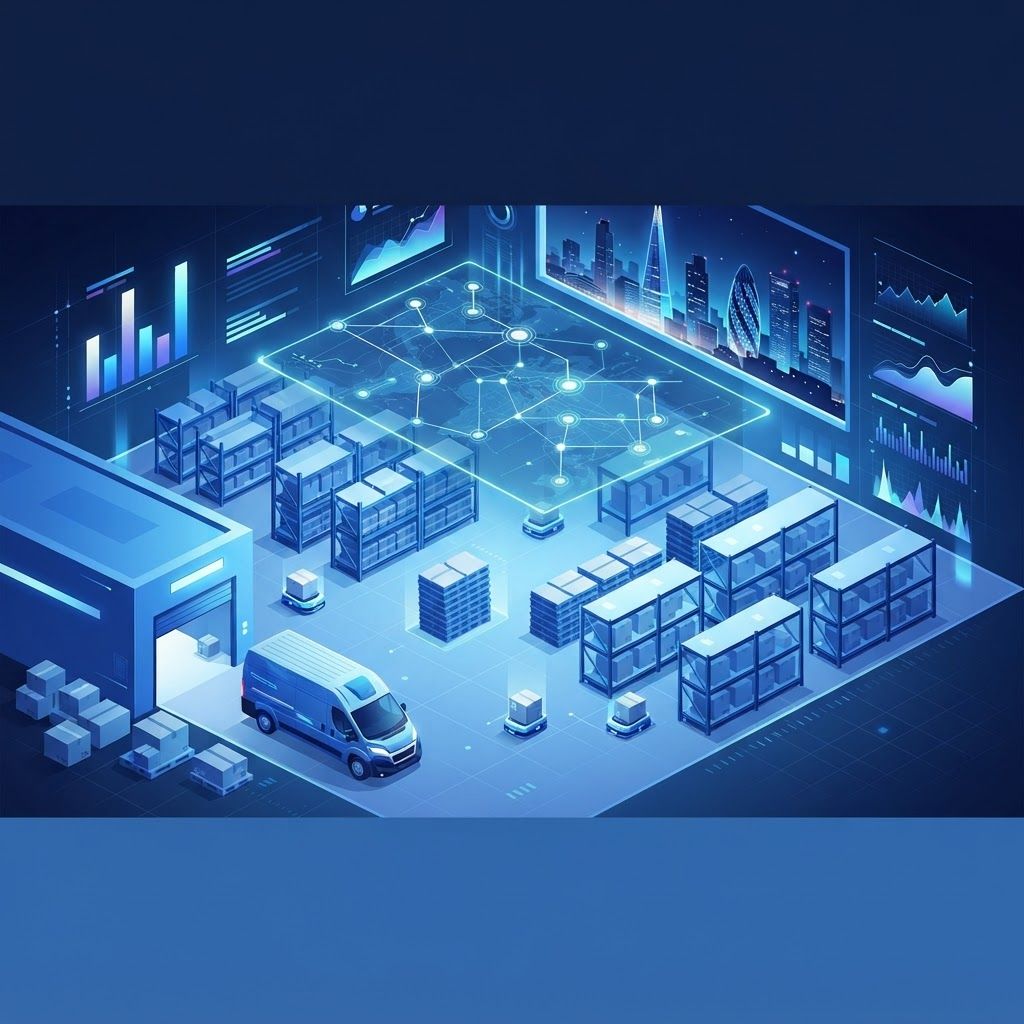
Why Logistics Concentrates Here
Logistics is fundamentally a business of geography, and Barking and Dagenham has geography on its side. The borough sits inside the M25 yet retains large parcels of industrial land, a combination that has become extremely rare across Greater London. Land at Dagenham East, Rainham Road South, River Road and the Thames-side estates supports the kind of large-footprint distribution facilities that simply cannot be built in inner London.
Add the A13 for east-west movement, the North Circular for orbital access, the Dartford Crossing for southern routes and rail connections towards the East Coast ports, and the case becomes compelling. Operators can reach central London within thirty minutes outside peak hours, serve several million consumers within a short radius, and still access national trunk routes without crossing the capital.
The Shift to London-Edge Fulfilment
E-commerce growth transformed the logistics property market. Consumers now expect next-day and often same-day delivery, which requires inventory to sit physically close to them. That has pushed fulfilment operations from the traditional Midlands corridor towards the edges of major cities. Barking and Dagenham has been a direct beneficiary, attracting multi-storey and high-bay warehousing, urban consolidation centres and electric last-mile fleets.
Third-Party Logistics Providers
Third-party logistics companies, commonly abbreviated to 3PL, form the largest category in the borough. A 3PL takes over storage, order processing, picking, packing, despatch and returns handling on a client's behalf, charging per pallet stored and per order handled. The advantage for growing businesses is converting fixed warehouse costs into variable ones and gaining immediate access to established carrier rates. The best providers integrate directly with client e-commerce platforms so orders flow automatically without manual intervention.
E-Commerce Fulfilment Specialists
A distinct subset focuses purely on direct-to-consumer fulfilment. These operators build their systems around high order counts of small parcels rather than pallet movements, with cut-off times late in the day, batch and wave picking, branded packaging options and integrated returns portals. Metrics matter here: pick accuracy, same-day despatch rate and returns turnaround are the numbers a prospective client should request before committing.
Contract Logistics and Dedicated Operations
Larger manufacturers and retailers frequently outsource an entire dedicated operation, with staff, systems and vehicles ring-fenced for one client. Contract logistics providers in the borough run these arrangements for food, automotive parts, construction products and retail replenishment. The commercial model typically involves open-book costing and gain-share mechanisms, aligning incentives around continuous improvement rather than transactional pricing.
Last-Mile Delivery Operators
Last-mile is the most expensive and most visible part of the chain. Operators serving the borough increasingly deploy electric vans, cargo bikes and micro-consolidation hubs to manage emissions rules and kerbside access restrictions. Route optimisation software, driver mobile apps with photographic proof of delivery, and customer-facing time-window notifications have become baseline expectations. Failed first-time delivery rates are the single most useful indicator of quality in this segment.
Cold Chain and Food Logistics
Food distribution across East London depends on temperature-controlled logistics. Providers in this space operate chilled and frozen storage, multi-temperature vehicles, continuous temperature logging and full traceability records. Compliance with food safety standards and the ability to evidence an unbroken cold chain are non-negotiable. Several borough operators also handle date-code rotation and short-shelf-life prioritisation as part of the service.
Freight Management and 4PL Consultancies
Fourth-party logistics providers do not own assets. Instead they manage a network of carriers and warehouses on the client's behalf, selecting the best option for each movement and providing consolidated reporting and invoicing. For businesses shipping across multiple modes and geographies, this orchestration layer can reduce total cost meaningfully while simplifying supplier management down to a single relationship.
Reverse Logistics and Returns Handling
Returns volumes in fashion and electronics can exceed a third of orders, making reverse logistics a strategic function rather than an afterthought. Specialist providers receive returns, inspect and grade them, refurbish or repackage where possible, restock sellable items and route the remainder to recycling or secondary markets. Speed matters because every day a returned item sits unprocessed is a day it cannot be resold.
Customs, Bonded and Compliance Services
Logistics operators with bonded warehouse authorisation allow importers to defer duty and VAT until goods leave storage, which materially improves cash flow. Combined with customs declaration services, tariff classification advice and duty relief schemes, these capabilities have become a significant differentiator for borough providers serving international traders.
Technology and Warehouse Management Systems
Modern logistics quality is largely a function of software. A capable warehouse management system provides real-time stock visibility, barcode or RFID-driven picking, automated carrier selection and rate shopping, and API integration with client systems. Ask prospective providers for a demonstration of their client portal, and check whether integration with your specific e-commerce or ERP platform is native or requires custom development.
Sustainability in Local Logistics
Emissions regulation and corporate reporting requirements have driven real change. Borough operators are investing in electric and hydrogen-ready vehicles, solar installations on warehouse roofs, LED lighting and automated racking that increases storage density per square metre. Consolidated deliveries and higher vehicle fill rates deliver the largest emissions reductions of all, and progressive providers now report carbon per order to their clients.
How to Select a Logistics Partner
Start with a clear specification of order profile, seasonality, stock-keeping unit count and service expectations, because pricing is meaningless without it. Visit the facility and observe the operation rather than relying on a presentation. Check scalability headroom for peak trading, and ask how the provider handled the previous November and December. Review the contract carefully for minimum volume commitments, notice periods and stock exit terms. Finally, agree measurable service levels with defined reporting from day one.
Final Thoughts
Barking and Dagenham offers a rare combination in London: genuine industrial capacity inside the M25 with excellent road access and a mature supplier base. Whether you need a compact e-commerce fulfilment partner, a dedicated contract operation, bonded storage or a low-emission last-mile solution, the borough's logistics sector has credible options. Specify your requirements precisely, verify performance with data rather than promises, and you will find a partner capable of supporting substantial growth.
Want your brand featured in front of decision-makers? Publish a guest post or get a link insertion in our guides through AAMAX's guest post and link insertion service.
Helpful Links
 SponsoredAAMAX — Full-Service Digital Agency
Write for Us
Share your expertise with our readers. We welcome guest contributions from industry specialists.
Pitch your idea