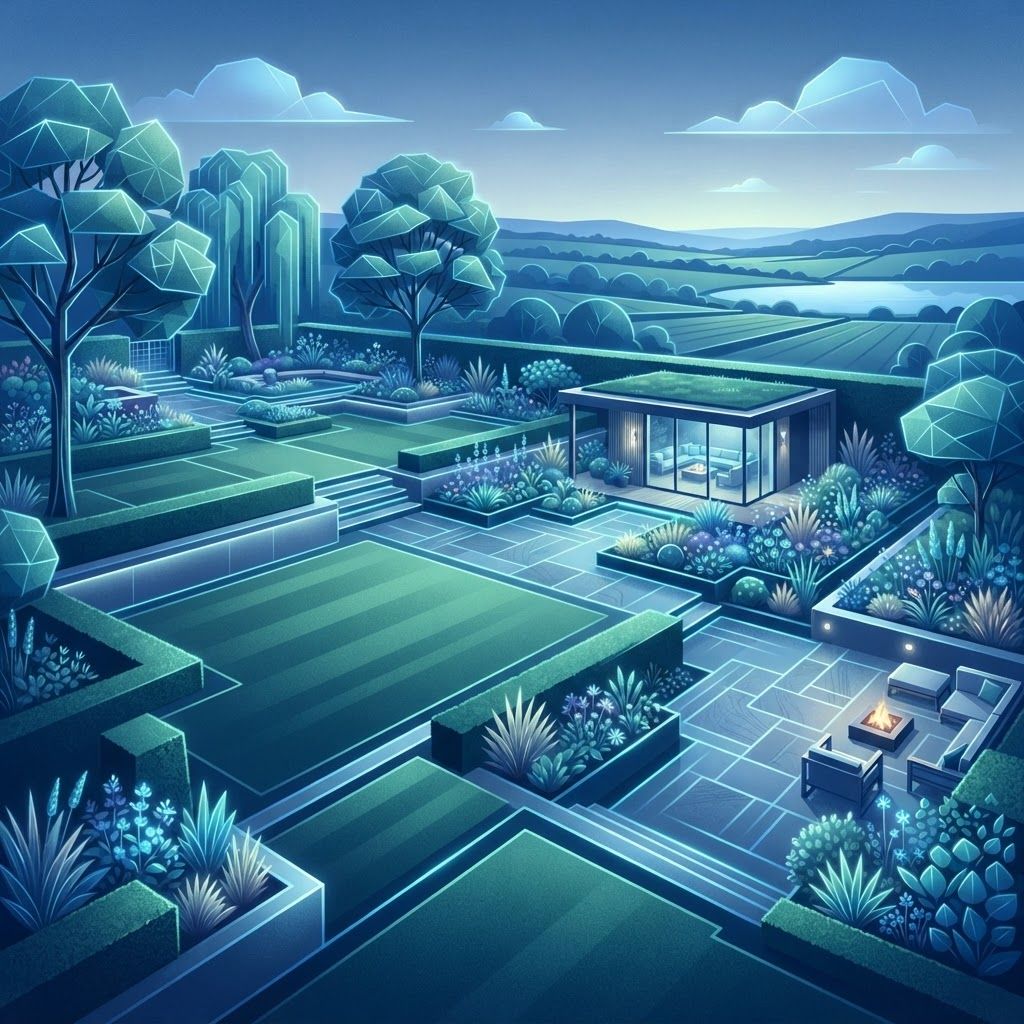
Gardening in the Shadow of the South Downs
East Hampshire offers some of the most rewarding conditions for gardening in southern England, and some of the most demanding. Chalk soils across much of the downland are free-draining and alkaline, which suits Mediterranean planting and wildflower meadows but frustrates anyone hoping to grow acid-loving shrubs. Greensand and clay pockets elsewhere in the district behave entirely differently, holding water in winter and cracking in summer. A landscaper who does not test and understand the soil will produce a garden that struggles from the first season.
Topography adds another dimension. Many properties sit on slopes requiring terracing, retaining structures, and drainage design. Exposure on higher ground brings wind that shreds tender foliage, while sheltered valley gardens can hold frost. Good local designers work with these conditions rather than against them, and the results are gardens that look established within two or three years rather than perpetually fragile.
What Distinguishes a Strong Landscaping Firm
The first marker is design capability. A genuine design process includes site survey, level measurement, soil assessment, and a scaled plan showing planting, hard surfaces, drainage, and lighting. Firms that skip straight to construction often produce attractive but impractical results, particularly where water management is concerned.
The second is construction quality, which is largely invisible once complete. Correct sub-base depth beneath paving, proper falls away from buildings, adequate foundations for walls, and engineered retaining structures determine whether a garden lasts fifteen years or five. Reputable contractors will explain their build-ups rather than quoting only surface finishes.
The third is horticultural knowledge. Plant selection matched to aspect, soil, and maintenance appetite is what makes a garden sustainable. Firms that offer aftercare, whether establishment watering, formative pruning, or seasonal maintenance, tend to deliver far better long-term outcomes.
The Top 10 Landscaping Companies in East Hampshire
1. Downland Garden Design leads the district for design-led projects, producing detailed planting plans suited to chalk and greensand conditions. Their gardens around Petersfield are noted for naturalistic perennial schemes that echo the surrounding downland while remaining structured enough for domestic settings.
2. Alton Landscape Construction is the go-to contractor for substantial hard landscaping: natural stone terraces, retaining walls, steps, and driveways. Their engineering approach to sloping sites and their attention to drainage detail are regularly praised by clients and architects alike.
3. Hampshire Grounds Maintenance serves schools, business parks, and residential management companies with scheduled grounds care, including grass cutting, hedge management, seasonal bedding, and winter gritting. Consistency and reliable scheduling define their offer.
4. Bordon Outdoor Living focuses on garden rooms, decking, pergolas, outdoor kitchens, and integrated lighting. As gardens increasingly function as additional living space, their combination of joinery and landscaping skill has proved highly popular in the newer housing around Whitehill and Bordon.
5. Meon Valley Tree and Hedge Care provides arboricultural services including crown reduction, deadwood removal, tree health assessment, stump grinding, and hedge laying. Their awareness of tree preservation orders and conservation area requirements prevents costly compliance mistakes.
6. Petersfield Wildlife Gardens specialises in ecological planting: native hedgerows, wildflower meadow establishment, pond creation, and habitat features. With biodiversity now a mainstream priority, their work appeals to landowners and households wanting gardens that support pollinators and birds.
7. Liphook Lawn Care concentrates on turf: scarification, aeration, overseeding, nutrition programmes, and weed control, alongside new lawn installation from seed or turf. For clients who want a genuinely good lawn on free-draining chalk, their seasonal programmes make a visible difference.
8. Selborne Estate Landscaping manages larger rural properties, combining paddock management, driveway maintenance, woodland thinning, and formal garden upkeep under a single contract. Their ability to coordinate seasonal work across a whole holding suits estate owners.
9. Grayshott Water Features and Irrigation designs ponds, rills, fountains, and automated irrigation systems. With dry summers becoming more frequent, their efficient drip irrigation and rainwater harvesting installations have grown steadily in demand.
10. Horndean Fencing and Boundaries completes the list with fencing, gates, trellis, and boundary walling. Their use of pressure-treated and durable timber, properly set posts, and considered detailing produces boundaries that survive exposed positions far better than budget alternatives.
Trends Shaping Local Landscaping
Sustainable drainage is now a central concern. Permeable paving, rain gardens, and soakaway design are replacing impermeable expanses of concrete, driven both by regulation and by the practical reality of heavier rainfall events. Good contractors design for water before they design for appearance.
Drought resilience is the parallel trend. Gravel gardens, deep-rooted perennials, and mulching strategies reduce irrigation dependence, which suits chalk soils naturally. Biodiversity is the third: clients increasingly request native planting, log piles, hedgehog highways, and reduced mowing regimes. Finally, outdoor living continues to expand, with lighting, heating, and covered structures extending garden use through much of the year.
Planning Your Project Sensibly
Begin with a survey and a plan, even if the work will be phased over several years. Phasing is far cheaper when the overall layout, drainage, and service routes are decided at the outset. Agree specifications for materials in writing, including stone type, paving thickness, and sub-base construction.
Check permissions early. Tree work may require consent in conservation areas or where a preservation order applies, and boundary structures above certain heights can need planning permission. Within the South Downs National Park, additional sensitivity applies to visible changes. Finally, budget realistically for maintenance; the most beautiful planting scheme will disappoint if nobody has time to look after it.
Final Thoughts
East Hampshire's landscaping sector spans designers, engineers, arborists, and horticulturists, and the best projects usually draw on more than one of those skills. Whether you are terracing a sloping garden near Alton, establishing a wildflower meadow outside Petersfield, or building an outdoor living space in Bordon, choosing a contractor who understands local soil, water, and landscape character will produce a garden that improves with every passing year.
Want your brand featured in front of decision-makers? Publish a guest post or get a link insertion in our guides through AAMAX's guest post and link insertion service.
Helpful Links
 SponsoredAAMAX — Full-Service Digital Agency
Write for Us
Share your expertise with our readers. We welcome guest contributions from industry specialists.
Pitch your idea