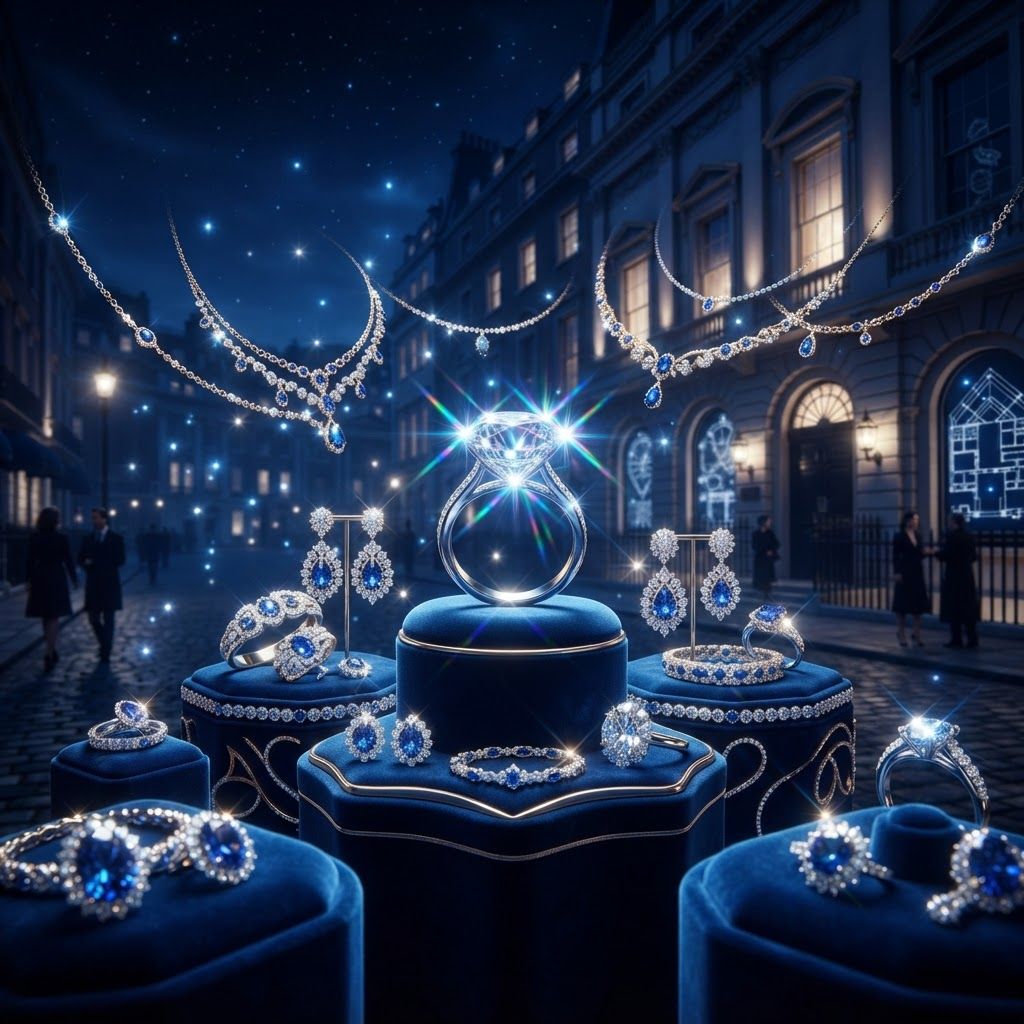
Westminster: A Global Jewellery Destination
Old and New Bond Street, together with the surrounding streets of Mayfair and St James's, form one of the most concentrated luxury jewellery districts in the world. Within a short walk you will find British houses holding royal warrants, international maisons with a century or more of heritage, contemporary designers working in innovative materials, and specialist dealers in antique and period pieces. Burlington Arcade and the Royal Arcade add further depth with independent jewellers and watch specialists.
This concentration serves several very different customers: collectors of investment-grade stones, couples commissioning engagement rings, buyers of significant gifts, and clients seeking bespoke design. What unites the best businesses here is expertise — in gemmology, in craftsmanship and in guiding clients through purchases that are often emotionally and financially significant.
How These Brands Were Assessed
Assessment considered craftsmanship, gemstone quality and certification, design originality, heritage, bespoke and repair capability, ethical sourcing practices and client service. Provenance documentation and after-sales support were weighted heavily, as both materially affect long-term value and ownership experience.
1. Garrard
Established in the eighteenth century and historically the Crown Jeweller, Garrard holds an unmatched position in British jewellery history, having been responsible for royal commissions of exceptional significance. Its collections combine classical proportion with distinctive design motifs, and its bespoke service handles major commissions with the discretion such work requires. Craft standards are exacting, with hand setting and finishing carried out to a level appropriate to the stones involved.
2. Boodles
A family-owned British house with a strong Bond Street presence, Boodles is admired for imaginative, nature-inspired design executed with technical precision. Rather than reproducing conventional forms, its collections explore movement, light and organic structure, often using unusual stone cuts and settings. Its buying strength in high-quality diamonds and coloured stones, combined with in-house design and bespoke capability, appeals to clients seeking distinctive rather than familiar pieces.
3. Cartier
With a landmark Bond Street presence, Cartier is among the most recognisable jewellery names globally, celebrated for iconic designs including the panther motif, tank-inspired geometry and instantly identifiable bracelet collections. Its strengths are design consistency, exceptional finishing and a level of brand recognition that supports strong resale values. High jewellery commissions demonstrate craft capability at the very top of the market.
4. Tiffany & Co.
Tiffany's contribution to modern jewellery is substantial, particularly the six-prong solitaire setting that lifts a diamond above the band to maximise light return — a design that reshaped engagement ring convention worldwide. Its collections range from accessible silver pieces to significant high jewellery, and its diamond grading and sourcing standards are rigorous, with detailed provenance information provided for larger stones.
5. Bulgari
Bulgari brings a distinctly Roman sensibility: bold volumes, saturated colour combinations, cabochon stones and architectural forms drawn from classical design. Its willingness to combine unconventional colour pairings sets it apart from more restrained houses, and its goldsmithing quality is exceptional, particularly in flexible chain and tubular constructions that require considerable technical skill.
6. David Morris
A British house with a strong Mayfair reputation, David Morris specialises in high jewellery with an emphasis on exceptional stones and intricate, often floral or feathered, settings. Its work is characterised by lightness — pieces that appear delicate despite substantial stone weight — achieved through skilled setting that minimises visible metal. Bespoke commissions form a significant part of its business.
7. Graff
Graff is known above all for extraordinary diamonds, including some of the most notable stones to appear on the market in recent decades. Vertical integration from rough stone acquisition through cutting, polishing and setting gives the house unusual control over quality, and its cutting expertise is central to its reputation. For clients focused primarily on stone quality and rarity, it is a reference point.
8. Van Cleef & Arpels
Celebrated for the invention of the mystery setting, which conceals metal entirely so stones appear to sit seamlessly together, Van Cleef & Arpels combines technical innovation with poetic design themes drawn from nature, dance and fairy tale. Its clover motif collections are widely recognised, while its high jewellery and transformable pieces demonstrate remarkable engineering within jewellery form.
9. Fabergé
Carrying a name synonymous with imperial craftsmanship, Fabergé produces contemporary jewellery and objects that reference its historic use of guilloché enamel, coloured gemstones and intricate detail. Its egg-inspired pendants and locket pieces incorporate hidden elements and surprise mechanisms, continuing a tradition of jewellery as object rather than ornament alone. Coloured gemstone expertise is a particular strength.
10. Bentley & Skinner
Completing the list, this long-established Piccadilly jeweller specialises in antique, period and estate jewellery, offering Georgian, Victorian, Art Nouveau, Edwardian and Art Deco pieces alongside bespoke work and expert restoration. Buying period jewellery offers craftsmanship and stone cuts no longer commercially produced, often at lower prices than contemporary equivalents, and the firm's expertise in dating, valuation and sympathetic restoration is highly regarded.
Trends in Fine Jewellery
Lab-grown diamonds have altered the market's structure, gaining acceptance for fashion jewellery while natural stones increasingly position themselves on rarity and provenance. Traceability has become a serious commercial requirement, with houses documenting mine-to-market chains and using recycled precious metals. Coloured gemstones — particularly sapphires, emeralds, spinels and unusual garnets — are gaining share in engagement jewellery as buyers seek individuality. Vintage and pre-owned jewellery is growing rapidly, supported by both sustainability considerations and appreciation for historic craftsmanship. Bespoke commissioning has become more accessible, with houses offering design collaboration at a wider range of price points.
How to Buy Fine Jewellery Wisely
For diamonds, insist on independent certification from a recognised laboratory and understand that cut quality affects appearance more than carat weight. For coloured stones, ask about treatments and origin, as both significantly influence value. Examine setting security and finishing under magnification, checking that stones sit level and prongs are even. Ask about after-sales service: rhodium plating, prong retipping, cleaning and insurance valuation support matter over decades of wear. Consider period jewellery for value and character, but buy from dealers with genuine expertise. Finally, choose pieces you will actually wear, since jewellery bought purely as investment often disappoints on both fronts.
Final Thoughts
Westminster's Bond Street and Mayfair jewellery district offers craftsmanship, gemmological expertise and design range that few places in the world can match, spanning royal-warrant British houses, international maisons and specialist antique dealers. Whether commissioning bespoke work, selecting an engagement ring or acquiring a period piece, the borough provides both exceptional choice and the professional guidance that makes such purchases confident rather than speculative.
Want your brand featured in front of decision-makers? Publish a guest post or get a link insertion in our guides through AAMAX's guest post and link insertion service.
Helpful Links
 SponsoredAAMAX — Full-Service Digital Agency
Write for Us
Share your expertise with our readers. We welcome guest contributions from industry specialists.
Pitch your idea