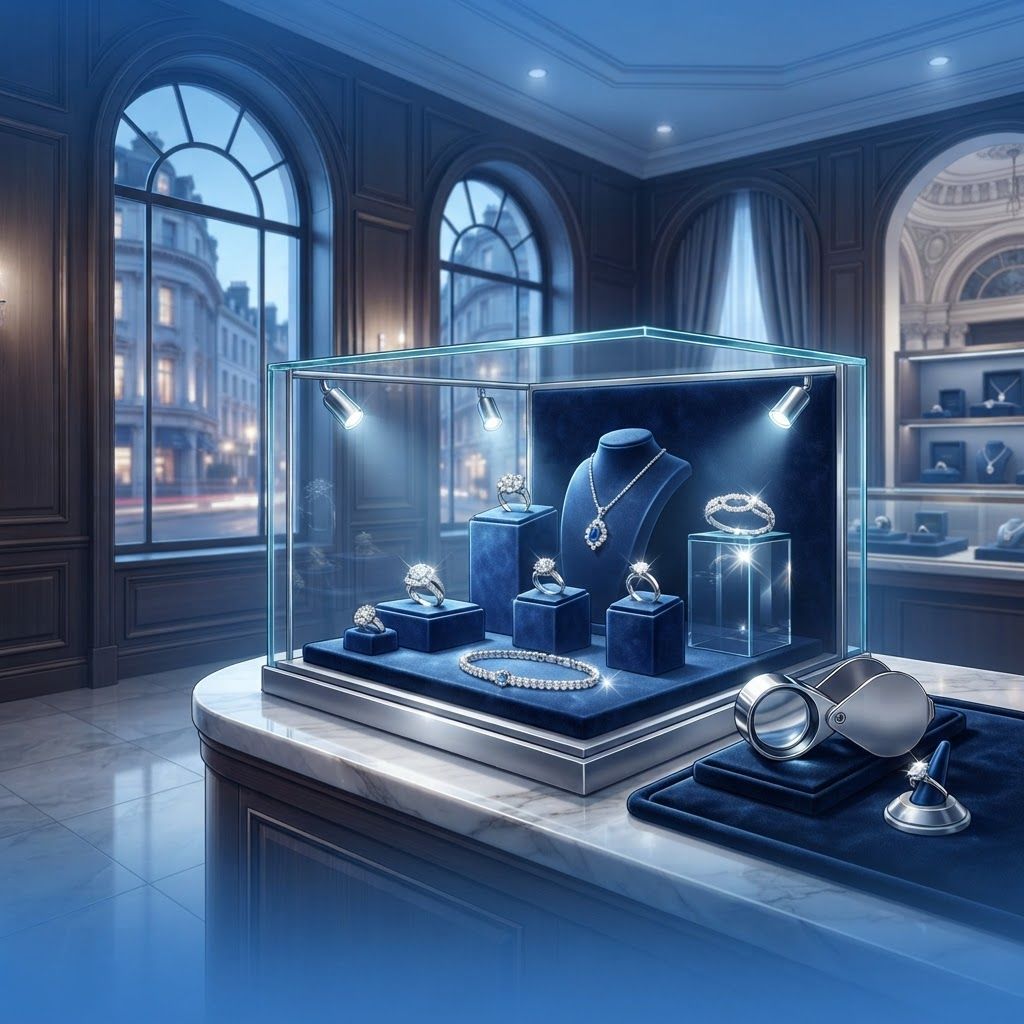
Jewellery Shopping in Hammersmith and Fulham
The borough's jewellery market is shaped by its residents. Fulham and Brook Green contain a high concentration of professional households, engagements and milestone anniversaries, which supports genuine demand for fine jewellery and bespoke commissions. Westfield London at Shepherd's Bush adds the scale and brand breadth of a major shopping destination, while independent jewellers along Fulham Road and King Street handle repairs, remodelling and personal commissions.
Buyers here tend to be well informed. Questions about diamond certification, metal purity, provenance and aftercare are common, and the retailers that thrive are those able to answer them clearly. The brands below span accessible everyday pieces through to serious fine jewellery, and each has a defensible reason for inclusion.
1. Pandora
Pandora's strength is accessibility and personalisation. The charm bracelet system allows a piece to be built over years, which makes it a natural choice for birthdays, anniversaries and christenings. Sterling silver and 14ct gold options are hallmarked, and the brand has committed to using recycled silver and gold across its production, which addresses a genuine concern among younger buyers. Availability at Westfield London means stock and sizing are rarely an issue.
2. Tiffany & Co.
Tiffany and Co. remains the reference point for engagement jewellery, and the appeal extends well beyond the packaging. Diamond selection standards are stricter than industry minimums, particularly on cut quality, which is the factor most responsible for brilliance. Setting work is exceptionally clean, and the brand publishes detailed provenance information on its diamonds. Lifetime servicing and resizing support the long-term ownership case, and value retention is stronger than most.
3. Cartier
Cartier combines jewellery and watchmaking heritage with designs that have proved genuinely timeless. The Love bracelet, Trinity ring and Juste un Clou collections are instantly recognisable without being ostentatious. Manufacturing quality is consistently high across metals and stone setting, and the brand's watches, particularly the Tank and Santos, hold their value well. For buyers treating jewellery partly as a long-term asset, Cartier is among the most defensible choices available.
4. Monica Vinader
Monica Vinader has established a strong position in demi-fine jewellery, occupying the space between costume and traditional fine pieces. Products use recycled sterling silver and 18ct gold vermeil over solid silver rather than thin plating, which significantly improves durability. Engraving services are offered on most pieces, and the stacking rings, chunky chains and gemstone pendants suit everyday wear. Repair and re-plating services extend the useful life considerably.
5. Astley Clarke
Astley Clarke produces contemporary fine jewellery with a distinctive aesthetic built around delicate settings and unusual gemstone combinations. Collections use solid gold and responsibly sourced coloured stones, and the brand's diamond pieces focus on modern, understated settings rather than traditional solitaires. It appeals particularly to buyers wanting fine jewellery that reads as personal rather than conventional, and pricing sits meaningfully below the major heritage houses.
6. Swarovski
Swarovski serves the occasion and fashion jewellery market with precision-cut crystal that offers considerable visual impact at accessible prices. Bridal accessories, statement earrings and hair pieces are the strongest categories, frequently chosen for weddings and events. Buyers should understand that crystal is not gemstone and that plated settings will eventually wear, but for pieces worn occasionally rather than daily the value equation works well.
7. Links of London Style Silverwork Specialists
Classic British silverwork remains popular in the borough, and several retailers specialise in this tradition. Sterling silver charm bracelets, cufflinks, signet rings and christening gifts form the core of the category. The appeal lies in hallmarked British silver, hand-finishing and pieces designed to be engraved and passed on. For gifting where sentiment outweighs stone value, well-made silver frequently outperforms a small diamond at similar cost.
8. Boodles
Boodles is a British family jeweller with genuine design credibility and a strong following among London buyers. The house designs and manufactures its own pieces, which shows in distinctive settings and unusual proportions that avoid the uniformity of mass-produced fine jewellery. Diamond and coloured stone selection is rigorous, and the bespoke service is a serious offer rather than a token option. For buyers wanting fine jewellery with individuality, it is a compelling alternative to international brands.
9. Fulham Bespoke Jewellery Workshops
The borough supports a number of independent workshops offering bespoke design, remodelling of inherited pieces and hand-made commissions. This is where inherited jewellery that is never worn becomes something wearable, using existing stones in new settings at a fraction of the cost of buying new. Clients work directly with the maker, seeing wax models or CAD renders before committing. Craftsmanship is often equal to major houses without the brand premium.
10. Independent Watch and Jewellery Repairers
Alongside retail, the borough retains skilled repair businesses handling ring resizing, claw re-tipping, chain soldering, pearl restringing, watch servicing and valuation for insurance. These services are what keep jewellery in circulation rather than in drawers. Regular claw inspection in particular prevents stone loss, which is the most common and most avoidable form of jewellery disaster. Access to trustworthy local repair is genuinely valuable and often overlooked when choosing where to buy.
How to Buy Fine Jewellery Sensibly
For diamonds, prioritise cut above all other characteristics. An excellently cut stone of modest weight and colour will consistently outshine a larger stone cut poorly. Insist on independent certification from a recognised laboratory for any significant diamond, and read the report rather than accepting a summary.
Check hallmarking on precious metals, which is a legal requirement in the United Kingdom for items above minimum weights and provides straightforward assurance of purity. Ask directly about sourcing, including whether stones are traceable and whether recycled metals are used, since credible retailers now expect these questions.
Consider lab-grown diamonds honestly. They are chemically and optically identical to mined stones and cost considerably less, but resale values are much lower and continue to fall as production scales. For a large statement piece worn for pleasure they make excellent sense; as a store of value they do not.
Trends in the Borough's Jewellery Market
Everyday fine jewellery has grown strongly, with buyers choosing solid gold pieces in small sizes for daily wear over occasional statement items. Stacking, layering and mismatched earrings continue to dominate styling. Coloured gemstones, particularly sapphires and emeralds, are increasingly chosen for engagement rings as buyers seek distinctiveness.
Remodelling inherited jewellery has become notably more popular, driven both by sustainability concerns and by the appeal of pieces with family history. Combined with the borough's strong independent workshop and repair sector, that trend is reshaping how residents think about jewellery ownership: less as accumulation, and more as a collection that is actively maintained and adapted over time.
Want your brand featured in front of decision-makers? Publish a guest post or get a link insertion in our guides through AAMAX's guest post and link insertion service.
Helpful Links
 SponsoredAAMAX — Full-Service Digital Agency
Write for Us
Share your expertise with our readers. We welcome guest contributions from industry specialists.
Pitch your idea