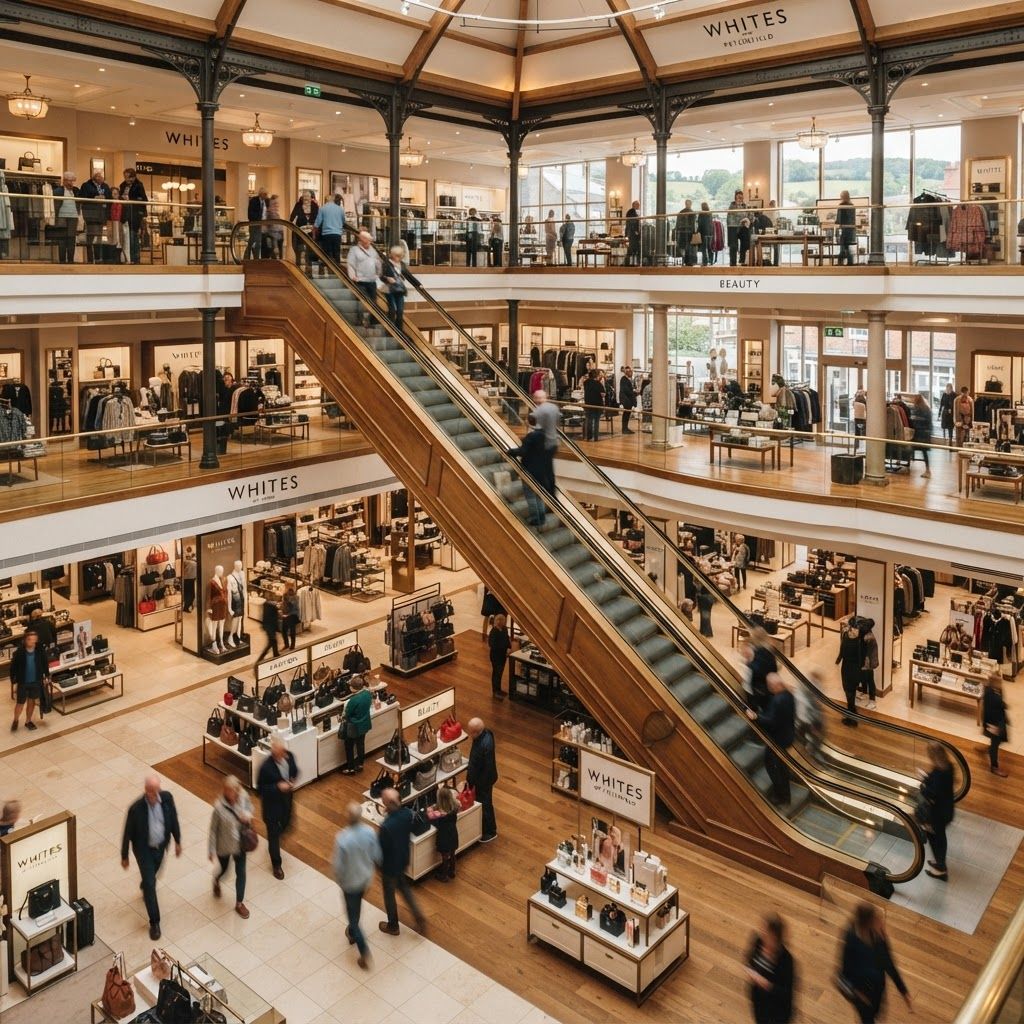
A Discerning Jewellery Market in Surrey
Elmbridge supports one of the more sophisticated jewellery markets outside central London. The borough's towns, Esher, Weybridge, Cobham, Walton-on-Thames and the surrounding villages, combine high household affluence with a population that travels widely and shops comparatively. That produces customers who understand quality, ask informed questions about provenance and treat significant jewellery purchases as considered investments rather than impulse buys.
The local market therefore spans several distinct segments. There are internationally recognised heritage houses bought for engagement rings and milestone occasions. There are contemporary British designers offering distinctive work at more accessible prices. There are independent workshops producing bespoke commissions. And there is a healthy trade in antique and estate jewellery, which appeals both for its character and its environmental credentials.
Understanding Jewellery Quality
Hallmarking is the essential starting point in the UK. Precious metal articles above specified weights must carry a hallmark from an assay office, indicating metal fineness, the sponsor's mark and the assay office. This is a legal requirement and a reliable verification of metal content. Any retailer unclear about hallmarking should prompt caution.
Diamond quality is assessed through the familiar framework of carat weight, colour, clarity and cut, though cut deserves substantially more weight than most buyers give it. A well-cut stone of modest colour and clarity outperforms a poorly cut stone with better paper grades, because cut determines how light returns to the eye. Independent certification from a recognised laboratory should accompany any significant diamond purchase.
Coloured gemstones require different assessment. Treatment disclosure is critical, as heating, filling, dyeing and irradiation are common and significantly affect value. Origin matters for certain stones, and reputable dealers document it.
Setting quality determines whether a piece survives daily wear. Examine claw thickness, how securely stones sit, solder joints and whether the piece is finished evenly on the reverse where it is less visible.
The Ten Best Jewellery Brands in Elmbridge
1. Cartier represents the apex of the heritage market, with designs that have remained desirable across a century. The house's craftsmanship standards, documentation and aftercare are exceptional, and pieces retain value remarkably well. For milestone purchases where permanence matters, few alternatives compare.
2. Tiffany and Co. combines instantly recognisable design with rigorous diamond standards, including cut grading criteria stricter than industry norms. The house's work on supply chain traceability, documenting the journey of newly sourced diamonds, has set a benchmark that competitors have followed.
3. Boodles offers British craftsmanship with a distinctive design language drawn from natural forms. As a family-run house, Boodles maintains close control over design and manufacture, and its bespoke service is particularly well regarded for engagement and commemorative pieces.
4. Mappin and Webb brings considerable heritage alongside a broad range covering engagement, fine jewellery and timepieces. The brand's expertise in classic diamond jewellery and its established aftercare service make it a dependable choice for significant purchases.
5. Monica Vinader occupies the contemporary accessible-luxury space, with recycled sterling silver and gold vermeil pieces, engraving services and a strong commitment to responsible sourcing. The brand's design sensibility, clean and stackable, suits everyday wear rather than occasion-only use.
6. Astley Clarke produces contemporary fine jewellery with a focus on coloured gemstones and delicate design. The brand's use of recycled precious metals and traceable stones appeals to buyers for whom ethical sourcing is a genuine requirement rather than a preference.
7. Pandora deserves inclusion for the accessible gifting market, offering hand-finished sterling silver pieces at prices that make jewellery giving routine rather than exceptional. The brand's transition to recycled silver and gold across its production is a substantial environmental commitment given its volume.
8. Links of London style contemporary British silversmiths and the independent designers working in that tradition supply Elmbridge with distinctive silver and mixed-metal pieces. This segment offers genuine design individuality at prices well below fine jewellery, and the craftsmanship in the better workshops is excellent.
9. Independent Bespoke Workshops across Cobham and Esher provide something the branded houses cannot: direct collaboration with the goldsmith making your piece. Commissioning bespoke work, or remodelling inherited jewellery into something wearable, delivers genuine individuality and often better value than comparable branded pieces.
10. Antique and Estate Jewellery Specialists complete the list. Georgian, Victorian, Art Deco and mid-century pieces offer craftsmanship that is difficult and expensive to reproduce today, alongside the strongest environmental credentials available in jewellery since no new mining is involved. Elmbridge's dealers are notably knowledgeable in this area.
Trends Reshaping the Jewellery Market
Lab-grown diamonds have transformed the mid-market, offering chemically identical stones at substantially lower prices. Opinion remains divided on long-term value retention, but the technology has undeniably expanded what buyers can afford and has pushed natural diamond suppliers towards better provenance documentation.
Traceability has become a mainstream expectation. Buyers increasingly ask where metals and stones originated, and brands able to answer specifically hold a clear advantage. Recycled precious metals are now standard across much of the industry.
Remodelling and repurposing inherited jewellery has grown considerably. Rather than keeping unworn pieces in drawers, customers commission goldsmiths to reset stones into contemporary designs, preserving sentimental value while producing something actually worn.
Everyday fine jewellery, delicate pieces designed to be worn continuously rather than reserved for occasions, continues to expand as a category, reflecting a broader shift away from formality.
Buying Jewellery Confidently
Always request independent certification for diamonds above meaningful sizes, and ensure the certificate comes from a recognised laboratory rather than the seller's own assessment. Verify hallmarks on precious metal items.
Consider the practicalities of daily wear. High settings catch on clothing, softer stones scratch, and certain designs are difficult to clean. A jeweller who raises these points is serving you well.
Arrange proper insurance valuation for significant pieces, updated periodically as metal and stone prices move. Keep documentation safely.
Finally, establish a relationship with a jeweller who offers ongoing care. Annual claw checks, professional cleaning and timely repair prevent the stone loss that accounts for most serious jewellery misfortunes.
Want your brand featured in front of decision-makers? Publish a guest post or get a link insertion in our guides through AAMAX's guest post and link insertion service.
Helpful Links
 SponsoredAAMAX — Full-Service Digital Agency
Write for Us
Share your expertise with our readers. We welcome guest contributions from industry specialists.
Pitch your idea