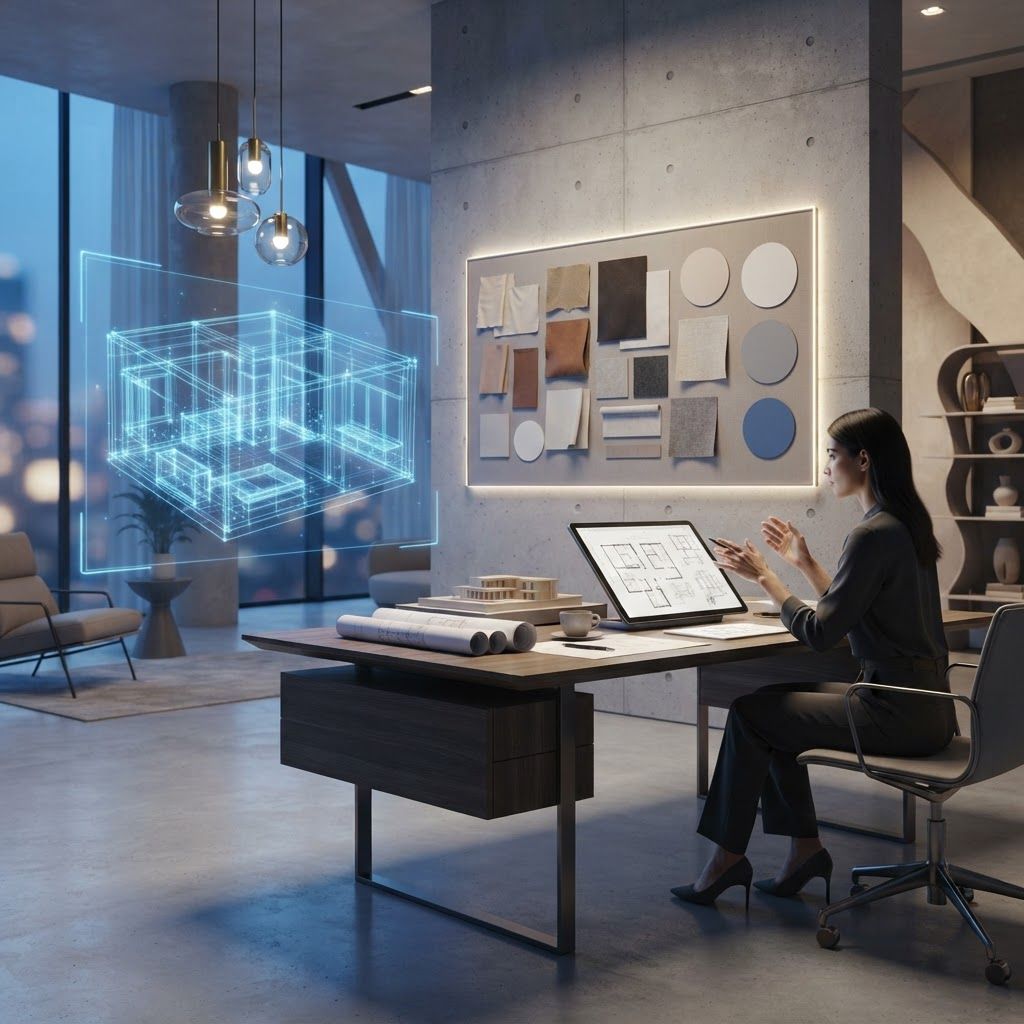
Designing Interiors in a Historic City
Interior design in Winchester is rarely a blank-canvas exercise. A significant proportion of the housing stock predates the twentieth century, and much of it sits within conservation areas or carries listed status. That imposes real constraints: alterations to layout, windows, fireplaces, staircases and joinery may require consent, and materials must often be specified to be breathable and reversible rather than simply attractive.
The best local designers treat these constraints as a creative discipline. They understand solid wall construction and the moisture implications of insulating it, they know why gypsum plaster and impermeable paint cause problems in lime-plastered buildings, and they can achieve contemporary comfort without stripping a building of the features that give it value.
At the same time, Winchester has a growing stock of well-built modern homes where the challenge is the opposite: bringing warmth, texture and character to spaces that can otherwise feel generic.
What Interior Designers Actually Provide
Full service design covers the entire project: initial briefing and budgeting, spatial planning, concept development, detailed specification of every finish and fitting, procurement, contractor coordination and final installation. The designer acts as author and project manager, and this is the appropriate route for significant renovations.
Design-only services produce drawings, schedules and specifications for the client or their builder to implement. It costs less and suits clients who want to manage delivery themselves.
Consultation services provide focused advice, typically over one or two sessions, on colour, layout, lighting or furniture. This is the most accessible entry point and often delivers disproportionate value.
Specialist services include kitchen and bathroom design, lighting design, window treatment and soft furnishing, and heritage advice for listed buildings.
Ten Interior Design Firms Serving Winchester
1. Cathedral Quarter Interiors
A design practice specialising in period property, Cathedral Quarter Interiors works extensively with listed and conservation area homes. Its projects characteristically balance historic fabric with contemporary function, introducing modern kitchens and bathrooms while preserving proportion, joinery and original detail. The practice maintains relationships with traditional craftspeople including plasterers, joiners and decorative specialists.
2. Itchen Design Studio
A full-service studio covering residential and small commercial work, Itchen Design Studio is known for interiors that feel layered and collected rather than newly decorated. Its approach favours natural materials, antique pieces mixed with contemporary furniture and carefully considered lighting schemes.
3. Wessex Heritage Interiors
Concentrating on country houses and substantial period properties, Wessex Heritage Interiors undertakes whole-house schemes over extended timescales. Its expertise includes fabric restoration, appropriate paint and plaster specification, and sourcing period-correct fittings alongside modern services discreetly integrated.
4. Southgate Contemporary Design
Working predominantly with modern and recently built homes, Southgate Contemporary Design brings a clean, architectural sensibility to residential interiors. Its strength lies in spatial planning, particularly in open-plan living where zoning, acoustics and lighting determine whether a large space feels generous or unfocused.
5. Downland Country Interiors
Serving rural properties across the South Downs fringe, Downland Country Interiors specialises in relaxed country schemes that avoid cliché. Projects often involve barn conversions and farmhouses, where the challenge is to make large volumes feel comfortable and to handle the practical realities of rural living including boot rooms, utility space and wood-burning heat.
6. Chalkhill Kitchen and Bathroom Design
A specialist practice focused on the two rooms that dominate renovation budgets, Chalkhill Kitchen and Bathroom Design handles detailed technical design including services coordination, ventilation, lighting and storage planning. Its schemes are developed around how clients actually cook and live rather than around showroom aesthetics.
7. Hyde Street Design Consultancy
Offering consultation-led services, Hyde Street Design Consultancy works with clients who want professional direction while managing their own projects. Typical engagements produce colour schemes, furniture layouts, lighting plans and supplier recommendations, giving homeowners a coherent framework to work within.
8. Kings Barton Home Design
Working with new build homeowners, Kings Barton Home Design helps clients personalise properties that arrive with neutral developer specifications. Services include specification upgrades chosen before completion, storage and joinery design, window treatments and complete furnishing schemes.
9. Abbey Gate Luxury Interiors
Operating at the top of the market, Abbey Gate Luxury Interiors delivers bespoke schemes with commissioned furniture, specialist finishes and original artwork. Projects are developed in close collaboration with clients over many months and typically involve architects, lighting consultants and specialist trades working in concert.
10. Winchester Colour and Light Studio
A boutique practice focused specifically on colour and lighting, Winchester Colour and Light Studio addresses the two elements that most transform a space for the least structural intervention. Its work is grounded in how natural light behaves in a particular room across the day and seasons, which produces far better results than selecting colours from a chart.
Trends Shaping Interior Design
Sustainability now influences specification decisions throughout a project. Clients increasingly ask about material provenance, embodied carbon, natural and low-toxicity finishes, and the repairability of furniture. Reupholstering good frames and restoring existing joinery are back in favour, both for environmental reasons and because quality older pieces are frequently better made than new equivalents.
Retrofit has become a mainstream design consideration. Designers working on period property are now routinely involved in insulation strategy, heating system replacement and ventilation, because these decisions affect layout, finishes and the long-term health of the building fabric.
Multifunctional space remains a dominant requirement. Home offices, guest accommodation, exercise space and quiet rooms all compete for the same square footage, and skilled designers resolve this through joinery, flexible furniture and clever zoning rather than by extending.
Working Successfully With a Designer
Begin with an honest budget. Designers can work at almost any level provided they know the constraint from the outset, and a realistic figure produces a better result than an aspirational one that unravels mid-project.
Review portfolios for range rather than a single signature look. A designer who has produced excellent work across different periods and styles is more likely to respond to your home and your life than to impose a template.
Clarify fee structure early, whether fixed fee, percentage of project cost or hourly rate, and understand how procurement and trade discounts are handled. Finally, allow proper time. Good design involves iteration, and the projects that disappoint are almost always the ones that were rushed.
Want your brand featured in front of decision-makers? Publish a guest post or get a link insertion in our guides through AAMAX's guest post and link insertion service.
Helpful Links
 SponsoredAAMAX — Full-Service Digital Agency
Write for Us
Share your expertise with our readers. We welcome guest contributions from industry specialists.
Pitch your idea