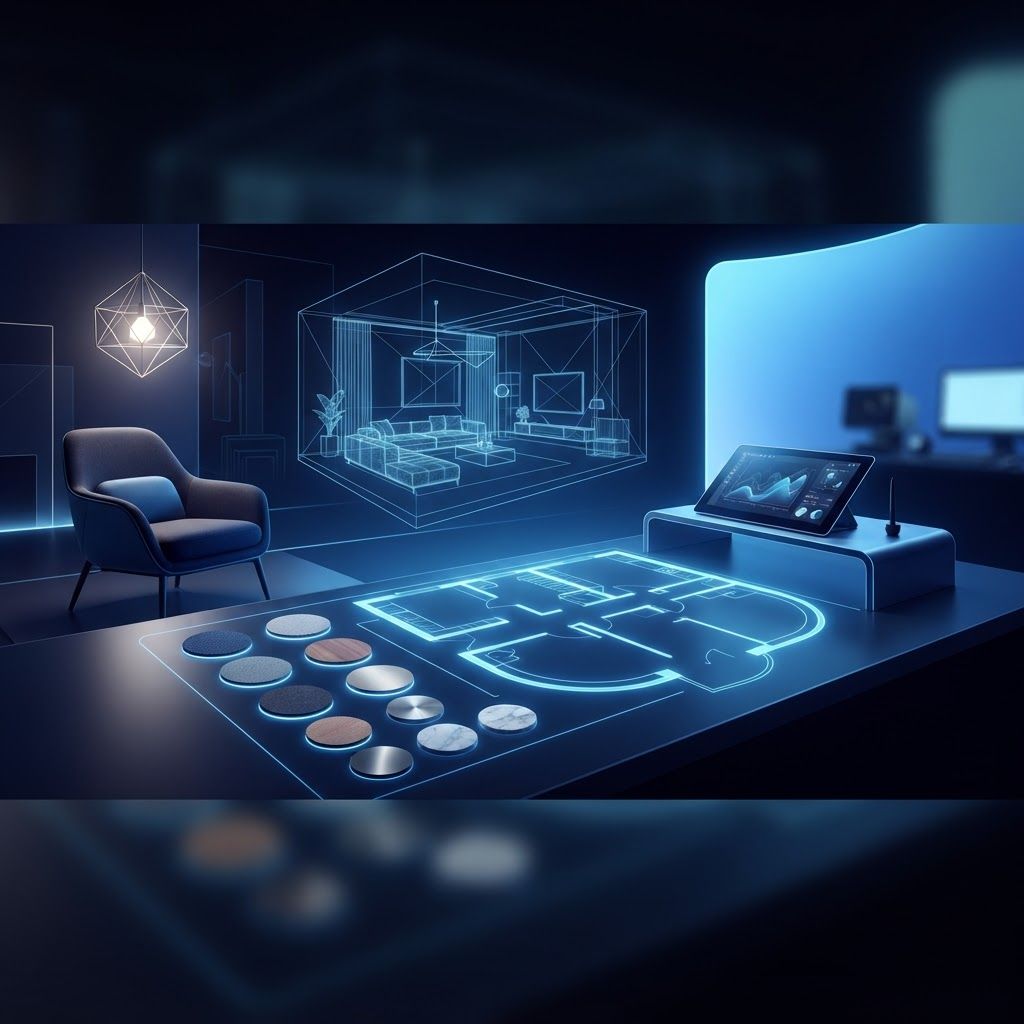
Designing for Kent's Architectural Mix
Interior design in Tonbridge and Malling is shaped by the housing stock, and that stock is remarkably diverse. Within a few miles you will find Kentish ragstone cottages, timber framed Wealden houses, Victorian terraces, oast house conversions with their distinctive circular rooms, Georgian townhouses in West Malling, mid-century suburban homes and contemporary new-build estates at Kings Hill.
Each demands a different approach. A Grade II listed cottage requires an understanding of what can and cannot be altered, appropriate materials and a light touch that respects original fabric. An oast conversion needs solutions for curved walls, awkward floor plates and dramatic ceiling heights. A new-build needs character introduced into rooms that arrive with none. Designers who work well across the borough are those comfortable moving between these registers rather than applying a single signature style.
Ten Interior Design Options Across the Borough
Independent interior design studios based in Tonbridge and Tunbridge Wells form the backbone of the local market, typically offering full service design from concept through procurement to installation for residential clients.
Period property specialists working across the Weald focus on listed and historic buildings, bringing knowledge of breathable materials, conservation consent and appropriate detailing that a general designer may lack.
Kitchen design specialists in the area handle what is usually the largest single design investment in a home, combining spatial planning, cabinetry specification and appliance integration.
Bathroom design companies similarly provide focused expertise on a room where waterproofing, ventilation and layout constraints make professional input genuinely valuable.
Architectural and interior practices offering combined services suit clients undertaking extensions or reconfigurations, because the interior logic and the structural work are developed together rather than sequentially.
Soft furnishing and curtain makers across west Kent deliver the bespoke window treatments and upholstery that finish a scheme, particularly important in period properties with non-standard openings.
Show home and developer design teams at Kings Hill demonstrate a distinct commercial discipline, creating aspirational interiors within tight budgets and timescales.
Commercial interior designers serving offices, hospitality and retail in the borough apply different priorities around durability, compliance and brand expression.
E-design and online consultation services provide affordable access to professional input for clients who will manage implementation themselves, typically delivering mood boards, layouts and shopping lists.
Local furniture makers and craftspeople complete the picture, producing bespoke joinery and pieces that make the most of irregular period spaces where standard furniture simply does not fit.
How a Design Project Typically Runs
Most projects begin with a briefing and site visit, where the designer establishes how you actually live, what frustrates you about the current space, your budget and your timescale. Honesty at this stage saves considerable expense later.
Concept design follows, usually presented as mood boards, sample materials and outline layouts. This is the moment to be direct about dislikes. Designers expect and welcome critical feedback early, when changes cost nothing.
Detailed design produces the working information: dimensioned plans, elevations, lighting layouts, electrical positions, finishes schedules and furniture specifications. Lighting in particular is where amateur projects most often fall down, because decisions about circuits and switch positions must be made before plastering.
Procurement and project management cover ordering, tracking lead times and coordinating trades. Bespoke furniture and specialist finishes can carry long lead times, and a designer who plans around them prevents the common scenario of a finished room waiting months for a sofa.
Installation and styling complete the process, with the designer dressing the space and resolving the final details that make a scheme feel considered rather than merely assembled.
Budgeting Realistically
Designers charge in several ways: a fixed project fee, an hourly or daily rate, a percentage of project cost, or a hybrid. Each has merits. Fixed fees give certainty, hourly rates suit smaller advisory engagements, and percentage fees align designer and client on quality but require clarity about what the percentage applies to.
Expect the design fee to represent a modest fraction of total spend, with the bulk going to trades, materials, joinery and furniture. Build in a contingency of at least ten to fifteen percent, higher for period properties where opening up walls routinely reveals surprises. In a Victorian terrace or a timber framed cottage, discovering unexpected structural, damp or wiring issues is normal rather than exceptional.
Current Directions in Local Interiors
Several themes recur in the borough's recent projects. There is a clear move toward natural and tactile materials, with timber, stone, linen and wool preferred over high gloss synthetic finishes, which suits the rural setting. Colour has returned after years of grey neutrality, with deep greens, clay tones and heritage shades particularly popular in period homes.
Multifunctional space remains a priority following the normalisation of home working. Well designed study areas integrated into living space, with proper lighting, acoustic consideration and storage, are now a standard part of most residential briefs.
Sustainability has also moved into the mainstream, expressed through reclaimed materials, furniture restoration, low VOC finishes and specifying quality pieces intended to last rather than cheap items due for replacement in five years.
Final Thoughts
Good interior design in Tonbridge and Malling is a response to a specific building in a specific landscape, not a template imported from elsewhere. Choose a designer whose previous work shows range rather than repetition, be clear about budget from the outset, and give the process enough time. The best interiors in the borough look inevitable, which is always the result of decisions made carefully rather than quickly.
Want your brand featured in front of decision-makers? Publish a guest post or get a link insertion in our guides through AAMAX's guest post and link insertion service.
Helpful Links
 SponsoredAAMAX — Full-Service Digital Agency
Write for Us
Share your expertise with our readers. We welcome guest contributions from industry specialists.
Pitch your idea