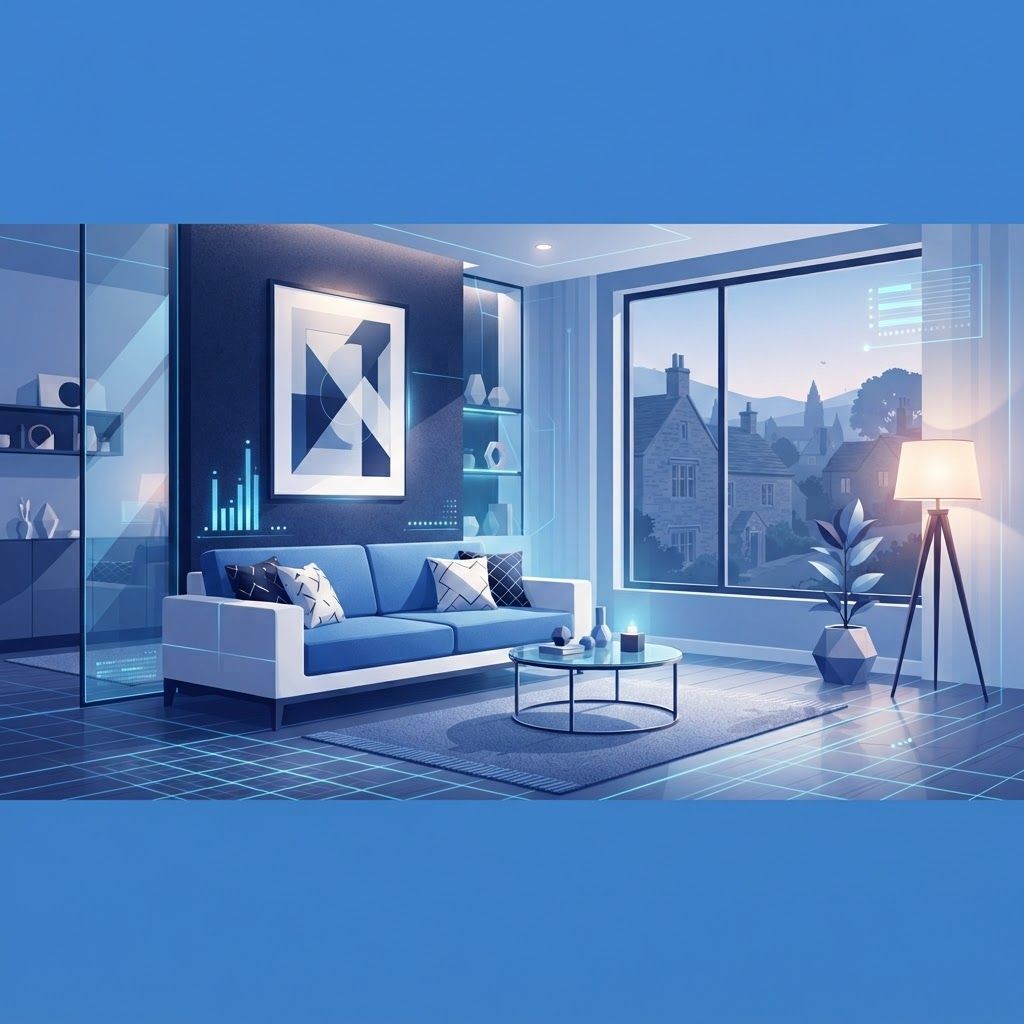
Why Teignbridge Has Become a Quietly Confident Design District
Teignbridge covers an unusually varied slice of Devon. Within a thirty-minute drive you can move from the pastel terraces of Teignmouth and Dawlish to the granite-and-cob vernacular of Moretonhampstead and Ashburton, then out to the fast-growing suburbs of Newton Abbot and Kingsteignton. That range has shaped the district's interior design profession in a particular way. Studios here rarely specialise in a single look, because a single look would not survive the journey from a listed cottage on the edge of Dartmoor to a contemporary apartment overlooking the Teign estuary.
The result is a design community that leans on adaptability, material literacy and a genuine understanding of local building stock. Designers working in this part of Devon need to know how lime plaster behaves, why a solid-wall cottage must breathe, how salt air degrades coastal joinery, and what a conservation officer will and will not accept in a Grade II property. Those are not decorative concerns. They are the technical foundations that separate a scheme that looks good in a mood board from one that still looks good after five winters.
What Separates the Leading Firms
The strongest practices in Teignbridge tend to share four traits. The first is a properly structured process: measured survey, concept development, detailed design, procurement schedules and site supervision, each with clear deliverables. The second is supply chain depth. Devon has an exceptional network of cabinetmakers, upholsterers, stone masons and metalworkers, and established studios maintain long relationships with them, which translates into better lead times and fewer compromises. The third is contract administration competence, because most projects of any size involve builders, electricians and sometimes structural engineers who all need coordinated information. The fourth is restraint. Good local designers know when a room needs an intervention and when it simply needs better lighting and a sensible furniture plan.
The Ten Studios Defining Local Interiors
Teign Valley Interiors has built a reputation around full-service residential work in Newton Abbot and the surrounding villages. Their calling card is the whole-house renovation: kitchens, bathrooms, joinery and decoration handled as one coordinated package rather than a series of disconnected trades. Clients tend to praise the clarity of their specification documents, which reduce the guesswork that so often inflates building costs.
Estuary Design Studio focuses on coastal properties across Teignmouth, Shaldon and Dawlish. Their work is characterised by light-handling: reconfiguring window reveals, using pale reflective finishes, and orienting living spaces toward the water. They are also unusually well informed about marine-grade finishes and moisture control, which matters enormously in seafront properties.
Moorland House Interiors operates largely on the Dartmoor fringe, in and around Bovey Tracey, Chudleigh and Moretonhampstead. Their speciality is sympathetic modernisation of period stone and cob buildings, combining underfloor heating and modern insulation strategies with traditional materials that allow old walls to function as they were designed to.
Ashburton Atelier is a smaller practice with a craft-led philosophy. They commission bespoke pieces from Devon makers and build schemes around a handful of strong objects rather than a comprehensive product list. It is a slower way of working that suits clients who want something genuinely individual.
Kingsteignton Interior Concepts serves the district's newer housing stock, where the design challenge is different: adding warmth, texture and spatial definition to open-plan layouts that can feel undifferentiated. Their zoning strategies, joinery inserts and layered lighting schemes address that directly.
Dawlish Design House works across residential and small commercial projects, including holiday lets and guest accommodation. They understand the commercial dimension of coastal interiors, where durability, cleaning cycles and photographic appeal all influence material selection.
Newton Abbot Design Collective brings together several independent designers under one umbrella, allowing them to take on larger mixed-use and commercial projects while keeping the personal service of a small studio. Retail fit-outs, offices and hospitality spaces feature heavily in their portfolio.
Chudleigh Home Studio offers a lighter-touch service aimed at clients who want expert direction without a full project management commitment. Colour consultations, furniture plans and material schedules are delivered as standalone packages, which suits homeowners managing their own builders.
Shaldon Interiors Workshop combines design with in-house making, producing fitted furniture, window seats and bespoke storage in their own workshop. Controlling fabrication internally gives them unusual precision in awkward period spaces where nothing is square.
Haldon Design Partnership takes on the district's larger and more technically complex commissions, frequently working alongside architects and structural engineers on extensions and conversions. Their strength is integration, ensuring the interior scheme is resolved before construction rather than retrofitted afterwards.
Trends Shaping Devon Interiors
Several currents are visible across Teignbridge projects. Retrofit is dominant: rather than extending, many homeowners are improving what they already have, with insulation, glazing and heating upgrades folded into design schemes. Natural and low-impact materials continue to gain ground, with clay paints, timber, wool and stone chosen partly for performance in older buildings and partly for environmental reasons.
Multifunctional space is another constant. Home working has not receded, and designers are routinely asked to carve genuine workspaces out of landings, box rooms and understairs voids. Meanwhile, colour has become bolder. The pale coastal neutrals that dominated a decade ago are giving way to deeper greens, clay tones and saturated blues that hold up better in Devon's soft, often overcast light.
How to Choose the Right Firm
Start by matching the studio to the building. A practice that excels at contemporary open-plan work may not be the right choice for a listed cob cottage, and vice versa. Ask to see completed projects in comparable properties, and ideally speak to a previous client about how the studio handled problems rather than how it handled the easy parts.
Be clear about scope from the outset. Interior design services range from a single consultation to full project management, and misaligned expectations about scope are the most common source of friction. Establish whether the designer will be on site during construction, who is responsible for ordering and storing goods, and how variations will be priced.
Finally, interrogate the budget conversation early. Reputable Teignbridge firms will talk openly about realistic costs at the first meeting and will build a contingency into the plan. A designer who avoids the numbers until the design is complete is rarely doing the client a favour.
Final Thoughts
Teignbridge's interior design sector is small but genuinely skilled, and its best practitioners are distinguished less by a signature style than by their fluency across building types. Whether the project is a seafront apartment, a moorland farmhouse or a new-build family home, the district offers studios with the technical grounding and supplier relationships to deliver work that lasts.
Want your brand featured in front of decision-makers? Publish a guest post or get a link insertion in our guides through AAMAX's guest post and link insertion service.
Helpful Links
 SponsoredAAMAX — Full-Service Digital Agency
Write for Us
Share your expertise with our readers. We welcome guest contributions from industry specialists.
Pitch your idea