

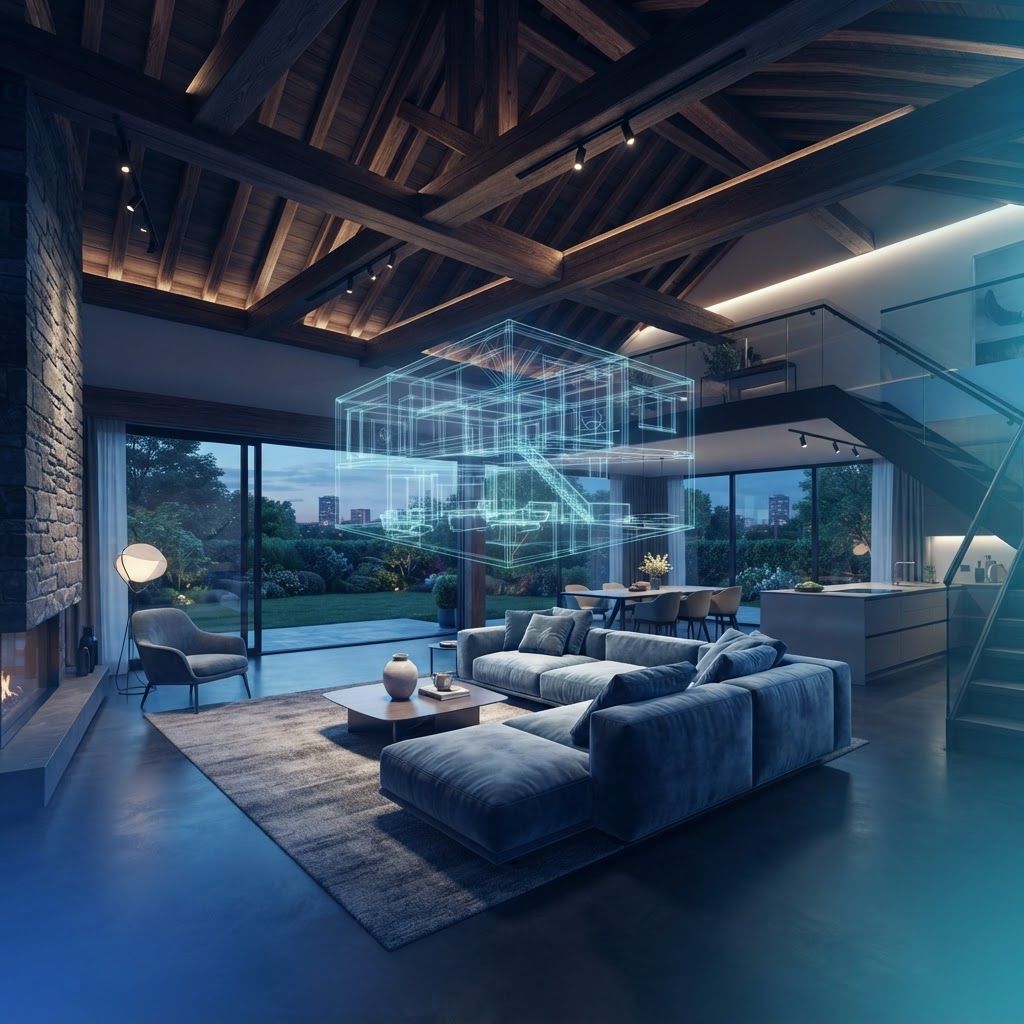
Why South Cambridgeshire Has Become a Design Hotspot
South Cambridgeshire is an unusual place to practise interior design. Within a twenty minute drive you can pass a Grade II listed cottage in Grantchester, a barn conversion outside Fulbourn, a research campus at Babraham and an ultra-insulated new build on the edge of Cambourne. Designers working here cannot rely on a single house style. They need to understand conservation constraints, the realities of Passivhaus airtightness, and the tastes of a client base that includes academics, life-science founders, farming families and London commuters who have swapped a terrace in Islington for an acre of Cambridgeshire garden.
The result is a design community that is technically literate as well as visually confident. Local studios routinely coordinate with structural engineers, heritage consultants and planning officers, and many now specify low-carbon materials as standard rather than as an upgrade. If you are commissioning work in the district, understanding what each firm does best will save you months.
The Ten Firms Shaping Interiors Across the District
1. Granta House Interiors works predominantly on period property in the villages along the Cam and the Granta. Their strength is restrained restoration: replacing unsympathetic 1980s alterations, reinstating cornice profiles, and layering in contemporary lighting and heating without visual clutter. Clients typically cite their patience with listed building consent as the reason they were hired.
2. Cavendish Studio takes the opposite position. The practice is known for confident, gallery-like modern interiors in new-build and heavily extended homes around Cambourne, Northstowe and Great Shelford. Expect polished microcement, wide-plank engineered oak, concealed joinery and carefully controlled palettes of three or four tones.
3. Barn and Brick Design specialises in agricultural conversions, a building type that is abundant in the district. Converting a former grain store or cart lodge into a home involves particular problems, such as enormous unbroken volumes, limited window openings and cold thermal mass. This studio is known for mezzanine planning and for using steel, reclaimed timber and lime plaster in ways that respect the original structure.
4. Ely Road Interiors serves the northern villages and has built a reputation on family-focused design. Their projects prioritise durability and storage: boot rooms that genuinely cope with muddy boots, utility spaces planned around dog washing, and kitchens designed for homework as much as for entertaining.
5. Orchard Lane Design is a small, highly personal studio that offers full turnkey delivery. Because the team keeps its caseload deliberately low, clients tend to work with the same designer from concept sketches through to the day the artwork is hung. This suits homeowners who want one point of accountability.
6. Trumpington Design Collective operates as a group of associated specialists covering interiors, lighting design and landscape. The collective model works well on larger renovations where the relationship between inside and garden matters, which is common in properties with generous plots on the southern edge of the district.
7. Fenland Contemporary focuses on colour. In a market that often defaults to warm neutrals, this studio has carved out a niche with saturated, layered schemes: deep greens in snugs, ochre and clay in hallways, and bold papered ceilings. They work extensively with independent British makers.
8. Sawston Interior Architecture sits at the technical end of the profession. The team produces full construction drawing packages, coordinates with structural engineers and is frequently appointed on projects involving significant remodelling, such as removing a spine wall or reconfiguring a staircase.
9. Willow and Wold is a sustainability-led practice. Their specification favours natural insulation, breathable finishes, solid timber joinery and refurbished or antique furniture over newly manufactured pieces. For owners of solid-wall period homes, their understanding of moisture management is genuinely valuable.
10. Hinxton Commercial Interiors serves the district's substantial commercial base, including laboratory offices, biotech workplaces, village practices and hospitality venues. Their work covers wayfinding, acoustic treatment, breakout design and the flexible layouts that research-led occupiers increasingly demand.
Trends Defining Local Interiors
Three themes dominate current briefs. The first is energy performance. Rising running costs have pushed insulation, glazing upgrades and heat pump integration into conversations that used to be purely decorative, and good designers now plan interiors around larger radiators, cylinder cupboards and slower, steadier heat.
The second is the multipurpose room. Hybrid working is deeply embedded in this part of England, and the dedicated study has evolved into something more sophisticated: acoustically considered, properly lit for video calls, and capable of closing itself off from family life at the end of the day.
The third is provenance. Clients increasingly ask where materials come from, who made the joinery, and whether existing furniture can be reupholstered rather than replaced. Studios that maintain relationships with regional cabinetmakers, upholsterers and metalworkers have a clear advantage.
How to Choose the Right Studio
Start by matching the firm to the building rather than to the prettiest portfolio. A studio that excels at minimalist new builds may be the wrong choice for a seventeenth-century cottage with uneven floors and a protected chimney breast. Ask directly about experience with your property type and, if relevant, with the local conservation process.
Clarify the service level before discussing money. Concept-only packages, design plus procurement, and full project management with site supervision carry very different fees and very different demands on your time. Confusion here is the most common source of disappointment.
Finally, test communication. Ask how often you will receive updates, who attends site meetings, and how variations are priced and approved. A designer who answers those questions crisply at the enquiry stage will almost certainly manage your project the same way.
Final Thoughts
South Cambridgeshire rewards designers who can hold two ideas at once: respect for a long architectural history and fluency in modern construction. The ten firms above approach that balance from different directions, from heritage restoration to laboratory-adjacent workplace design. Shortlist three, visit completed work where possible, and choose the team whose questions about your home are sharper than your own.
Want your brand featured in front of decision-makers? Publish a guest post or get a link insertion in our guides through AAMAX's guest post and link insertion service.
Helpful Links
 SponsoredAAMAX — Full-Service Digital Agency
Write for Us
Share your expertise with our readers. We welcome guest contributions from industry specialists.
Pitch your idea

