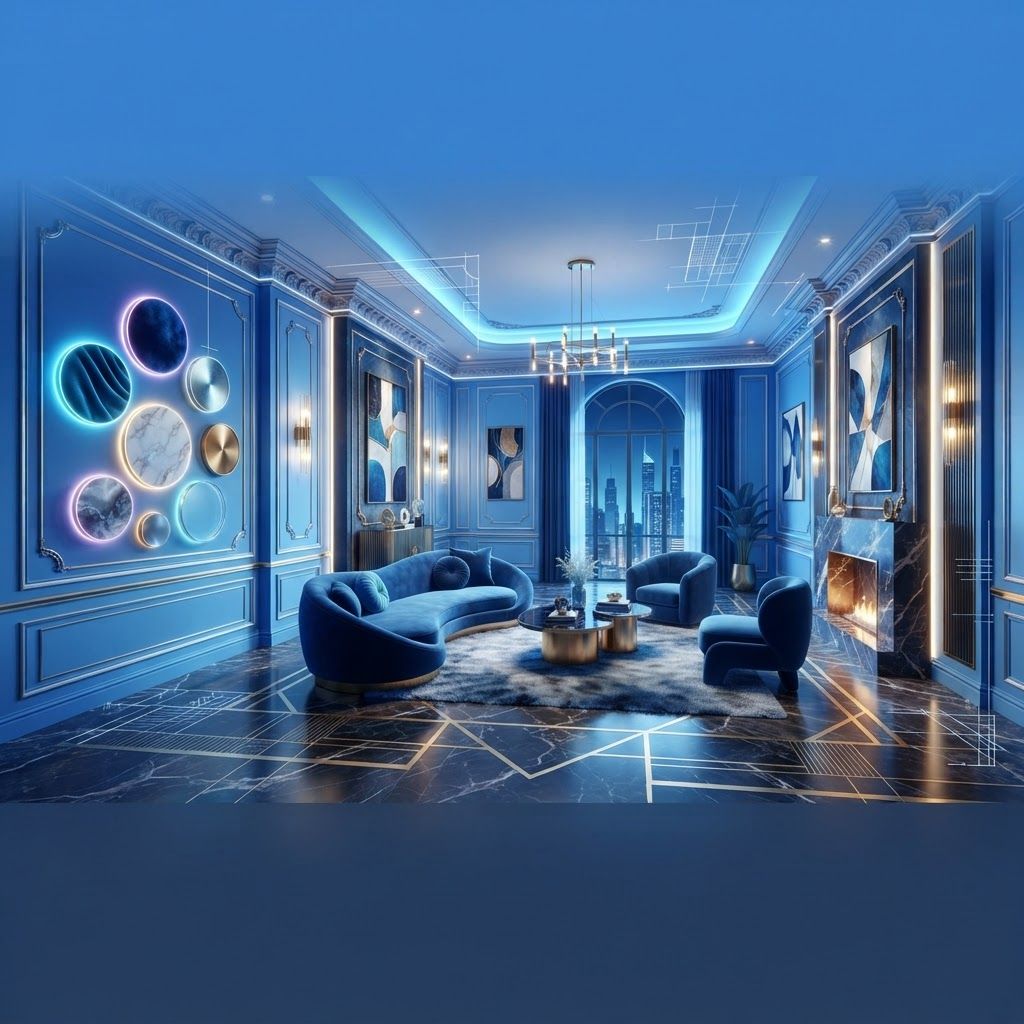
The Design Capital Within a Capital
Few square miles anywhere in the world contain as much interior design expertise as Kensington and Chelsea. The Design Centre at Chelsea Harbour brings together a vast concentration of fabric houses, furniture makers, lighting specialists and antique dealers under one roof. Pimlico Road, just beyond the borough boundary but firmly within the same ecosystem, is a global centre for antiques and bespoke furniture. The King's Road and Fulham Road host showrooms for kitchen, bathroom, joinery and textile brands.
Around this infrastructure sits a dense population of design studios ranging from internationally renowned practices to small ateliers with a handful of clients. What they share is access: to craftsmen, to materials, to trade-only suppliers and to the specialist contractors capable of working on listed and conservation-area buildings without causing damage or planning difficulty.
Ten Interior Design Firms with Strong Borough Presence
Sophie Paterson Interiors is known for refined, layered residential schemes with a strong sense of comfort and a recognisable palette of soft neutrals and tactile materials, widely admired for family houses in West London.
Kelly Hoppen Interiors remains one of the most recognised British design names internationally, with a signature approach built on neutral tones, textural contrast and disciplined symmetry, applied across residential and hospitality projects.
Nicky Haslam Studio brings a distinctly English, wit-inflected classicism to grand interiors, with decades of experience in period houses and a deep understanding of how historic rooms should be proportioned and furnished.
Sims Hilditch specialises in a relaxed English country aesthetic translated into town settings, particularly effective in family houses where formality would feel unwelcoming.
Studio Ashby is celebrated for colour confidence, contemporary art curation and a modern approach to historic architecture, appealing to clients who want personality rather than a neutral scheme.
Taylor Howes delivers high-specification luxury interiors with substantial technical capability, handling complex projects that include structural reconfiguration, integrated technology and bespoke joinery.
Finchatton operates at the intersection of design and development, producing highly finished prime residential interiors with a strong understanding of resale value in central London.
Katharine Pooley is known for ambitious, richly detailed schemes drawing on international influences and exceptional craftsmanship, suited to clients commissioning landmark projects.
Turner Pocock produces fresh, characterful interiors with a practical family focus, well regarded for balancing design ambition with everyday liveability.
Boutique local studios across Chelsea and Notting Hill complete the picture. Many of the borough's best projects are delivered by small practices of three or four people working almost entirely by referral, offering principal-level attention throughout.
How Interior Design Projects Are Structured
Most practices work through recognisable stages. Concept design establishes the direction through mood boards, spatial planning and initial material selections. Developed design resolves the scheme into detailed drawings, elevations, joinery designs and a specification. Technical design produces the information contractors build from. Procurement covers ordering furniture, fabrics and fittings. Installation and styling complete the project.
Fee structures vary. Some firms charge a percentage of total project value, some a fixed fee based on scope, some an hourly rate, and many combine approaches, with a fixed design fee plus a procurement margin or management fee. What matters is clarity: ask explicitly whether trade discounts are passed on, retained, or shared, because on a large furnishing budget this is a significant sum.
Working With Period and Listed Buildings
The borough's architecture imposes real constraints. Listed building consent is required for works affecting the character of a listed property, internally as well as externally, and that includes items owners often assume are cosmetic, such as removing panelling, altering fireplaces or changing window arrangements. Conservation area rules govern external alterations.
Practical challenges recur. Services routing through solid masonry walls without damaging historic plaster requires careful planning. Underfloor heating beneath original boards demands the right build-up. Improving thermal and acoustic performance while retaining sash windows usually means secondary glazing rather than replacement. Basement excavation, common in the borough, is heavily regulated and requires structural and party wall expertise.
A designer's value here extends well beyond aesthetics. Choosing a practice that has demonstrably delivered projects in comparable buildings, and that has established relationships with conservation-literate contractors, prevents expensive mistakes.
Current Design Directions
Several trends are visible across recent borough projects. There is a decisive move away from all-grey neutrality towards warmer, richer palettes with deeper colour on joinery and walls. Natural materials, including unlacquered brass, limewash finishes, stone and solid timber, are favoured for the way they age rather than for immediate perfection.
Practical zoning has become important, with clients requesting properly designed home working space, boot rooms and utility areas rather than treating these as leftovers. Wellness features, from steam rooms to well-considered lighting design that supports circadian rhythm, appear increasingly in briefs.
Sustainability has moved from a marginal concern to a mainstream conversation, covering material provenance, reuse of existing furniture, antique and vintage sourcing, and improving the thermal performance of the building fabric.
How to Choose and Brief a Designer
Look for a portfolio that resonates rather than one that merely impresses, because you will live with the result. Meet the person who will actually run your project, not only the founder. Ask for references from clients whose projects completed at least a year ago, so you hear about durability and after-care as well as the installation.
Brief thoroughly. Share your budget honestly, because a designer working without a real number will either overspecify or waste time. Describe how you actually live, including entertaining habits, children, pets, storage needs and any accessibility requirements. Agree a realistic programme, remembering that bespoke joinery and imported fabrics carry long lead times.
Final Thoughts
Kensington and Chelsea offers access to design talent and craftsmanship that few places can match, and the borough's buildings reward investment in doing things properly. Choose a practice whose aesthetic you genuinely love and whose technical experience matches your building's constraints, agree fees and scope in writing, and allow the programme the time that quality work requires.
Want your brand featured in front of decision-makers? Publish a guest post or get a link insertion in our guides through AAMAX's guest post and link insertion service.
Helpful Links
 SponsoredAAMAX — Full-Service Digital Agency
Write for Us
Share your expertise with our readers. We welcome guest contributions from industry specialists.
Pitch your idea