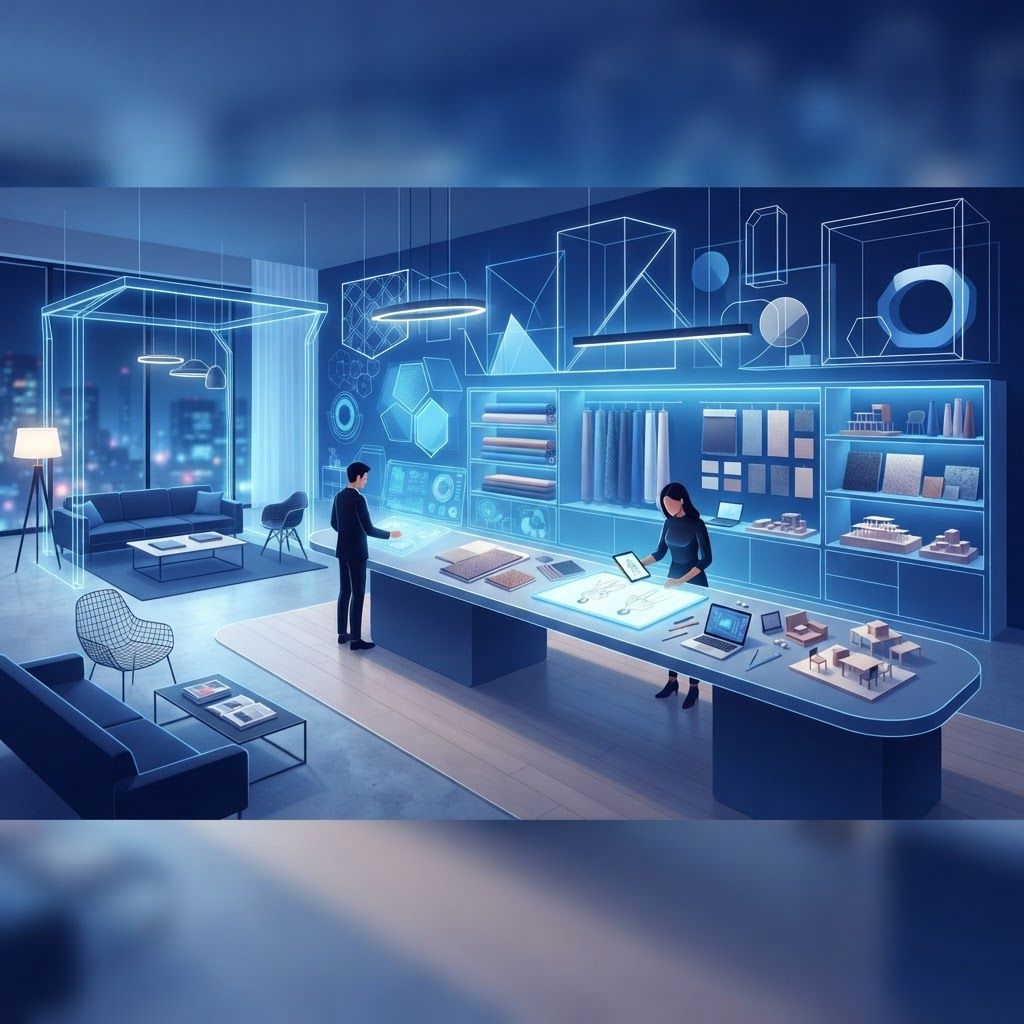
The Interior Design Landscape in Ipswich
Ipswich presents interior designers with an unusually varied brief. The town contains medieval and Tudor fabric, a substantial stock of Victorian and Edwardian housing, mid-century suburban estates and a modern waterfront of converted maltings and new-build apartments. Beyond the town, Suffolk's villages add timber-framed cottages, Georgian rectories and barn conversions. A designer working here needs to move comfortably between conservation-sensitive restoration and clean contemporary work.
Demand has grown steadily as homeowners invest in improving rather than moving, and as commercial clients in hospitality, retail and workspace recognise that design directly influences trading performance. The following ten practices and practice types cover the range of design services available in and around the town.
1. Established Suffolk Residential Design Practices
The county's leading residential studios offer full design services from concept to completion: space planning, detailed drawings, material and finish specification, bespoke joinery design, furniture procurement and installation. Clients typically engage them for whole-house projects or significant extensions. Their strength is coordination, managing the relationship between architect, builder and client so that decisions are made in the right order and nothing is specified too late.
2. Period Property and Conservation Specialists
Working on listed buildings in and around Ipswich requires knowledge of breathable construction, lime plaster, appropriate paint systems and the consent process. Specialists in this field advise on sympathetic interventions that improve comfort and efficiency without damaging historic fabric. For owners of timber-framed or Georgian properties, engaging a designer who understands these constraints prevents costly mistakes and consent difficulties.
3. Waterfront and Apartment Design Studios
The Ipswich Waterfront's apartments present different challenges: open-plan layouts, limited storage, large glazed elevations and acoustic considerations. Studios that focus on this stock excel at integrated storage, zoning open spaces without building walls, and managing light and glare. Their work tends to be contemporary, material-led and highly practical.
4. Kitchen and Bathroom Design Specialists
Kitchen and bathroom studios in Ipswich offer design-led services that go well beyond supplying units. Good ones start with how the household actually cooks, entertains and stores things, then resolve services, ventilation, lighting layers and worktop ergonomics. Because these two rooms absorb the largest share of most renovation budgets, specialist input usually repays itself in avoided errors.
5. Commercial and Hospitality Fit-Out Designers
Ipswich's restaurants, cafés, bars and hotels compete partly on atmosphere. Commercial designers handle brand translation, durability specification, compliance with fire and accessibility regulations, and layouts that maximise covers without feeling cramped. Their briefs are commercial rather than personal: the measure of success is dwell time, spend per head and staff efficiency.
6. Workplace and Office Interior Consultancies
With hybrid working reshaping demand, workplace designers in the region focus on making offices worth travelling to. That means collaboration zones, quiet focus rooms, better acoustics, improved lighting and inclusive design. Practices serving Ipswich businesses often combine space planning with furniture procurement and phased installation to avoid disrupting operations.
7. E-Design and Remote Consultation Services
A growing number of Suffolk designers offer online packages: the client supplies measurements and photographs, and receives mood boards, a layout plan, a shopping list and guidance. This model has opened professional design to homeowners with modest budgets or single-room projects. It requires more client involvement in execution, but the cost difference is substantial.
8. Soft Furnishing and Curtain Makers
Traditional curtain makers and upholsterers around Ipswich provide bespoke window treatments, blinds, cushions, headboards and reupholstery. Working with a maker rather than buying ready-made matters in period properties where windows are rarely standard sizes. These businesses often collaborate with designers but also work directly with homeowners.
9. Colour and Lighting Consultants
Specialist consultants address the two elements that most often undermine otherwise good interiors. Colour consultants test paint in the actual light of the room across the day, which matters in Suffolk where east-coast light is notably clear and cool. Lighting designers plan layered schemes with ambient, task and accent circuits, dimming control and correct colour temperature, transforming how a finished space feels.
10. Architectural Practices With Interiors Teams
Several Ipswich architectural practices offer interiors alongside building design. The advantage of a single appointment is continuity: structural decisions, window positions, service routes and interior detailing are resolved together rather than negotiated after the fact. For extensions and new builds, this integrated approach usually produces the most coherent result.
How Interior Designers Charge
Fee structures fall into four broad models: a fixed fee for a defined scope, an hourly or daily rate for consultancy, a percentage of the overall project cost, or a cost-plus arrangement where the designer procures goods at trade prices and adds a margin. Each is legitimate. What matters is that the basis is written down clearly, along with what triggers additional fees, how procurement is handled and who holds responsibility for site coordination.
Writing a Brief That Works
The most productive briefs describe how you live rather than what you want to buy. Explain who uses each room, at what time of day, and what currently frustrates you. Be honest about budget from the first meeting, because a designer can only make good decisions within a real constraint. Collect images of interiors you dislike as well as ones you admire, since negative examples often communicate more precisely than positive ones.
Trends Shaping Suffolk Interiors
Regional taste has moved towards natural materials, tactile finishes and colour drawn from the local landscape: muted greens, chalky neutrals, estuary blues and warm clay tones. Reclaimed and locally sourced timber remains popular, partly for sustainability and partly for character. Broken-plan layouts, which retain openness while providing acoustic separation, are replacing fully open-plan ground floors. Energy performance has become a design consideration rather than an engineering afterthought, with insulation, glazing and heating strategy discussed at concept stage. Above all, clients increasingly want interiors that feel specific to Suffolk rather than reproducible anywhere.
Want your brand featured in front of decision-makers? Publish a guest post or get a link insertion in our guides through AAMAX's guest post and link insertion service.
Helpful Links
 SponsoredAAMAX — Full-Service Digital Agency
Write for Us
Share your expertise with our readers. We welcome guest contributions from industry specialists.
Pitch your idea