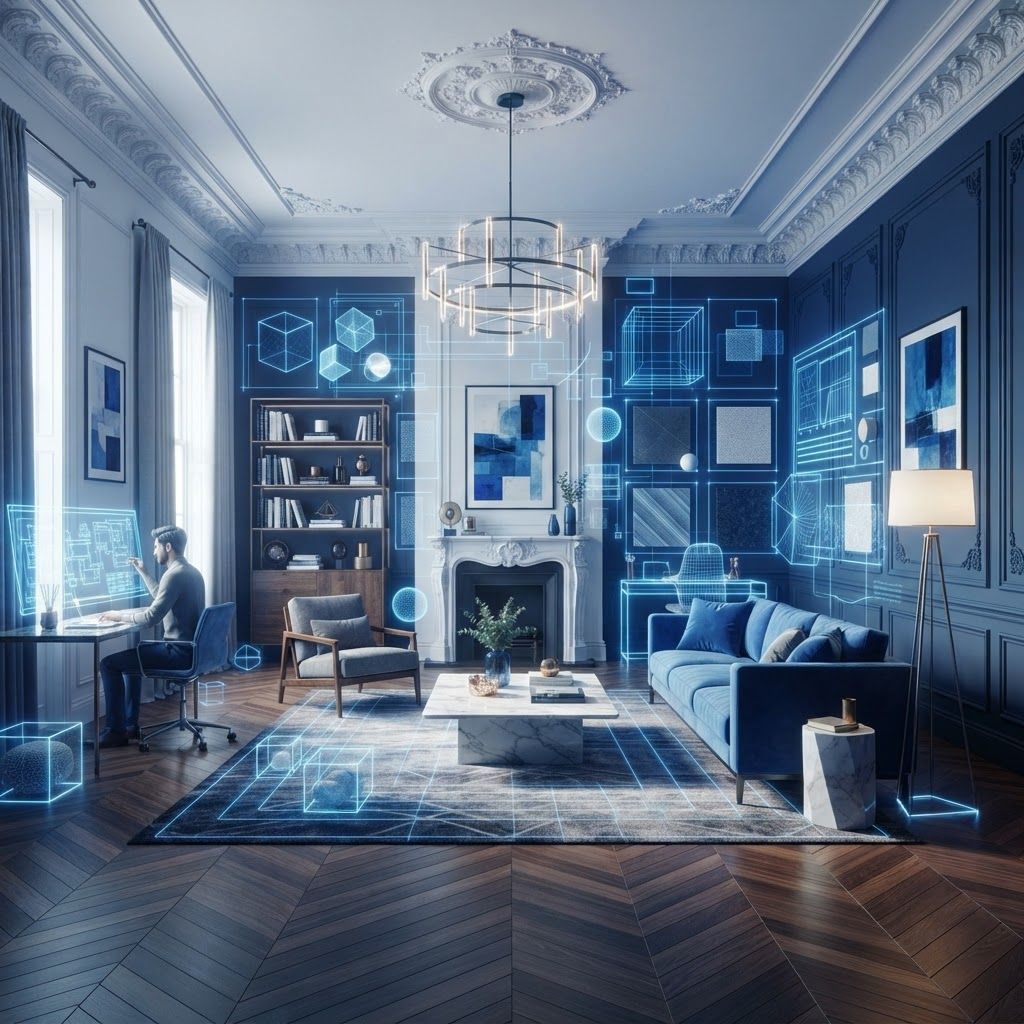
Interior Design in a Heritage District
Interior design in Bath and North East Somerset is a more technical discipline than in most parts of the country. The district contains thousands of listed buildings and extensive conservation areas, and a very large proportion of the housing stock predates 1900. Designers working here need to understand lime plaster, breathable finishes, sash window restoration, cornice and joinery profiles, and the practical implications of listed building consent, alongside conventional design skills.
The market divides into several strands. Heritage-focused practices specialise in period restoration and sympathetic modernisation. Contemporary practices work on new build, barn conversions and extensions where design freedom is greater. Commercial designers serve the district's hospitality, retail and workplace sector. And a broad tier of decorators, kitchen designers and furnishing consultants handle smaller projects.
Ten Design Practices and Providers
1. Bath Interior Design Studio
A city-based practice working across residential renovation and full refurbishment, with experience of listed building constraints and established relationships with local specialist trades.
2. Harding and Read Interiors
Focused on high-specification residential projects, offering full design and project management from concept through to installation and styling.
3. Georgian Restoration Interiors
Specialists in period-correct restoration, including plasterwork, panelling, historic paint colours and traditional joinery. Practices in this niche often work alongside conservation officers and heritage consultants.
4. Chew Valley Design Company
A rural practice working on barn conversions, farmhouse renovations and country houses where the design brief is typically openness, natural materials and connection to landscape.
5. Bath Kitchen and Bathroom Design Studios
Room-specific specialists handling the two most technically demanding and expensive spaces in any home, coordinating plumbing, electrical, ventilation and cabinetry within often awkward period layouts.
6. Somer Valley Interiors
Serving Midsomer Norton, Radstock and surrounding villages with accessible full-room design, typically at lower price points than city practices while maintaining professional specification standards.
7. Commercial and Hospitality Design Practices
Designers working on hotels, restaurants, cafes and retail across the city, where regulatory requirements including fire safety, accessibility and licensing shape design decisions as much as aesthetics.
8. Sustainable and Retrofit Design Consultants
Practices combining interior design with fabric improvement, focused on insulation strategy, breathability, heat pump integration and moisture management in solid-wall buildings. This expertise is increasingly essential rather than optional.
9. Bespoke Joinery and Cabinetmaking Workshops
Local makers producing fitted furniture, bookcases, window seats and cabinetry designed for irregular period dimensions where standard units simply do not fit.
10. Independent Colour and Styling Consultants
Providing focused, lower-cost input on palette, lighting, window treatments and furniture selection for clients undertaking their own projects. Often the highest value per pound spent for homeowners on a limited budget.
Working with Period Property
Listed building consent is required for internal alterations affecting the special interest of a listed structure, and that includes work homeowners often assume is cosmetic. Removing internal walls, replacing doors, altering staircases, installing recessed lighting into decorative ceilings and replacing windows can all require consent. Undertaking such work without permission is a criminal offence and creates serious problems at resale.
Breathability is the second critical technical issue. Solid stone walls manage moisture by allowing it to evaporate. Applying impermeable modern finishes such as cement render, vinyl paint or foam insulation traps moisture, causing damp, decay and internal deterioration. Competent designers in Bath specify lime plaster, mineral paints and appropriate insulation systems for this reason, and homeowners should ask directly how moisture will be managed.
Lighting requires particular care. Many Bath interiors have limited natural light due to deep plans and window restrictions, and ceiling interventions may be restricted. Effective schemes rely on layered lighting using wall lights, floor and table lamps and concealed sources rather than a grid of downlights.
How to Appoint and Brief a Designer
Define scope before seeking quotations. Full service design covers survey, concept, detailed specification, procurement, contractor coordination, site visits and final styling. Concept-only appointments deliver drawings and schedules for you to implement. The cost difference is substantial and confusion here causes most client disputes.
Understand fee structures. Practices charge fixed fees, hourly rates, percentages of project value, or combinations, and some earn trade discounts on procurement. Ask explicitly how the practice is remunerated and whether trade discounts are passed on, retained, or shared. Transparency on this point is a reliable indicator of professionalism.
Review a portfolio for relevance rather than beauty. A designer with an outstanding record in contemporary new build may have limited experience of listed consent processes. Ask for two completed projects of similar type and speak to those clients about budget control, programme adherence and how problems were handled.
Finally, agree a realistic budget range at the outset and include a contingency of at least ten to fifteen percent. Period buildings reliably reveal unexpected conditions once floors and plaster are opened, and projects without contingency stall at exactly the wrong moment.
Trends Shaping Local Interiors
Retrofit-led design is the dominant trend, with energy performance now integrated into design briefs rather than treated separately. Natural and locally sourced materials, particularly Bath stone, lime, timber and wool, remain strongly favoured. And there is a clear move away from open-plan uniformity towards defined, acoustically separated rooms, driven by home working and the practical realities of family life.
Final Thoughts
Interior design in Bath and North East Somerset rewards practices that combine aesthetic judgement with genuine building knowledge. Whether restoring a Georgian townhouse, converting a Chew Valley barn or refurbishing a family home in Keynsham, prioritise designers who ask about moisture, consent and budget contingency early. Those questions signal competence far more reliably than a polished portfolio.
Want your brand featured in front of decision-makers? Publish a guest post or get a link insertion in our guides through AAMAX's guest post and link insertion service.
Helpful Links
 SponsoredAAMAX — Full-Service Digital Agency
Write for Us
Share your expertise with our readers. We welcome guest contributions from industry specialists.
Pitch your idea