Interior Design in an Architecturally Diverse County
Angus presents unusually varied work for interior designers. Within a thirty-minute drive you will find Georgian and Victorian townhouses in Montrose and Brechin, fishing cottages in Arbroath and Auchmithie, substantial country houses and castles across the Strathmore valley, agricultural steadings converted to contemporary family homes, mid-century bungalows in Forfar, and new-build coastal properties in Carnoustie and Monifieth.
Each demands a different approach. Working with a listed Georgian interior requires knowledge of conservation requirements, breathable finishes, historically appropriate colour and lighting that respects proportion. A modern airtight new-build with mechanical ventilation and underfloor heating presents entirely different technical constraints. The best Angus designers are those fluent in both worlds.
What Interior Designers Actually Do
Full interior design service extends well beyond selecting cushions. It typically includes spatial planning and layout revision, lighting design covering ambient, task and accent layers, specification of finishes and materials, joinery and bespoke furniture design, colour scheming, window treatments, art and accessory curation, procurement and logistics, and contractor coordination on site. On larger projects, designers work alongside architects, structural engineers and building standards consultants.
The Top 10 Best Interior Design Firm Types in Angus
1. Full-Service Residential Design Studios
Established studios serving Angus and the wider Tayside region offer complete project delivery from concept through to installation. They suit clients undertaking whole-house renovations, extensions or new builds who want a single point of accountability across design, procurement and site coordination.
2. Heritage and Listed Building Specialists
Angus has a significant listed building stock, and designers specialising in heritage interiors understand what can and cannot be altered, how to work with Historic Environment Scotland guidance, and how to introduce modern comfort without damaging historic fabric. Their expertise in lime plaster, traditional paints, sash window restoration and sympathetic heating solutions is genuinely specialised.
3. Steading and Barn Conversion Designers
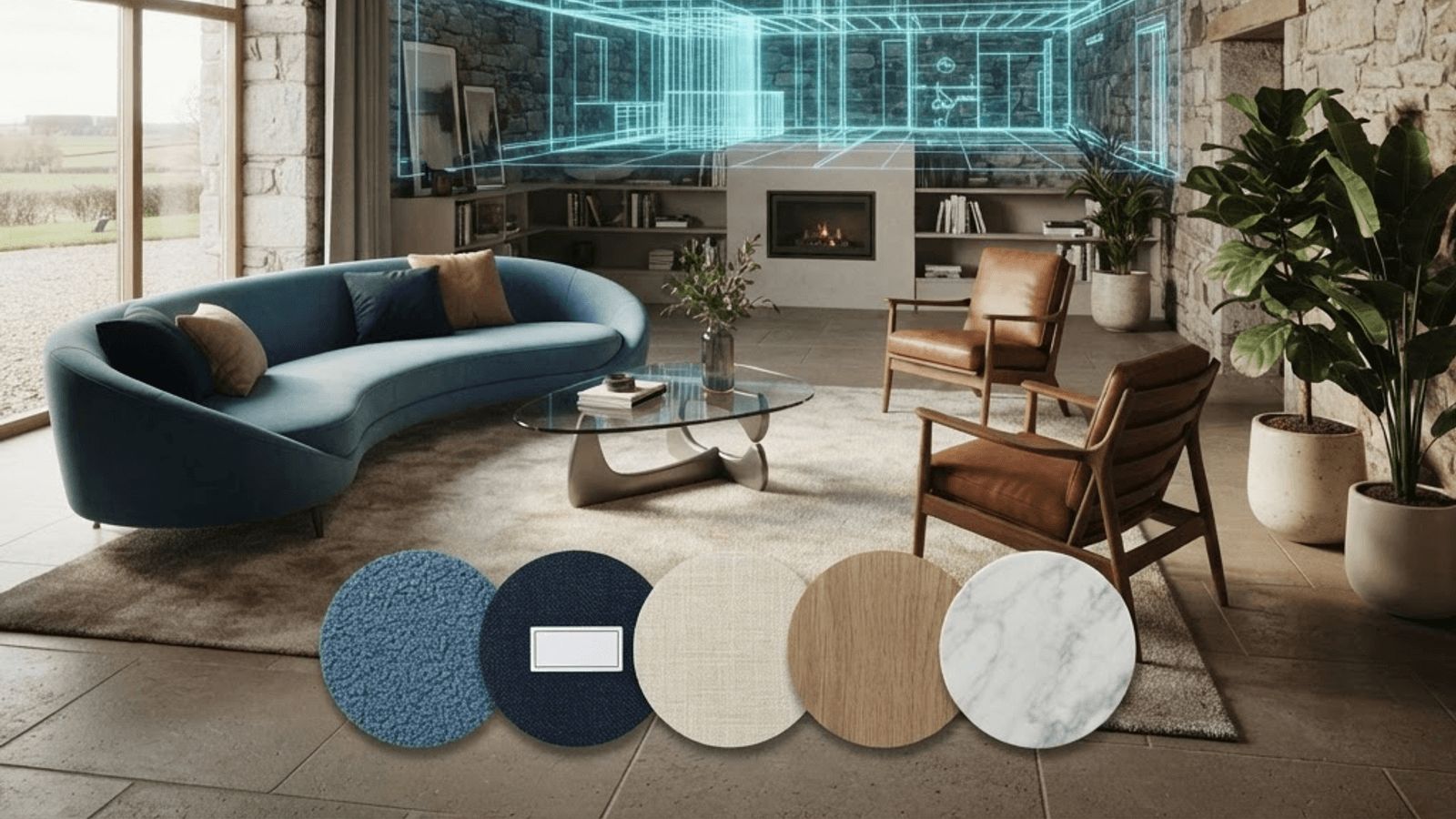
Converting agricultural buildings is one of the defining architectural activities in rural Angus, and it presents distinctive interior challenges: large volumes, limited natural light from small original openings, structural interventions and the need to balance rustic character with contemporary comfort. Designers experienced in this typology are highly valued locally.
4. Coastal and Contemporary Home Designers
Along the Angus coast, designers focus on maximising light and sea views, specifying finishes resilient to salt air and moisture, and creating practical transitions between outdoors and indoors. Boot rooms, drying spaces and durable flooring are not afterthoughts in this climate; they are central to the brief.
5. Kitchen and Bathroom Design Specialists
Kitchen and bathroom showrooms across Angus offer detailed design services within their specialism, including CAD layouts, appliance specification, lighting and installation management. For clients whose project is limited to these rooms, a specialist often delivers better value than a full-service studio.
6. Commercial and Hospitality Interior Designers
Angus hotels, restaurants, cafés, holiday lets and retail premises require design that balances aesthetics with durability, fire regulations, accessibility compliance and operational practicality. Designers working in this space understand contract-grade specification and the commercial imperative of a scheme that photographs well for marketing.
7. Holiday Let and Short-Term Rental Stylists
With the county's growing self-catering sector, a niche has emerged in designing interiors specifically for holiday rental. The brief is distinct: hard-wearing materials, photogenic focal points, guest-proof furnishings, clear storage and a sense of place that differentiates the property on booking platforms.
8. E-Design and Remote Consultation Services
Online interior design services provide mood boards, layout plans and shopping lists at a fixed fee, without site visits. For Angus clients with modest budgets, or for single rooms, this model offers professional input at a fraction of full-service cost. It works best when the client is comfortable managing procurement and installation themselves.
9. Sustainable and Low-Impact Design Practices
A growing number of designers focus on sustainability: reclaimed and locally sourced materials, low-VOC finishes, natural insulation, restored rather than replaced furniture, and specification aligned with reducing whole-life carbon. In Angus this often intersects with retrofit work on older housing stock.
10. Independent Decorators, Upholsterers and Craftspeople
Finally, Angus retains a strong network of individual makers: cabinetmakers, upholsterers, curtain makers, stonemasons, blacksmiths and ceramicists. Many designers build schemes around these local craftspeople, producing interiors that could not be assembled from catalogues and that support the regional economy.
Design Trends Relevant to Angus Homes
Retrofit-driven design is the dominant force. As heat pumps replace oil and gas boilers, interiors must accommodate larger radiators or underfloor systems, hot water cylinders and improved insulation, all of which affect layout and finishes. Designers who understand these technical realities save clients considerable expense.
Beyond that, there is a clear move toward warmer, more textured palettes replacing the grey neutrals of the previous decade, with earthy tones, natural wood and tactile fabrics prominent. Multifunctional spaces remain important as home working persists. And Scottish vernacular references, including tartan reinterpreted subtly, local stone and heather-derived colour palettes, are appearing in a way that feels contemporary rather than touristic.
How to Work Well with a Designer
Set a realistic budget and share it openly, since designers can only specify appropriately when they know the envelope. Gather visual references before the first meeting. Be clear about how you actually live, including pets, children and hosting habits, as honest briefs produce practical results. Agree the fee structure in advance, whether fixed fee, hourly, percentage of project cost or a combination, and clarify how trade discounts on procurement are handled.
Finally, allow time. Bespoke joinery, upholstery and imported furniture carry lead times, and rushing specification decisions is the most common cause of compromise and cost overrun.
Conclusion
Angus supports a capable and varied interior design sector, spanning heritage conservation, rural conversion, coastal contemporary and commercial hospitality work. Choose a designer whose portfolio genuinely matches your property type, agree the scope and fees clearly, and prioritise those who ask detailed questions about how you live before showing you a single image.
Want your brand featured in front of decision-makers? Publish a guest post or get a link insertion in our guides through AAMAX's guest post and link insertion service.
Helpful Links
 SponsoredAAMAX — Full-Service Digital Agency
Write for Us
Share your expertise with our readers. We welcome guest contributions from industry specialists.
Pitch your idea