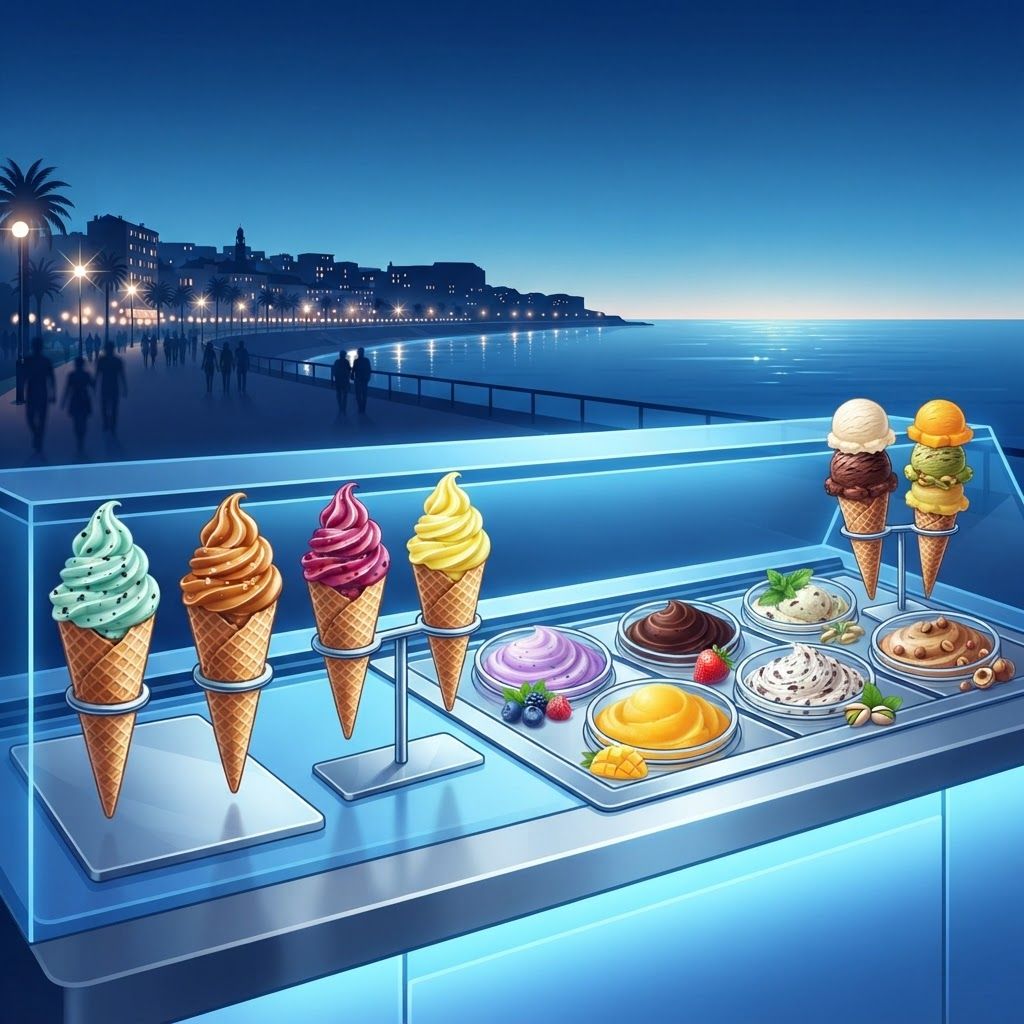
Why the Ayrshire Coast Takes Ice Cream Seriously
Few parts of Scotland have a stronger relationship with ice cream than the Ayrshire coast. The tradition dates back to the Italian-Scottish cafés that opened along seafront towns in the early twentieth century, many of which built their reputations on hand-churned ice cream served alongside strong coffee and hot food. That heritage remains visible in Largs, Millport and the Three Towns, where a cone eaten looking out over the Firth of Clyde is close to a regional ritual.
Modern producers have built on that foundation. Ayrshire dairy farming provides excellent milk and cream, and several local brands now churn small batches with high butterfat content, natural flavourings and minimal stabilisers. The contrast between old-school parlour scoops and contemporary gelato-style products gives the region genuine variety.
What Makes Ice Cream Genuinely Good
Quality starts with the dairy. A high proportion of fresh cream and whole milk produces a richer mouthfeel and cleaner flavour than products built around vegetable fat and heavy emulsification. Overrun, the amount of air whipped into the mix, is equally important. Cheap ice cream can be more than half air, which is why it melts into a thin, watery liquid. Dense, slow-melting ice cream almost always indicates careful production.
Flavour honesty is another marker. Real vanilla shows visible seed specks and a rounded aroma rather than a sharp synthetic note. Fruit sorbets should taste of fruit rather than sugar syrup. Colour is instructive too: natural pistachio is dull green, natural strawberry is pale pink, and violently bright colours usually signal artificial additives.
The Best Ice Cream Brands and Producers in North Ayrshire
Clyde Coast Creamery is among the most respected regional producers, churning traditional dairy ice cream with a high cream content. Its vanilla and raspberry ripple are benchmark flavours that appear in cafés across the coast.
Arran Dairy Delights uses island milk to produce a rich, slow-churned range including oatcake crumble, whisky cream and seasonal berry flavours that reflect the island's produce.
Largs Seafront Gelato works in the Italian gelato tradition, serving denser, lower-fat, intensely flavoured scoops from a rotating daily selection with a particular strength in nut and chocolate varieties.
Millport Cone Company is a Cumbrae institution, best known for classic ninety-nines and hand-made wafer cones, and it remains a fixture of any summer visit to the island.
Irvine Artisan Ices takes a modern craft approach with small-batch production, unusual flavour pairings such as salted honeycomb and rhubarb custard, and a commitment to natural ingredients.
Ayrshire Farmhouse Dairy produces ice cream directly on the farm, offering exceptional freshness and a short supply chain that customers increasingly value.
Saltcoats Soft Serve Co specialises in soft-serve and frozen yoghurt, supplying seafront kiosks and mobile units throughout the summer season.
Kilwinning Frozen Kitchen has developed a strong dairy-free and vegan range built on oat and coconut bases, achieving a creaminess that has won over plenty of non-vegan customers.
West Kilbride Sorbet House focuses entirely on fruit sorbets and water ices, producing sharp, clean flavours such as blackcurrant, lemon and Scottish raspberry.
Garnock Valley Gelateria completes the list with a café-based operation offering gelato, affogato and dessert plates, popular with families across Kilbirnie, Dalry and Beith.
Trends in the Frozen Dessert Market
Plant-based frozen desserts have moved decisively into the mainstream. Oat and coconut bases now deliver textures close to dairy, and most serious local producers offer at least two or three vegan options as standard rather than as a token gesture. Reduced-sugar and higher-protein products have also gained traction, though they remain a smaller niche in artisan settings.
Local provenance is a powerful selling point. Consumers respond strongly to ice cream made with named Ayrshire dairy milk or Arran ingredients, and producers have leaned into that story. Seasonal and limited-edition flavours drive repeat visits, with autumn and festive specials extending trade beyond the summer peak.
Packaging sustainability is the other significant shift. Compostable tubs, paper spoons and wafer cones instead of plastic have become expected along the coast, particularly at seafront locations sensitive to litter.
Buying and Enjoying Ice Cream at Its Best
For the best experience, buy from producers who churn in small batches and sell through quickly. Ask when the batch was made. If you are taking tubs home, transport them in an insulated bag, store them at the back of the freezer rather than in the door, and allow a few minutes of softening before serving. Avoid refreezing partially melted ice cream, as ice crystals form and texture is permanently damaged.
When tasting, start with a simple flavour such as vanilla or a plain dairy base. It is the hardest to hide behind and tells you almost everything about a producer's quality.
Final Thoughts
Ice cream in North Ayrshire is more than a seaside treat; it is a living tradition supported by good dairy farming and a genuine craft culture. Whether your preference is a classic cone on Largs promenade, island-made whisky cream from Arran or a sharp raspberry sorbet, the region delivers quality that comfortably rivals anywhere in Scotland.
Want your brand featured in front of decision-makers? Publish a guest post or get a link insertion in our guides through AAMAX's guest post and link insertion service.
Helpful Links
 SponsoredAAMAX — Full-Service Digital Agency
Write for Us
Share your expertise with our readers. We welcome guest contributions from industry specialists.
Pitch your idea