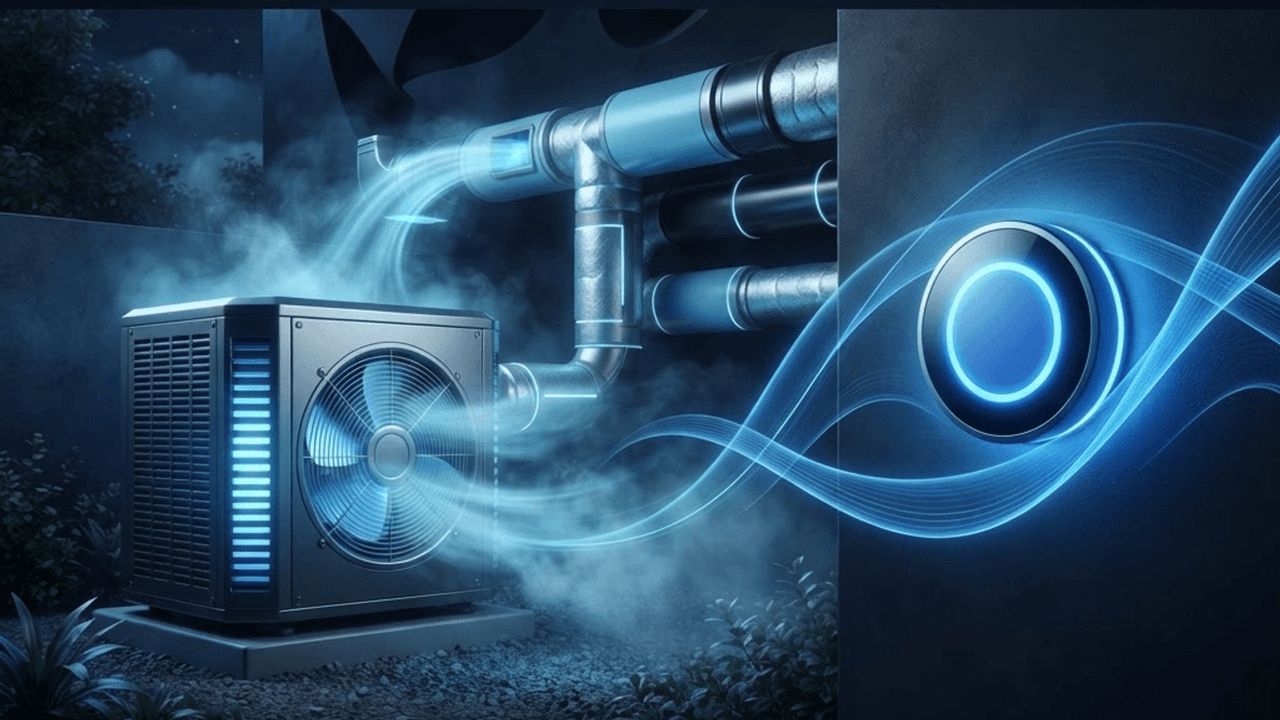
Why HVAC Installation Quality Matters More Than Equipment Brand
Homeowners shopping for heating and cooling naturally focus on equipment: which brand, which efficiency rating, which model. Industry research and field experience both point elsewhere. Installation quality is the dominant factor in how a system performs. Correct load calculation, properly sized and sealed ductwork, accurate refrigerant charge, adequate airflow, and correct commissioning matter more than the nameplate on the unit. A premium system installed poorly will underperform a mid-tier system installed correctly, and it will cost more to operate.
Westminster's climate makes this consequential. Winters demand sustained heating capacity, summers bring genuine cooling load with intense solar gain and very low humidity, and the elevation affects both combustion and equipment capacity — derating that must be accounted for in sizing. Wide daily temperature swings mean systems cycle frequently. An HVAC contractor who performs a real load calculation rather than replacing existing equipment with the same tonnage is doing the work that actually determines comfort.
Services HVAC Companies Provide
Installation and replacement covers furnaces, air conditioners, heat pumps, air handlers, and packaged systems. Quality installers include duct evaluation, load calculation, and post-installation commissioning rather than a simple equipment swap.
Repair and diagnostics addresses failures, insufficient heating or cooling, uneven temperatures, and unusual noise or odor. Maintenance programs provide seasonal tune-ups, filter service, and inspection intended to catch developing problems before failure.
Ductwork services include design, sealing, replacement, and zoning. Leaky ducts in unconditioned spaces waste a substantial portion of conditioned air, and sealing is often the highest-return improvement available. Indoor air quality work covers filtration upgrades, ventilation, humidification, and air purification — all relevant in a dry climate.
Ductless mini-split installation serves additions, finished basements, and homes without existing duct systems. Commercial HVAC extends into rooftop units, larger tonnage systems, and building controls.
Ten HVAC Companies Serving Westminster
Front Range Heating & Air is a full-service residential contractor whose process includes manual load calculation and duct assessment before quoting replacement equipment. Clients cite the diagnostic thoroughness as the reason for repeat business.
Westminster Comfort Systems handles installation and service across furnaces, air conditioners, and heat pumps, with a maintenance program that many local homeowners use for seasonal service.
Summit Heat Pump Specialists focuses on cold-climate heat pump installation and dual-fuel configurations. As electrification incentives expand, their specialization in correct heat pump sizing and backup strategy is increasingly relevant.
Cornerstone Duct & Airflow concentrates on ductwork: design, sealing, testing, and zoning. They are frequently retained to solve comfort complaints that equipment replacement alone did not fix.
Blue Line Commercial Mechanical serves commercial and multifamily properties with rooftop units, larger systems, and preventive maintenance contracts, plus building automation and controls work.
Heritage Furnace & Boiler works on older systems including hydronic and boiler heating, which requires expertise many modern forced-air contractors lack. Homes with radiant or radiator heating often need this specialization.
Northwest Metro HVAC emphasizes responsive repair service with clear diagnostic explanation and honest repair-versus-replace guidance rather than automatic replacement recommendations.
Aspen Air Quality Solutions focuses on indoor environmental quality — high-efficiency filtration, whole-home humidification, ventilation, and air purification. In a dry climate, humidification alone noticeably improves winter comfort.
Clearwater Ductless Systems specializes in mini-split installation for additions, basements, garages, and homes where extending ductwork is impractical. Their placement and sizing judgment shows in balanced performance.
Ridgeline Mechanical Contractors serves new construction and major renovation, designing systems from the start rather than adapting equipment to existing constraints — the situation in which the best outcomes are possible.
How to Choose an HVAC Contractor
Ask whether the contractor performs a load calculation for replacement work. Many do not, defaulting instead to matching existing equipment size. Existing equipment is frequently oversized, which causes short cycling, poor humidity control, uneven temperatures, and premature wear. A contractor who measures rather than assumes is signaling a higher standard.
Ask how ductwork will be evaluated. If the duct system is undersized or leaky, new equipment cannot deliver its rated performance. Contractors who inspect and test ducts, and who quote sealing where needed, are addressing the actual cause of comfort problems.
Confirm what commissioning is included: refrigerant charge verification, airflow measurement, static pressure readings, and combustion analysis on gas equipment. These steps take time and are where corners get cut on low bids. Request the commissioning data at completion.
Maintenance That Pays for Itself
Filter changes are the simplest and most neglected maintenance item. A loaded filter restricts airflow, reducing efficiency and stressing the blower. Checking monthly during heavy use seasons and replacing as needed costs very little and prevents disproportionate problems.
Seasonal professional service catches developing issues: refrigerant leaks, weakening capacitors, heat exchanger concerns, drainage blockage, and control problems. Addressing these before failure is both cheaper and avoids losing heating or cooling at the worst moment.
Keep outdoor condenser units clear of vegetation and debris, and rinse coils gently each season. Restricted airflow across the condenser directly reduces cooling capacity and increases energy consumption. This is homeowner-level maintenance with measurable payback.
Where HVAC Technology Is Heading
Cold-climate heat pumps have improved dramatically and now maintain useful capacity at temperatures once considered impractical. Paired with a gas furnace in a dual-fuel configuration, they can handle most of the heating season efficiently while retaining backup for the coldest periods — an arrangement well suited to this region.
Variable-capacity equipment with inverter-driven compressors and modulating gas valves is replacing single-stage systems in the premium tier. By running longer at lower output rather than cycling on and off, these systems deliver more consistent temperatures, quieter operation, and better efficiency.
Smart controls and diagnostics are becoming standard. Communicating thermostats, zoning, and remote monitoring allow contractors to identify developing faults before a homeowner notices a problem. For Westminster residents facing both real heating and real cooling seasons, the combination of correctly sized modern equipment, sealed ductwork, and proactive monitoring is what converts an HVAC system from a recurring frustration into infrastructure that simply works.
Want your brand featured in front of decision-makers? Publish a guest post or get a link insertion in our guides through AAMAX's guest post and link insertion service.
Helpful Links
 SponsoredAAMAX — Full-Service Digital Agency
Write for Us
Share your expertise with our readers. We welcome guest contributions from industry specialists.
Pitch your idea