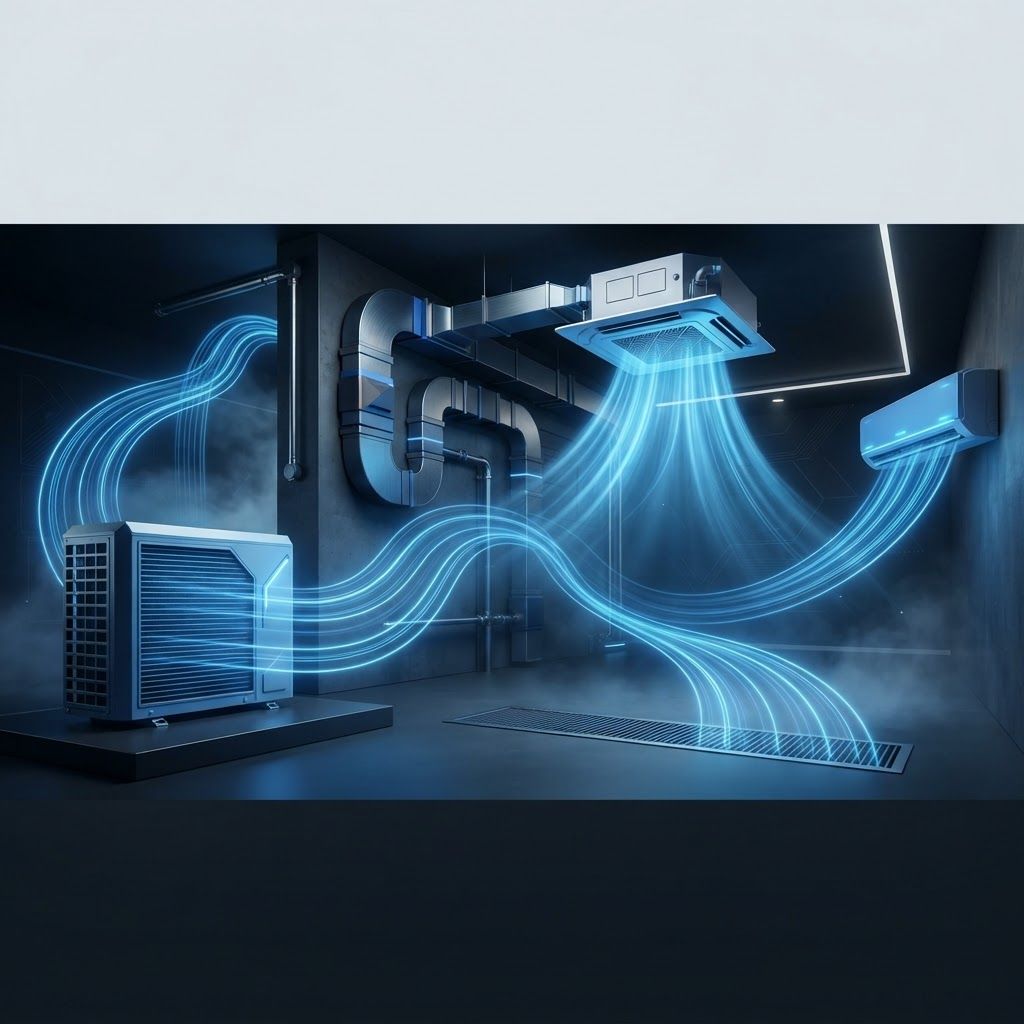
Understanding HVAC in a UK Context
HVAC covers heating, ventilation and air conditioning, three systems that are increasingly designed as one. Historically in the UK, heating dominated and ventilation was left to draughts and opening windows, while air conditioning was largely commercial. That is changing quickly. Tighter buildings need designed ventilation, warmer summers are driving domestic cooling demand, and the shift from gas boilers to heat pumps is merging heating and cooling into the same equipment.
In Redcar and Cleveland, the climate is cool, damp and windy, with relatively mild summers moderated by the North Sea. That favours heat pumps, which perform well in moderate winter temperatures, and it makes ventilation and moisture control particularly important in a housing stock that is being progressively sealed up through insulation and window upgrades.
The Main HVAC Services Available
Heat pump installation, principally air source, is the fastest growing area. Ground source systems appear on rural properties with land available. Both deliver multiple units of heat per unit of electricity, but only when the system is properly designed for low flow temperatures.
Air conditioning installation covers split systems for homes and offices, multi-split systems, and larger variable refrigerant flow systems for commercial buildings. Many modern units are reverse cycle, providing efficient heating as well as cooling.
Ventilation spans extract fans and positive input ventilation in homes, mechanical ventilation with heat recovery in airtight new builds and retrofits, and full air handling systems in commercial and industrial premises.
Commercial and industrial HVAC includes warehouse heating, destratification, kitchen extract systems, cleanroom ventilation, dust extraction and process cooling.
Maintenance underpins everything. Filter changes, refrigerant leak checks, coil cleaning, control recalibration and system balancing keep equipment efficient and compliant.
Ten HVAC Companies Active Across the Borough
Teesside Climate Systems designs and installs commercial air conditioning and ventilation with full commissioning and maintenance contracts. Cleveland Heat Pump Services focuses on air source heat pump design including room-by-room heat loss calculation.
Redcar Air Conditioning installs split and multi-split systems for homes, offices and retail units. Coastal Ventilation Solutions specialises in mechanical ventilation with heat recovery and condensation control in damp-prone coastal properties.
Eston Industrial HVAC handles warehouse heating, extract systems and process ventilation on the industrial estates. Guisborough Renewable Heating combines heat pumps, underfloor heating and solar thermal for rural and off-gas-grid properties.
Saltburn Refrigeration and Cooling covers commercial refrigeration and cellar cooling for hospitality venues. Skelton HVAC Maintenance provides planned preventative maintenance, refrigerant compliance checks and reactive repair.
Marske Home Comfort Systems works on domestic comfort cooling, smart zoning and indoor air quality improvement, and East Cleveland Agricultural Ventilation serves farm buildings, livestock housing and crop storage ventilation.
Heat Pumps: Getting the Design Right
The single biggest determinant of heat pump success is design rather than brand. A heat pump delivers water at around 35 to 50 degrees rather than the 70 degrees a boiler might use, which means emitters must be larger to deliver the same heat output. Installing a heat pump onto existing undersized radiators is the most common cause of disappointment.
A competent installer carries out a full heat loss calculation for every room, assesses the existing pipework capacity, specifies replacement radiators or underfloor heating where needed, and sizes the unit to the actual load rather than oversizing. Oversized heat pumps cycle frequently, reducing efficiency and shortening compressor life.
Weather compensation control is essential, adjusting flow temperature according to outdoor conditions so the system runs as cool as possible while maintaining comfort. Hot water production requires a suitably sized cylinder with a large coil surface area, and a periodic pasteurisation cycle for hygiene.
Noise and siting deserve attention too. Outdoor units must be positioned considering noise to neighbours, airflow clearance and, in coastal locations, protection from salt spray which corrodes fins and casings.
Ventilation and Indoor Air Quality
As homes become more airtight, ventilation becomes a health issue rather than an afterthought. Cooking, bathing, drying clothes and simply breathing release substantial moisture. Without adequate ventilation, that moisture condenses on cold surfaces and feeds mould growth.
Mechanical ventilation with heat recovery provides continuous fresh air while recovering most of the heat from outgoing air, offering both air quality and efficiency benefits. It requires proper duct design, commissioning and filter maintenance to work as intended. Positive input ventilation is a simpler, lower-cost option that reduces condensation in many older homes.
Commercial premises have defined fresh air requirements per occupant, and kitchen extract systems must meet specific flow rates and fire safety standards with regular deep cleaning of ductwork.
Compliance and Refrigerants
Work on systems containing fluorinated refrigerants requires appropriate qualification, and businesses operating such systems have legal duties around leak checking and record keeping depending on system size. The industry is transitioning towards lower global warming potential refrigerants, which affects equipment selection and future serviceability.
Electrical work associated with HVAC must be certified, and heat pump installations should follow recognised installation standards to qualify for any available support schemes and to ensure warranty validity.
Choosing an HVAC Company
Ask to see the heat loss calculation or cooling load calculation before accepting a quote. Any installer unwilling to produce one is guessing. Ask about expected running costs based on that calculation rather than generic claims.
Confirm maintenance requirements and cost before committing. Heat pumps, air conditioning and ventilation systems all need servicing, and factoring that in gives a realistic picture of ownership cost.
Check commissioning documentation, warranty terms and whether the installer holds the relevant certifications for the technology being installed.
Final Thoughts
HVAC is moving from a collection of separate systems to an integrated approach to comfort, air quality and energy use. In Redcar and Cleveland, where damp coastal air and an ageing housing stock create genuine challenges, the companies doing this well are those treating design calculations as the starting point rather than an optional extra.
Want your brand featured in front of decision-makers? Publish a guest post or get a link insertion in our guides through AAMAX's guest post and link insertion service.
Helpful Links
 SponsoredAAMAX — Full-Service Digital Agency
Write for Us
Share your expertise with our readers. We welcome guest contributions from industry specialists.
Pitch your idea