HVAC in Newcastle-under-Lyme
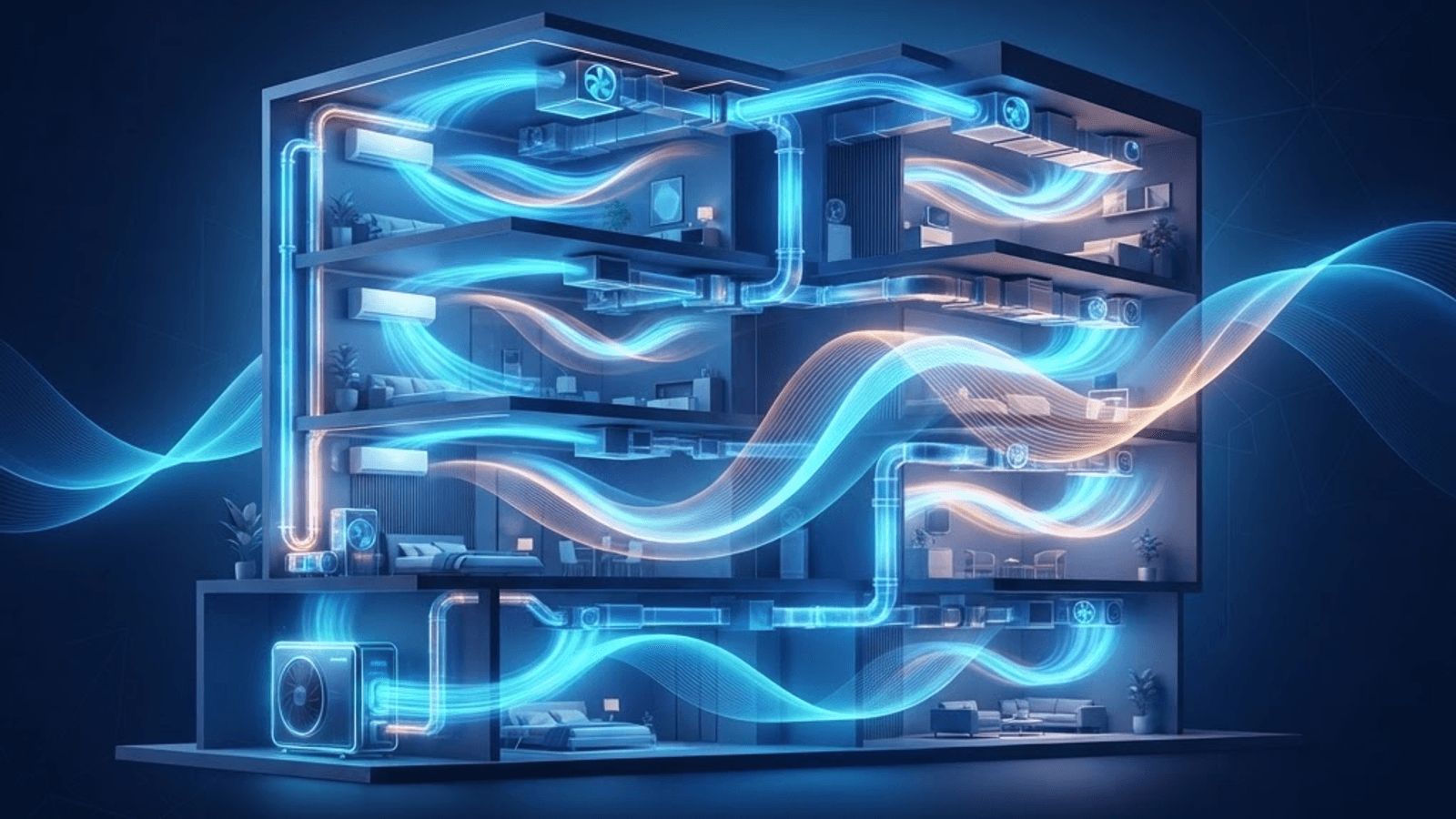
Heating, ventilation and air conditioning covers a broader range of systems than most people realise. It includes domestic boilers and heat pumps, commercial chillers and air handling units, mechanical ventilation with heat recovery, extract systems for kitchens and bathrooms, split air conditioning for offices and server rooms, and industrial process cooling. Each has different design, installation and maintenance requirements.
North Staffordshire's climate shapes local demand. Winters are cool and damp rather than extreme, so heating dominates energy use in most buildings. However, summer overheating in well-insulated modern homes and glazed commercial buildings has become a genuine issue, driving growth in cooling and ventilation. Simultaneously, tightened airtightness standards mean that controlled ventilation is no longer optional; buildings that cannot leak air must be ventilated deliberately to prevent condensation and poor air quality.
The Top 10 HVAC Companies Serving the Borough
1. Newcastle Heating and Cooling Services
Local HVAC firms covering both domestic heating and light commercial air conditioning provide a practical single point of contact for homeowners and small businesses. Combined competence across heating, cooling and ventilation avoids the coordination problems of appointing separate trades.
2. Daikin Approved Installers
Manufacturer-approved installer networks for leading heat pump and air conditioning brands offer extended warranties and access to technical support. Approved status requires product-specific training, which matters on equipment with sophisticated controls and refrigerant circuits.
3. Mitsubishi Electric Accredited Partners
Accredited partners install and maintain air source heat pumps, variable refrigerant flow systems and ventilation units. Their design capability is particularly relevant for commercial buildings requiring zoned heating and cooling with heat recovery between spaces.
4. Staffordshire Commercial Air Conditioning Contractors
Commercial specialists design and install split systems, multi-split installations, cassette units and ducted systems for offices, retail units, restaurants and server rooms. Planned maintenance contracts, filter replacement and refrigerant leak testing form the backbone of their business.
5. Air Source Heat Pump Specialists
Heat pump installation has grown rapidly, supported by grant funding and the long-term shift away from fossil fuel heating. Competent installers begin with a room-by-room heat loss calculation, then size emitters for low flow temperatures. Systems designed this way perform efficiently; those simply swapped in place of a boiler frequently disappoint.
6. Ventilation and MVHR Installers
Mechanical ventilation with heat recovery supplies fresh filtered air while recovering warmth from extracted air. In airtight new builds and deep retrofits it is essential rather than optional, and installation quality, particularly duct sealing and commissioning, determines whether it performs as designed.
7. Industrial Ventilation and Extraction Engineers
Manufacturing and food production facilities require local exhaust ventilation, dust extraction, fume control and process cooling. This work carries statutory examination and testing obligations, and specialists provide both installation and the periodic testing required by health and safety regulation.
8. Commercial Kitchen Ventilation Specialists
Restaurants, pubs and catering facilities need canopy extraction, grease filtration, odour control and gas interlock systems. Correct air balance between extract and makeup air is critical, as poorly balanced kitchens suffer from doors slamming, smoke spillage and unhappy neighbours.
9. Refrigeration and Cold Storage Engineers
Retail, hospitality and food distribution businesses rely on commercial refrigeration. Engineers handle cold room installation, display cabinet maintenance, temperature monitoring and compliance with refrigerant handling regulations.
10. Building Management and Controls Specialists
Controls engineers optimise how existing plant operates, often delivering substantial energy savings without replacing equipment. Correct scheduling, sensor calibration, zoning and setpoint management routinely reduce consumption in commercial buildings where systems have drifted out of tune over the years.
Regulation and Compliance
Refrigerant handling is tightly regulated. Engineers working on systems containing fluorinated greenhouse gases must hold appropriate qualifications, and operators of larger systems have legal duties around leak checking and record keeping. The industry is transitioning towards lower global warming potential refrigerants, which affects equipment selection and future serviceability.
Air conditioning inspections are required periodically for larger commercial systems, and building regulations govern ventilation provision, heating system efficiency and controls in both new and refurbished buildings. Commercial gas work requires commercial gas qualifications distinct from domestic registration.
Trends Reshaping HVAC
Decarbonisation of heat dominates the agenda. Heat pumps, heat networks and hybrid systems are gradually replacing gas, supported by policy and by the falling carbon intensity of the electricity grid. This shift requires designers to think in terms of low flow temperatures, larger emitters and improved building fabric rather than simply larger boilers.
Indoor air quality has moved firmly into mainstream awareness. Carbon dioxide monitoring in schools and offices, improved filtration, and attention to ventilation rates are now routine considerations rather than specialist concerns. In parallel, overheating risk assessment has become a design requirement for new homes, pushing shading, ventilation strategy and sometimes cooling into projects that would previously have ignored summer conditions.
Smart controls, remote monitoring and predictive maintenance are also expanding. Connected systems allow engineers to diagnose faults remotely, monitor performance trends and intervene before a breakdown disrupts a business.
Choosing an HVAC Contractor
Ask for evidence of relevant qualifications for the specific work, whether that is gas, refrigerant handling or renewable heat certification. Request a design calculation rather than a rule-of-thumb sizing, particularly for heat pumps and cooling systems. Clarify what commissioning will be carried out and what documentation will be handed over, since a system that is installed but never properly commissioned will underperform indefinitely.
For commercial clients, a maintenance contract with defined response times, planned visits and clear exclusions protects both comfort and equipment life. For homeowners, annual servicing preserves warranty validity and catches small faults before they become expensive.
Final Thoughts
HVAC decisions influence comfort and running costs for the lifetime of a building. Newcastle-under-Lyme has access to manufacturer-accredited installers, experienced commercial engineers and capable local firms. Prioritising proper design and commissioning over the cheapest installation price is the decision that consistently pays back, particularly as heating electrifies and buildings become more airtight.
Want your brand featured in front of decision-makers? Publish a guest post or get a link insertion in our guides through AAMAX's guest post and link insertion service.
Helpful Links
 SponsoredAAMAX — Full-Service Digital Agency
Write for Us
Share your expertise with our readers. We welcome guest contributions from industry specialists.
Pitch your idea