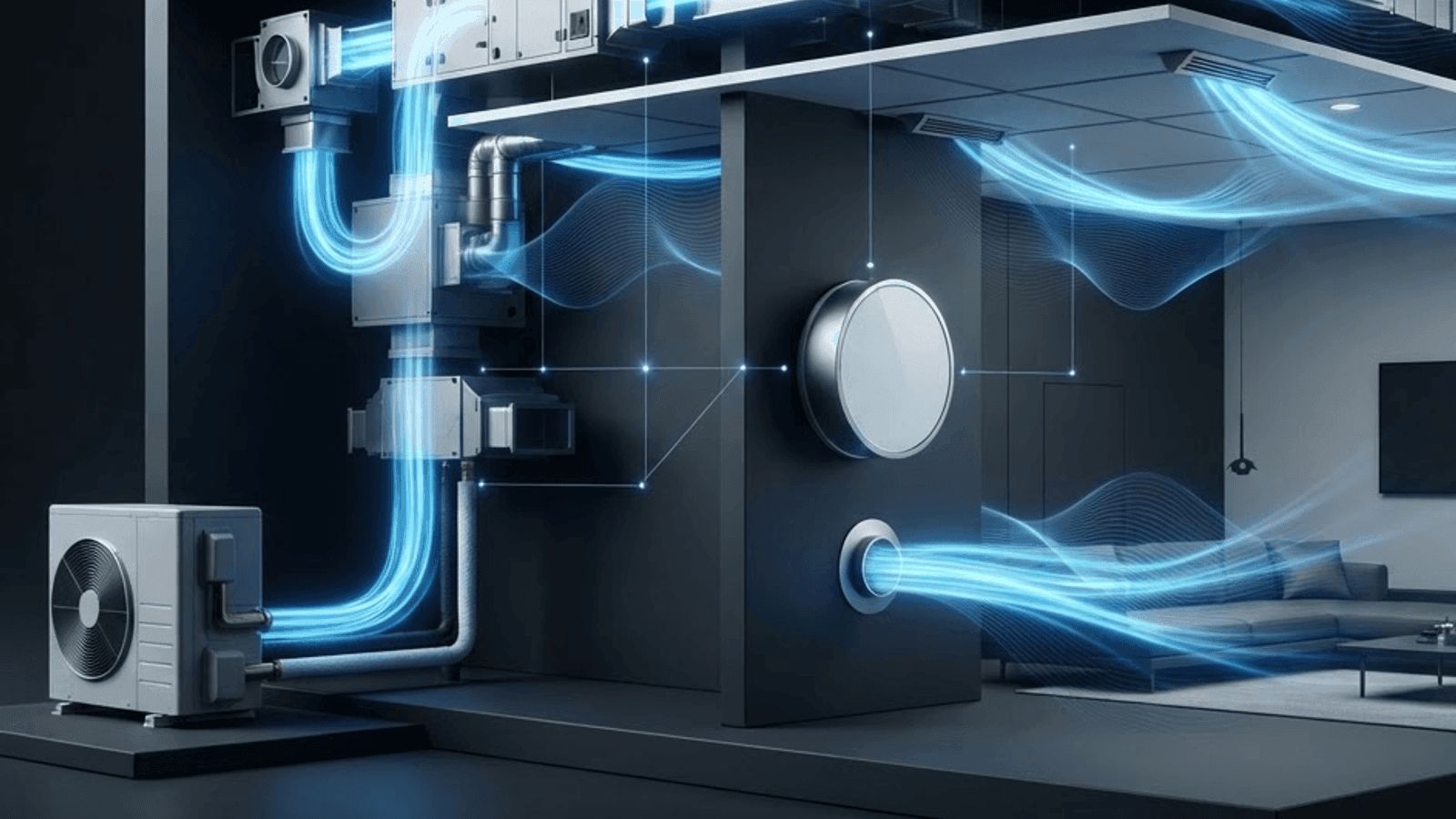
HVAC in Havant: A Sector in Transition
Heating, ventilation and air conditioning is undergoing the most significant change in decades. Policy direction away from fossil fuel heating, rising energy costs, tightening building regulations and growing awareness of indoor air quality are collectively reshaping what gets installed in Havant's homes and commercial buildings.
The borough's climate is comparatively mild, with fewer extreme cold days than inland or northern locations, which improves heat pump performance considerably. Summers, however, are warming, and overheating in well-insulated modern buildings is an increasing concern. Coastal humidity and salt exposure also influence equipment selection and siting, particularly for external condenser units near the harbours.
1. Air Source Heat Pump Installers
Air source heat pumps have become the leading low-carbon heating technology for UK homes. They extract heat from outside air and deliver it to the property at efficiencies typically three to four times better than direct electric heating. Successful installation depends on proper design: accurate room-by-room heat loss calculation, radiators or underfloor heating sized for lower flow temperatures, adequate insulation, correctly sized hot water cylinder and sensible siting of the external unit for airflow and noise. Certified installers work to recognised standards required for government incentive schemes.
2. Gas Boiler Installation and Heating Engineers
Gas remains the dominant heating fuel in existing Havant properties, and Gas Safe registered engineers install, service and repair condensing boilers, system controls and full central heating systems. Modern installations should include weather compensation or load compensation controls, thermostatic radiator valves, a magnetic system filter and correct system flushing. Optimising an existing gas system, particularly by lowering flow temperatures and improving controls, frequently delivers meaningful savings for modest cost.
3. Air Conditioning Installation Specialists
Domestic and light commercial air conditioning demand has grown notably as summers warm. Split systems comprise an external condenser and one or more internal units, with multi-split configurations serving several rooms from a single outdoor unit. Most modern systems are heat pumps in their own right, providing efficient heating as well as cooling. Installation requires F-Gas certified engineers because refrigerant handling is regulated, and correct sizing matters; oversized systems cycle inefficiently and control humidity poorly.
4. Commercial HVAC Contractors
Commercial systems are substantially more complex, encompassing variable refrigerant flow installations, air handling units, chillers, ductwork distribution, fan coil units and building management systems. Contractors serving Havant's offices, retail units, industrial buildings and healthcare premises handle design, installation, commissioning and planned preventative maintenance. Commissioning is critical and often rushed; a well-designed system that is poorly commissioned will never deliver its intended performance or efficiency.
5. Mechanical Ventilation with Heat Recovery Installers
As buildings become more airtight, controlled ventilation becomes essential rather than optional. Mechanical ventilation with heat recovery continuously extracts stale, humid air from kitchens and bathrooms while supplying filtered fresh air to living spaces, recovering the majority of the heat from the outgoing air. Correct installation requires careful duct design with minimal bends, rigid insulated ductwork rather than flexible, and proper commissioning with measured flow rates at every terminal. Poorly installed systems are noisy and ineffective, which has unfairly damaged the technology's reputation.
6. Ventilation and Extraction Specialists
Beyond whole-house systems, ventilation specialists install and maintain bathroom and kitchen extraction, commercial kitchen canopy systems with grease filtration, industrial fume extraction, and positive input ventilation units used to address condensation in existing homes. Commercial kitchen extraction requires specific fire safety provision and regular cleaning to prevent grease accumulation, which is both a fire risk and an insurance condition.
7. Underfloor Heating Specialists
Underfloor heating distributes heat evenly at low flow temperatures, making it an excellent match for heat pumps. Wet systems embed pipework in screed or within low-profile panels for retrofit. Design considerations include insulation beneath the pipework, correct pipe spacing based on heat loss, screed depth affecting response time, floor covering thermal resistance and zoning strategy. Electric mat systems suit small areas such as bathrooms but are expensive to run as a primary heat source.
8. Refrigeration and Cold Storage Contractors
Commercial refrigeration serves food retail, hospitality, healthcare and food production businesses in the area. Contractors install and maintain walk-in cold rooms, display cabinets, blast chillers and process cooling. Reliability is business-critical, since refrigeration failure means immediate stock loss, so maintenance contracts with rapid response are standard. Regulatory requirements around refrigerant types have driven a transition towards lower global warming potential alternatives.
9. Ductwork Fabrication and Cleaning Services
Ductwork specialists fabricate and install spiral and rectangular ducting, install fire and volume control dampers, and provide insulation and acoustic treatment. Duct cleaning is a separate discipline, important for air quality, system efficiency and fire safety, particularly in commercial kitchens where grease deposits accumulate. Documented cleaning to recognised standards is frequently required by insurers and by food hygiene inspection regimes.
10. HVAC Maintenance and Servicing Providers
Planned preventative maintenance extends equipment life, sustains efficiency and prevents unplanned failures. Services include filter replacement, coil cleaning, refrigerant leak testing as required by regulations, control calibration, belt and bearing inspection and performance verification. For commercial operators, maintenance contracts with defined response times and asset registers support both operational continuity and compliance obligations.
Choosing Between Heating Technologies
The decision between retaining gas and moving to a heat pump depends on several factors. Heat pumps suit properties with reasonable insulation, space for an external unit and a hot water cylinder, and emitters that can be sized for lower flow temperatures. Running costs depend heavily on the electricity to gas price ratio and on achieving good system efficiency in practice, which comes back to design quality. For poorly insulated properties, fabric improvement should generally precede heating replacement, otherwise the heat pump must be oversized and will run inefficiently.
Regulation and Certification
Gas work requires Gas Safe registration by law. Refrigerant handling requires F-Gas certification. Heat pump installations accessing government funding must be carried out by installers certified under recognised schemes. Building regulations govern ventilation provision, heating system efficiency, controls and commissioning. For commercial buildings, air conditioning systems above certain capacities require periodic energy inspections. Always request commissioning certificates and, for heat pumps, the design heat loss calculation, since these documents demonstrate the system was properly engineered rather than guessed.
Getting the Best Performance From Your System
Set heating controls to run longer at lower temperatures rather than short high-temperature bursts, which improves efficiency on condensing boilers and heat pumps alike. Keep radiators clear of furniture and curtains. Replace or clean filters on ventilation and air conditioning systems at the recommended intervals, as blocked filters dramatically reduce performance and increase energy use. Service equipment annually. And address draughts and insulation gaps first; no heating system, however efficient, compensates economically for a poorly performing building fabric.
Want your brand featured in front of decision-makers? Publish a guest post or get a link insertion in our guides through AAMAX's guest post and link insertion service.
Helpful Links
 SponsoredAAMAX — Full-Service Digital Agency
Write for Us
Share your expertise with our readers. We welcome guest contributions from industry specialists.
Pitch your idea