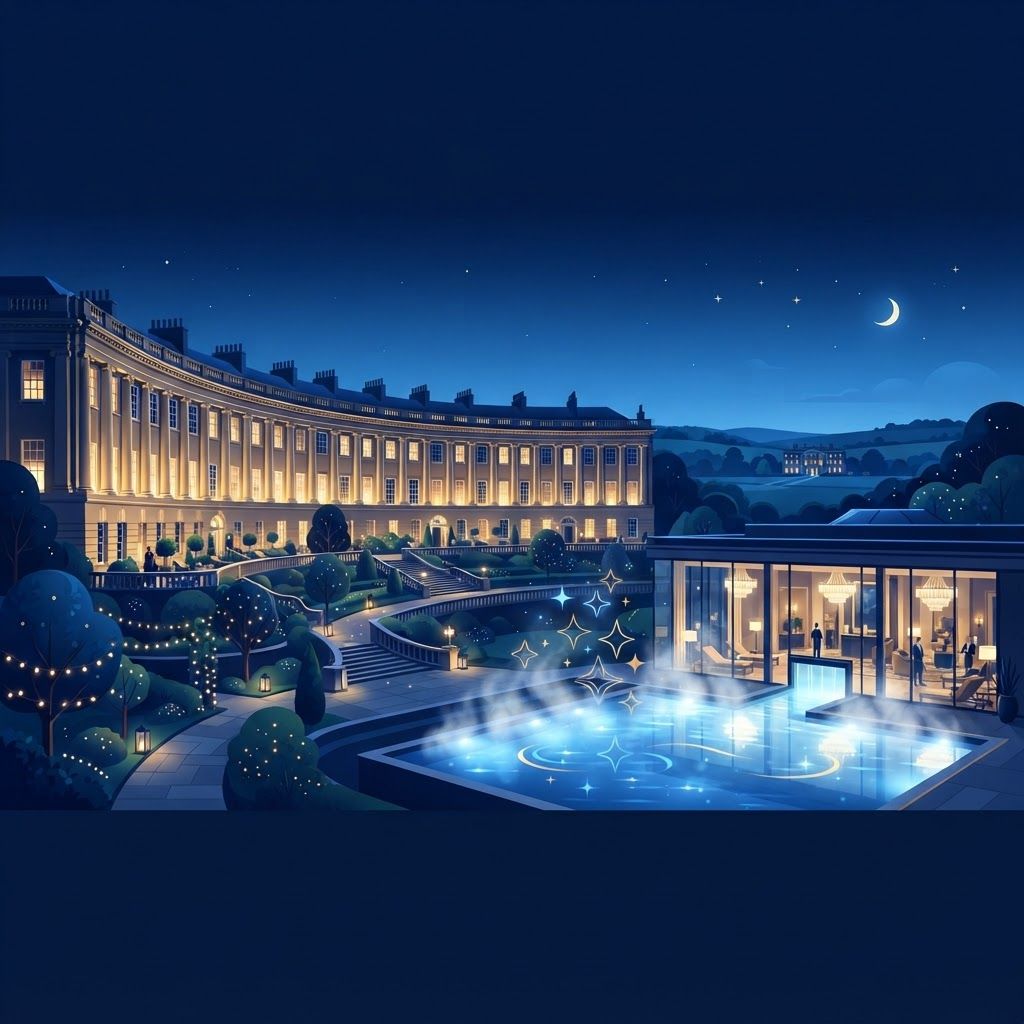
A Hotel Market Shaped by Georgian Architecture and Thermal Waters
Few UK districts of comparable size support a hotel sector as distinctive as Bath and North East Somerset. The City of Bath combines UNESCO World Heritage status with Britain's only natural thermal springs, generating year-round demand from cultural tourists, spa guests, wedding parties and conference delegates. Beyond the city, the countryside around the Chew Valley, Mendip fringe and Avon Valley supports manor house hotels, restored farm estates and boutique country retreats.
The result is unusual market breadth. Guests can choose between grand Georgian hotels on the city's most celebrated crescents, design-led townhouse conversions, spa resorts built around thermal or wellness facilities, and rural properties with substantial grounds. Occupancy remains robust across seasons, with autumn and the Christmas market period rivalling summer peaks.
The Region's Leading Hotels
The Royal Crescent Hotel is frequently cited as the definitive Bath luxury experience, occupying Georgian townhouses on one of Europe's most photographed terraces. Interiors balance period restoration with contemporary comfort, and the property is known for its private garden, spa facilities and highly personalised service culture.
The Gainsborough Bath Spa holds a genuinely unique position as the only hotel with direct access to Bath's natural thermal waters within its own spa. The combination of a listed building, a serious wellness programme and an accomplished restaurant makes it a leading choice for restorative short breaks.
Bath Priory offers a country house atmosphere within walking distance of the city centre, set in mature walled gardens. It is well regarded for fine dining, quiet grounds and a traditional service style that appeals to guests seeking calm rather than buzz.
Homewood sits above the Limpley Stoke valley and has established a strong reputation for relaxed luxury, with expansive views, a substantial spa and a distinctly informal tone. It performs particularly well with couples and small celebration groups.
The Bird Bath represents the design-led boutique segment, combining playful interiors, strong food and beverage credentials and a location convenient for both the city and the A36 approach. It appeals to younger leisure travellers and creative-sector business guests.
No.15 by GuestHouse occupies Georgian townhouses in Great Pulteney Street and is known for eclectic art-filled interiors, an intimate spa and a highly individual character that distinguishes it from chain alternatives.
Combe Grove operates as a wellness-focused estate on Claverton Down, with extensive grounds, fitness and metabolic health programmes, and a proposition aimed squarely at guests prioritising health outcomes alongside comfort.
The Francis Hotel anchors Queen Square with a strong central location and a classic Georgian frontage. It suits guests who want walkable access to the Roman Baths, Abbey and shopping district with dependable four-star standards.
Apex City of Bath Hotel serves the contemporary business and city-break market with modern rooms, reliable technology provision and meeting facilities — a practical choice for corporate stays and conference attendance.
Woolley Grange, on the district's eastern fringe, completes the list as a family-focused country house hotel, well known for genuinely accommodating children without compromising the experience of adult guests. Its childcare provision and gardens make it a regional standout for multi-generational stays.
What Defines Quality in This Market
In a heritage destination, building sensitivity is a real measure of hotel quality. The best properties in Bath work with their listed fabric — sash windows, plasterwork, proportions and staircases — rather than concealing it, while quietly solving the practical problems of soundproofing, climate control and bathroom provision that historic buildings present.
Wellness has become a core rather than peripheral offer. Thermal and spa facilities, treatment quality, hydrotherapy provision and thoughtful relaxation spaces significantly influence rate achievement in Bath. Guests increasingly evaluate spas on treatment expertise and facility design rather than on square footage.
Food and beverage credibility also carries weight. Properties with serious kitchens, strong breakfast standards and locally sourced menus consistently outperform those treating dining as an afterthought. The district's proximity to Somerset producers makes provenance genuinely achievable rather than merely marketed.
Trends Influencing the Local Hotel Sector
Several trends stand out. Sustainability investment has accelerated, with properties improving thermal efficiency within conservation constraints, reducing single-use amenities, sourcing regionally and managing water use — a meaningful issue in a spa destination. Guests increasingly ask about these measures directly.
Blended business and leisure travel has grown, with weekday corporate guests extending stays into weekends. Hotels have responded with more flexible rate structures, better in-room workspaces and improved connectivity.
Experience-led packaging is another shift. Rather than competing on room rate alone, hotels bundle thermal spa entry, guided heritage walks, dining credits and seasonal events into their offers. This protects rate integrity while giving guests a clearer sense of value.
Finally, accessibility standards are improving. More properties now publish detailed access statements covering lifts, step-free routes, bathroom configurations and hearing loop provision, which is particularly important in a district where many hotels occupy historic buildings.
How to Choose the Right Hotel
Start with location logic. City-centre properties suit walkable sightseeing and evening dining, while countryside hotels suit driving guests prioritising space and views. Parking is genuinely scarce and expensive in central Bath, so confirm arrangements before booking.
Match the property to the purpose. Spa breaks favour hotels with proper thermal or hydrotherapy facilities; family stays favour properties with interconnecting rooms and childcare; business stays favour reliable connectivity and meeting space. Check restaurant opening patterns, particularly at rural properties, and verify cancellation terms for peak periods such as the Christmas market weekends.
Conclusion
Bath and North East Somerset delivers hotel quality that comfortably exceeds expectations for a district of its scale, driven by exceptional architecture, thermal heritage and a mature visitor economy. Whether the priority is Georgian grandeur, serious wellness, family practicality or countryside seclusion, the region offers credible options at each level. The most satisfying stays come from aligning the property's genuine strengths with the purpose of the trip.
Want your brand featured in front of decision-makers? Publish a guest post or get a link insertion in our guides through AAMAX's guest post and link insertion service.
Helpful Links
 SponsoredAAMAX — Full-Service Digital Agency
Write for Us
Share your expertise with our readers. We welcome guest contributions from industry specialists.
Pitch your idea