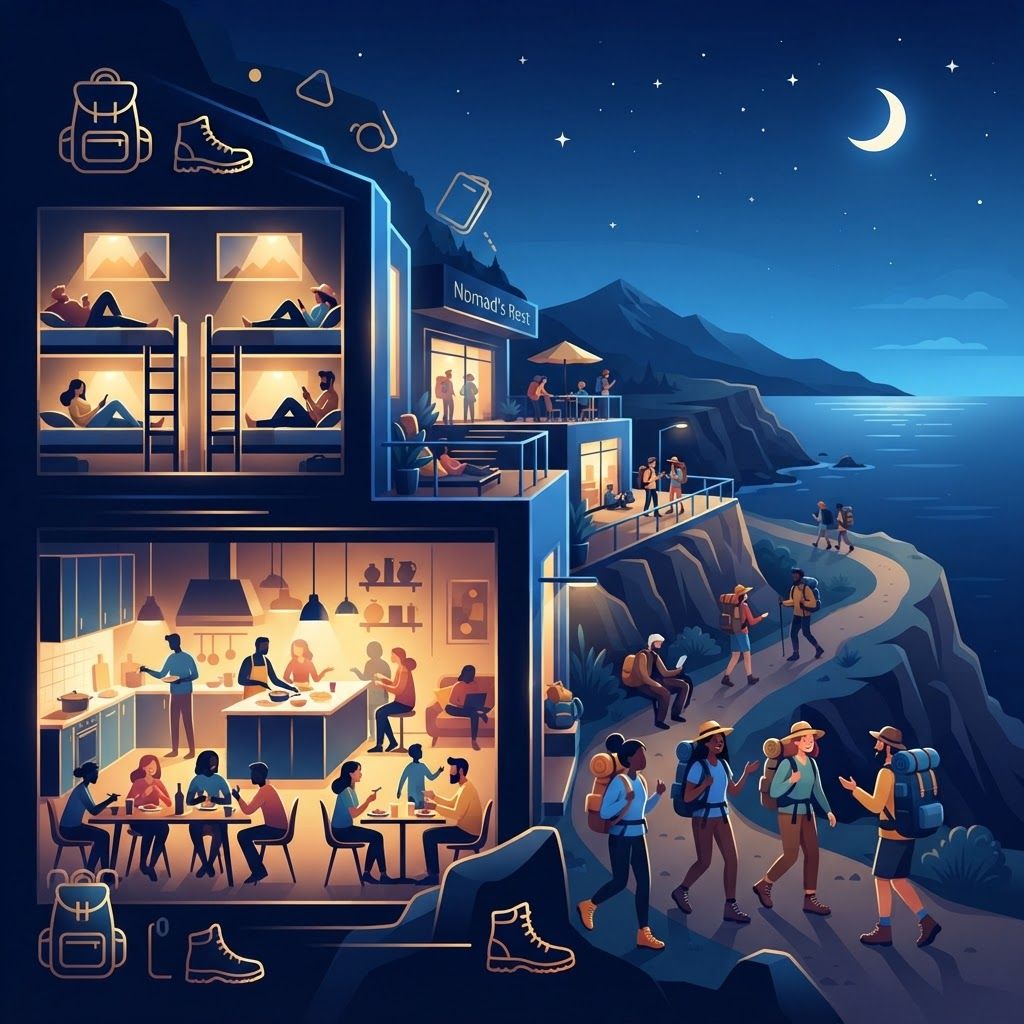
Hostelling Has Changed
The image of hostels as spartan dormitories for young backpackers is long out of date. Across Fermanagh and Omagh, budget accommodation now spans purpose-built activity centres, restored farm buildings converted to bunkhouses, independent hostels with private ensuite rooms, and community-run facilities that host school groups during term and travellers at weekends.
The guest profile has broadened accordingly. Walkers tackling the Sperrins, cyclists following the district's quiet road network, canoeists on the Erne, families seeking affordable multi-room accommodation, sports clubs on training weekends, and older independent travellers all use hostels here. Many properties now offer private family rooms alongside dormitories, which has made them viable for groups who would never have considered hostelling a decade ago.
The economics are compelling. A family or group can secure sole use of a small hostel for less than the cost of several hotel rooms, with a kitchen that dramatically reduces food costs and communal space that allows everyone to be together. For extended stays exploring a large rural district, this combination is difficult to beat.
What to Expect
Standards vary, so it is worth understanding the categories. Dormitory accommodation offers beds in shared rooms, usually with lockers and shared bathrooms, at the lowest price. Private rooms provide a double, twin or family room within the hostel, sometimes ensuite. Sole use bookings allow a group to take the entire property, which is common for clubs and extended families.
Self-catering kitchens are the defining feature of hostelling and are typically well equipped with cookers, fridges, kettles and basic utensils. Communal lounges and dining areas encourage the social atmosphere that distinguishes hostels from budget hotels.
Practical facilities matter enormously in this district. Drying rooms are close to essential given the weather and the outdoor activities most guests are pursuing. Secure bike and equipment storage, boot rooms, laundry facilities, ample parking and reliable heating all contribute far more to guest satisfaction than decorative considerations.
The Ten Leading Hostels
1. Erne Lakeside Hostel sits close to the water near Enniskillen, offering a mix of dormitories and private rooms with direct access to boating and paddling. Its kayak and canoe storage, drying room and lakeside communal area make it a natural base for water-based visitors.
2. Sperrin Mountain Bunkhouse caters to walkers and hill runners in upland west Tyrone, with simple, warm accommodation, a substantial drying room and a well-used kitchen. Guests consistently praise the warden's route advice and weather knowledge.
3. Omagh Town Hostel provides central, affordable accommodation within walking distance of shops, restaurants and transport. Its mix of dormitory and private ensuite rooms suits both independent travellers and visitors attending events in the town.
4. Lakeland Activity Centre Accommodation combines residential accommodation with an on-site outdoor activity programme covering kayaking, climbing, orienteering and team challenges. It is widely used by school groups, youth organisations and corporate teams, and its safety standards and instructor qualifications are of a high order.
5. Drumragh Farm Bunkhouse occupies converted farm buildings on a working farm, offering a genuinely rural stay at low cost. Sole-use booking is popular with extended families and groups, and the setting appeals strongly to visitors from urban areas.
6. Fermanagh Cyclists' Hostel is oriented specifically toward touring cyclists, with secure workshop space, tools, wash-down facilities and laundry. Its location on a popular touring route through the lakelands has made it well known among long-distance riders.
7. Clogher Valley Community Hostel is a locally run facility in the south of the district, providing affordable accommodation for visitors and a venue for community activity. Its social atmosphere and genuinely local character are its principal appeal.
8. Strule Riverside Backpackers offers a contemporary hostel experience near Omagh, with modern pod-style dormitory beds, good shared bathrooms and a bright communal kitchen. Its design-conscious approach attracts younger independent travellers.
9. Tyrone Outdoor Education Lodge focuses on residential outdoor learning, accommodating school and youth groups with classroom space alongside dormitories. Its programmes link to curriculum objectives in geography, science and personal development.
10. Enniskillen Independent Hostel is a small, owner-run property in the town known for a warm welcome, spotless facilities and genuinely helpful local advice. Its limited size means it books up quickly in season, but guests describe it as the friendliest option in the district.
Booking and Etiquette
Book early for summer months, bank holidays and any period coinciding with local festivals or sporting events. Sole-use bookings for groups should be arranged several months ahead, particularly for weekends.
Check what is included. Bed linen is usually provided, but towels may not be. Some hostels include a simple breakfast while others do not. Ask about check-in times, as smaller properties may not have staff present all day and often operate key-code access.
Hostel etiquette makes a substantial difference to everyone's experience. Keep noise down after late evening, particularly in dormitories. Clean up in the kitchen immediately. Label food stored in shared fridges. Pack quietly if leaving early, and use the drying room rather than draping wet gear around communal areas.
Why Hostels Matter to the District
Budget accommodation broadens who can visit. Walkers, cyclists, students, youth groups and families on limited budgets contribute meaningfully to the local economy and often stay longer than higher-spending visitors because their daily costs are lower.
Hostels also support activity tourism specifically, and activity visitors tend to return. Someone who walks the Sperrins or paddles the Erne on a first budget trip frequently comes back, sometimes with family and often spending more.
Several hostels in the district occupy buildings that would otherwise be redundant, including former schools, farm outbuildings and community halls. Their reuse preserves local built heritage while creating employment.
Choosing the Right Property
Match the hostel to your activity. A lakeside property with boat storage is ideal for paddlers but of little use to hill walkers, who need drying facilities and proximity to upland routes.
Read reviews with attention to cleanliness, heating and kitchen facilities, which are the areas where budget accommodation most often falls short. Confirm accessibility if required, as converted buildings frequently have stairs and limited adapted facilities.
Finally, consider the atmosphere you want. A busy activity centre and a quiet farm bunkhouse offer very different experiences, and both are excellent when matched to the right visitor.
Want your brand featured in front of decision-makers? Publish a guest post or get a link insertion in our guides through AAMAX's guest post and link insertion service.
Helpful Links
 SponsoredAAMAX — Full-Service Digital Agency
Write for Us
Share your expertise with our readers. We welcome guest contributions from industry specialists.
Pitch your idea