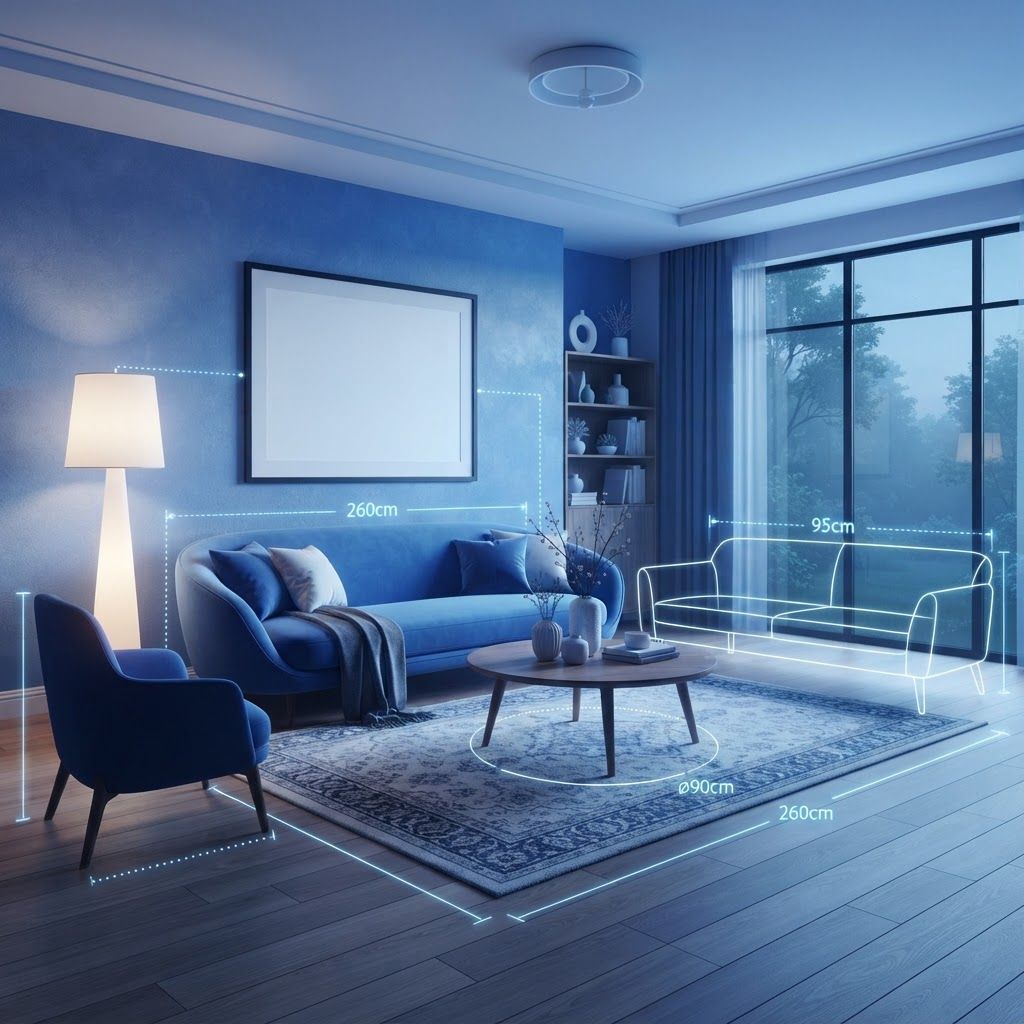
Why Staging Matters in a Premium Market
Home staging moved from a niche American concept to a mainstream part of the UK selling process over the past decade, and nowhere does it make more commercial sense than in high-value markets. In Epping Forest, where family homes routinely transact well above the national average, even a modest percentage improvement in achieved price substantially exceeds the cost of staging.
The underlying logic is straightforward. The overwhelming majority of buyers now begin their search online, and the first photograph determines whether they click through or scroll past. A property that photographs poorly loses potential viewers before it has a chance. Once a buyer arrives in person, emotional response drives decision-making far more than most people admit, and a well-presented home creates that response.
Staging also affects speed. Properties that sit on the market accumulate what agents call stigma, prompting buyers to assume something is wrong. Selling quickly at a strong price is a better outcome than eventually selling after reductions.
What Home Staging Actually Involves
The process typically begins with a consultation where a stager walks the property and produces a report identifying what should change. For many homes this is largely advisory: declutter these rooms, repaint this wall, remove this furniture, improve lighting here.
Partial staging involves the stager working with the owner's existing furniture, rearranging layouts, adding accessories, styling surfaces and introducing soft furnishings to create a coherent look. This is the most common approach for occupied properties.
Full staging applies to empty properties, where furniture, artwork, lighting and accessories are hired and installed to show the space in use. Empty rooms photograph badly and make it hard for buyers to judge scale, so this can transform a vacant property's appeal.
Some stagers also offer pre-sale renovation management, coordinating decorators, flooring, minor building work and gardening to bring a property to market condition.
Ten Home Staging Services Operating in the District
1. Forest Home Styling provides full and partial staging across the district, with a substantial furniture inventory and a design approach tailored to the local buyer demographic rather than generic show home styling.
2. Epping Property Presentation focuses on consultation and partial staging for occupied homes, working with owners to maximise impact using existing furniture wherever possible.
3. Loughton Interiors for Sale specialises in period property, understanding how to present Victorian and Edwardian features rather than obscuring them beneath contemporary styling.
4. Chigwell Luxury Staging operates at the premium end, staging large detached homes with high-specification furniture and accessories appropriate to properties in the upper price brackets.
5. Essex Vacant Property Styling concentrates exclusively on empty homes and new build developments, including show home creation for developers.
6. Roding Valley Home Prep combines staging with a practical renovation management service, coordinating trades to resolve the issues that would otherwise deter buyers.
7. Theydon Styling Studio is a boutique operation offering a highly bespoke service on a small number of properties at a time, with detailed attention to each room.
8. Waltham Abbey Staging Solutions offers accessible pricing aimed at mid-market properties, with packaged services covering key rooms rather than whole houses.
9. North Weald Rural Property Styling specialises in barn conversions, cottages and rural homes, where the styling challenge differs considerably from suburban housing.
10. Buckhurst Hill Show Home Design works primarily with developers on new build schemes, creating the show units that drive off-plan sales.
Where Staging Delivers the Most Value
Kitchens and living rooms carry disproportionate weight in buyer decision-making and usually justify the most attention. Clear worktops, good lighting and a sense of space matter more than expensive additions.
The main bedroom benefits enormously from quality bedding, symmetry and the removal of personal items. Buyers respond to a hotel-like calm.
Entrance halls set expectations within seconds. Clearing coats, shoes and clutter, improving lighting and adding a mirror to increase perceived space delivers strong returns for minimal cost.
Gardens and outdoor space are frequently neglected yet heavily weighted by buyers in a district where outdoor living is part of the appeal. Cutting back, cleaning hard surfaces, and adding simple seating makes a measurable difference.
Cost and Return Considerations
Consultation-only services are the least expensive option and, for owners willing to do the work themselves, often deliver the best return on outlay. A few hundred pounds of advice can prompt changes worth far more.
Partial staging sits in the middle, involving stylist time and some hired accessories. Full staging of a vacant property is the largest investment, typically charged as an initial installation fee plus monthly furniture hire, which means the length of time on market affects total cost.
Industry research consistently suggests staged properties sell faster and for more, though the precise figures vary. The sensible way to evaluate it is to compare the total staging cost against a realistic estimate of the price improvement and the cost of carrying the property for additional months.
Doing It Yourself Effectively
Not every seller needs professional staging. The core principles can be applied independently: remove roughly a third of your possessions, depersonalise by taking down family photographs, repaint in neutral tones, deep clean everything including windows, maximise natural light, ensure every bulb works and matches in colour temperature, and fix small defects like sticking doors and cracked tiles.
Photograph the rooms on your phone before the professional shoot. The camera reveals clutter and imbalance that the eye filters out, and gives you a chance to correct it.
Conclusion
In Epping Forest's competitive and high-value market, presentation is not cosmetic detail but a commercial decision. Whether through a full professional service or careful self-preparation, the sellers who invest attention in how their home is perceived consistently achieve better outcomes. Given the sums involved in a typical local transaction, it is one of the highest-return actions available to a vendor.
Want your brand featured in front of decision-makers? Publish a guest post or get a link insertion in our guides through AAMAX's guest post and link insertion service.
Helpful Links
 SponsoredAAMAX — Full-Service Digital Agency
Write for Us
Share your expertise with our readers. We welcome guest contributions from industry specialists.
Pitch your idea