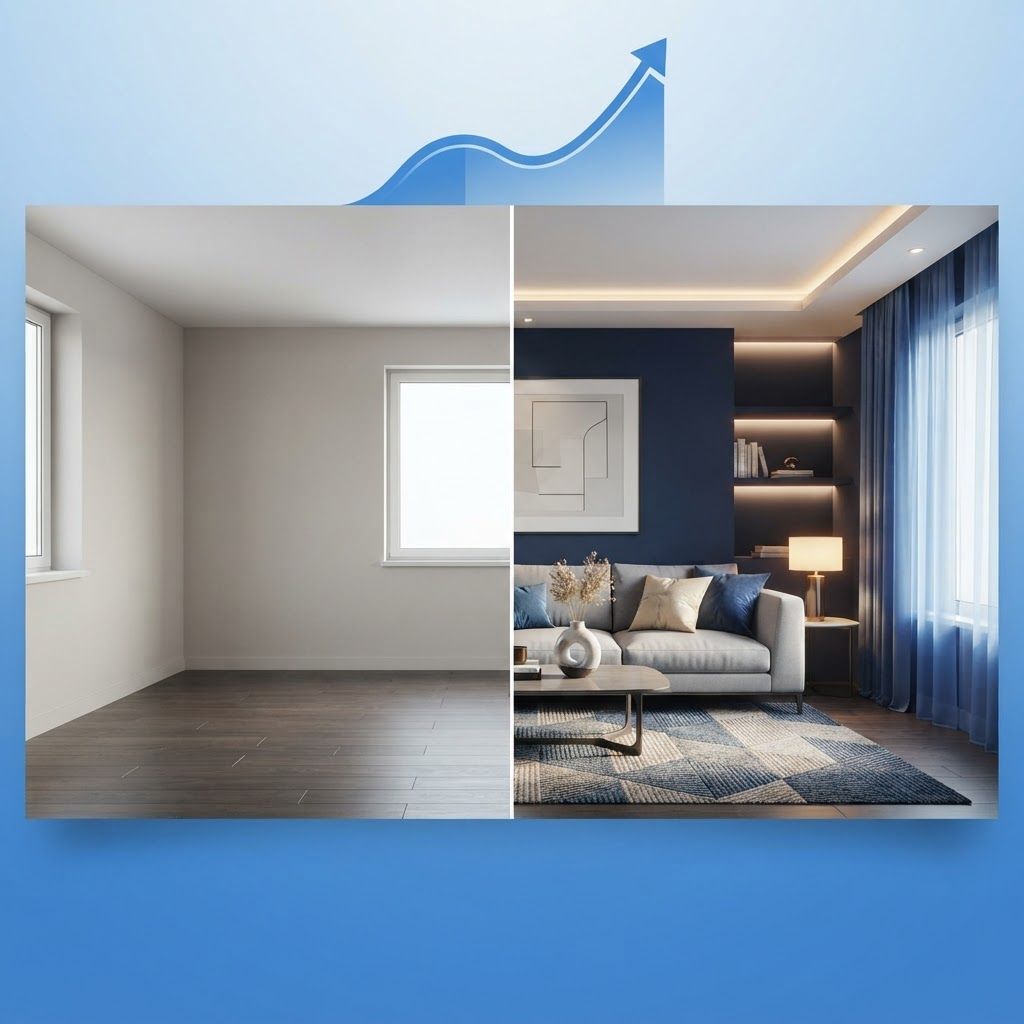
What Home Staging Really Means
Home staging is the deliberate preparation of a property for sale so that it appeals to the widest possible pool of buyers. It is not decoration for the current owner taste, and it is not renovation. It is a marketing exercise concerned with how a property photographs, how it feels on a viewing and how easily a buyer can imagine themselves living there.
In Bassetlaw, where the stock ranges from Victorian terraces in Worksop to period houses in Retford, rural barn conversions and modern estate homes, staging has become increasingly relevant. The reason is simple: almost every buyer now begins on a property portal, scrolling quickly. A property either earns a click in the first photograph or it does not. Staging is what makes that photograph work.
Ten Home Staging Services and Providers Available to Bassetlaw Sellers
1. Independent home staging consultants operating across Nottinghamshire and South Yorkshire provide the most common route. A consultation covering decluttering, furniture placement, colour and lighting typically costs a modest fee and delivers the majority of the available benefit.
2. Full furniture rental staging companies supply complete room sets for vacant properties. Empty rooms photograph poorly and read as smaller than they are, so for probate sales, new builds and investor refurbishments this service transforms the marketing material.
3. Estate agency in-house presentation services are increasingly offered by premium agents and networks such as Fine and Country, which often include professional photography, styling advice and lifestyle imagery within their marketing package.
4. Interior design practices offering pre-sale styling serve the upper end of the Bassetlaw market, where a substantial rural property may warrant a more considered approach to presentation given the price at stake.
5. Professional property photographers and videographers are arguably the most important single investment. Wide-angle photography, correct exposure balancing interior and window light, drone imagery for rural properties and video walkthroughs all materially increase portal engagement.
6. Virtual staging providers digitally furnish empty rooms in photographs. This is far cheaper than physical staging and is legitimate provided listings clearly disclose that images are virtually staged, which is both an ethical and a regulatory requirement.
7. Decluttering and professional organising services address the single biggest presentation problem in occupied homes. Removing a third of the contents of a house makes it feel larger, cleaner and better maintained than any amount of styling.
8. Storage providers across Worksop and Retford are the practical partner to decluttering. Short-term self-storage during a marketing period is inexpensive relative to the effect on presentation and is widely used by sellers.
9. Handyman, decorating and garden services handle the small remedial work that staging reveals. Filling cracks, repainting in neutral tones, fixing dripping taps, cleaning grout and tidying front gardens costs little and removes the visual cues that make buyers suspect deferred maintenance.
10. Deep cleaning and carpet cleaning specialists complete the picture. Cleanliness is the one factor viewers comment on most, and a professionally cleaned house consistently outperforms a well-styled but grubby one.
Does Staging Actually Work?
The evidence from across the UK market is consistent: staged properties tend to sell faster and frequently achieve higher prices than comparable unstaged homes. The mechanism is partly psychological and partly practical. Buyers form an emotional judgement within seconds of entering, and staging manages that first impression. More concretely, staging increases click-through rates on portals, which increases viewings, which increases the likelihood of competing offers.
The effect is strongest in three situations: vacant properties, properties with challenging layouts where the intended use of a room is unclear, and properties competing against new builds with show homes. In Bassetlaw, where estate developments often compete directly with second-hand stock, this last point is particularly relevant.
The Practical Staging Checklist
Start outside. Kerb appeal determines whether a buyer arrives in a positive frame of mind. Clean the front path, tidy borders, repaint the front door, remove bins from view and clear gutters. Rural properties should have a swept, uncluttered approach with parking clearly visible.
Inside, depersonalise before you decorate. Remove family photographs, collections, religious items and anything strongly identity-specific. The aim is not a blank box but a space where the buyer imagination has room. Reduce furniture until circulation is generous, since rooms feel larger when you can walk through them easily.
Address light aggressively. Clean windows inside and out, remove heavy curtains, replace low-wattage bulbs with consistent warm-white lighting throughout, and use mirrors to bounce light into darker rooms. Many Bassetlaw period properties have small windows, and lighting is the cheapest way to counteract that.
Neutralise strong colours. This does not mean everything must be magnolia, but a feature wall in a bold colour will divide opinion, and a divided opinion is a lost buyer. Soft neutrals with texture and a few accent pieces photograph best.
Define every room clearly. A spare bedroom used for storage should be staged as a bedroom or a study. Buyers count bedrooms, and a room that does not read as one loses you the comparison.
Budget and Return
Staging spend should be proportionate to the property value. A modest terraced house might justify a consultation, a deep clean, decluttering and some repainting. A substantial rural property could justify full furniture rental and professional photography with drone footage. As a rough principle, spending a fraction of one per cent of the asking price on presentation is usually recoverable several times over.
Be disciplined about what not to do. Full kitchen and bathroom replacements rarely return their cost at sale, and expensive structural work is generally better left as a negotiating point. Staging is about presentation, not renovation.
Trends in Property Presentation
Several developments are worth noting. Video walkthroughs and virtual tours have become standard rather than premium, and properties without them receive measurably less engagement. Home offices have become a genuine selling feature since hybrid working became normal, and staging a room specifically as a workspace resonates with a large share of Bassetlaw buyers who work remotely.
Energy efficiency has also entered the presentation conversation. Highlighting insulation, double glazing, a heat pump or solar panels in both the listing and the viewing narrative addresses a running-cost concern that now influences offers directly.
Getting Started
Book a staging consultation before your agent takes photographs, not after. Photography is the one step that cannot be redone cheaply once the property is live, and relisting with new images signals a stale property. Prepare first, photograph second, launch third. Sellers who follow that order consistently achieve better results in the Bassetlaw market than those who rush to market and improve later.
Want your brand featured in front of decision-makers? Publish a guest post or get a link insertion in our guides through AAMAX's guest post and link insertion service.
Helpful Links
 SponsoredAAMAX — Full-Service Digital Agency
Write for Us
Share your expertise with our readers. We welcome guest contributions from industry specialists.
Pitch your idea