

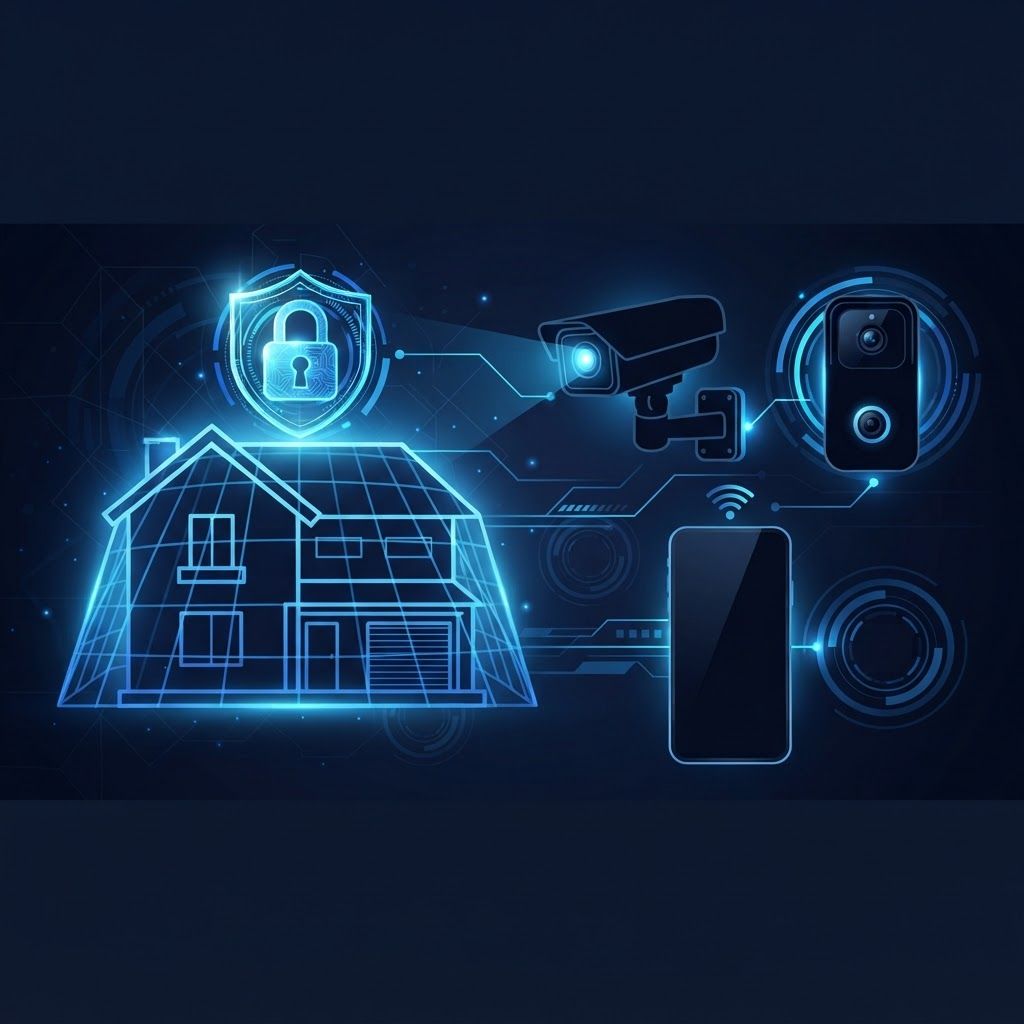
Security That Actually Works
Home security has changed enormously in a short period. A decade ago it meant a bell box on the wall and a keypad by the front door. Today it encompasses networked cameras, video doorbells, smart locks, sensor-based alarms and remote monitoring accessible from a phone anywhere in the world. The technology is impressive, but effectiveness still depends on sound design: sensible coverage, reliable detection and solid physical protection at doors and windows.
Dartford's mix of terraced streets, suburban estates, rural fringes and apartment developments creates different security needs. A ground-floor flat, a detached house with rear access and a rural property with outbuildings each require quite different approaches. The companies below cover that range.
1. Darent Security Systems
Darent Security Systems designs and installs intruder alarms for homes and small businesses, offering both bells-only and monitored options. The firm surveys properties individually rather than fitting standard packages, identifying the specific vulnerabilities of each layout.
2. Crossing Point Alarms
Crossing Point Alarms focuses on wireless alarm systems, which suit finished properties where cabling would be disruptive. Modern wireless systems use encrypted signalling and supervised devices that report low battery or loss of communication rather than failing silently.
3. Thameside CCTV Installations
Thameside CCTV Installations provides camera systems for domestic and commercial premises, covering lens selection, positioning, lighting and recording retention. Camera placement is the critical factor; a badly positioned camera produces footage that identifies nothing useful.
4. Stone Crossing Smart Home Security
Stone Crossing Smart Home Security integrates alarms, cameras, video doorbells, smart locks and lighting into a single controllable system. Integration means that a detected event can trigger recording, lighting and notification simultaneously rather than operating as unconnected devices.
5. Greenhithe Locksmith and Security
Physical security remains the foundation. Greenhithe Locksmith and Security upgrades locks, fits anti-snap cylinders, reinforces door frames and installs window locks and security bars. Most burglaries exploit weak physical points rather than defeating electronics.
6. Wilmington Monitored Security
Wilmington Monitored Security connects alarm systems to a monitoring centre that verifies activations and escalates response. Monitoring adds an ongoing cost but converts an alarm from a noise-maker into a system with an actual response process behind it.
7. Joyce Green Access Control
Joyce Green Access Control installs door entry, intercom and access systems for apartment blocks and shared buildings, where controlling communal entry is often the main security concern for residents.
8. Temple Hill Security Lighting
Temple Hill Security Lighting designs external lighting that deters without creating nuisance. Well-aimed, appropriately timed lighting improves camera performance and removes the dark approaches that make properties attractive targets.
9. Bean Valley Rural Security
Rural and semi-rural properties face different risks: outbuildings, machinery, longer response times and poor connectivity. Bean Valley Rural Security uses perimeter detection, wireless links and standalone recording suited to those conditions.
10. Hesketh Security Group
Hesketh Security Group completes the list with comprehensive systems for larger properties, combining perimeter detection, integrated CCTV, access control and professional monitoring under a single coordinated design.
Designing a Sensible System
Start by walking the property and identifying how someone would actually get in. Rear and side access, vulnerable ground-floor windows, flat roofs providing access to first-floor openings and unlit approaches are the usual weak points. Protect those first rather than installing detection in the places that are easiest to wire.
Layer your approach: deterrence through visible measures and lighting, delay through good locks and physical protection, detection through alarms and cameras, and response through monitoring or notification. A system strong in one layer and absent in another leaves an obvious gap.
Cameras, Recording and Privacy
Camera systems should record locally, to cloud storage or ideally both, with a retention period long enough that an absence of a week or two does not lose the footage. Consider image quality in darkness, since many incidents occur at night and low-cost cameras often produce unusable low-light images.
Privacy obligations apply when domestic cameras capture areas beyond your property boundary, such as neighbouring gardens or public pavements. Position cameras to minimise this, use privacy masking where available, and be prepared to explain your setup to neighbours. Doing so avoids disputes and is simply good practice.
Insurance and Standards
Insurers may offer premium reductions for professionally installed and monitored alarm systems, and some policies specify minimum lock standards for doors and windows. Check your policy wording before investing, and confirm that any installation meets the standards your insurer references. Retain installation certificates and maintenance records.
Maintenance and Reliability
Security systems fail quietly. Batteries deplete, cameras drift out of focus or position, lenses become dirty and recording devices fill up. Schedule periodic checks, test the alarm regularly and verify that recordings are actually being stored. A system nobody has tested in two years is closer to decoration than protection.
Trends in Home Security
Smart integration continues to dominate, with security merging into broader home automation. Video verification is growing, allowing monitoring centres to confirm an actual intrusion before escalating, which reduces false alarms substantially. Analytics that distinguish people from animals and vehicles have improved markedly, cutting the nuisance notifications that cause people to ignore their systems.
Cybersecurity has become part of physical security. Connected cameras and locks need strong unique passwords, current firmware and secure network configuration, since a poorly protected device can become a weakness rather than a safeguard.
Final Thoughts
Effective home security is a combination of good physical protection, sensible detection and a realistic response plan, not simply the most impressive technology available. Choose an installer who surveys properly, explains the reasoning behind each device and offers ongoing support. Dartford's security firms cover everything from a single lock upgrade to a fully monitored integrated system.
Want your brand featured in front of decision-makers? Publish a guest post or get a link insertion in our guides through AAMAX's guest post and link insertion service.
Helpful Links
 SponsoredAAMAX — Full-Service Digital Agency
Write for Us
Share your expertise with our readers. We welcome guest contributions from industry specialists.
Pitch your idea

