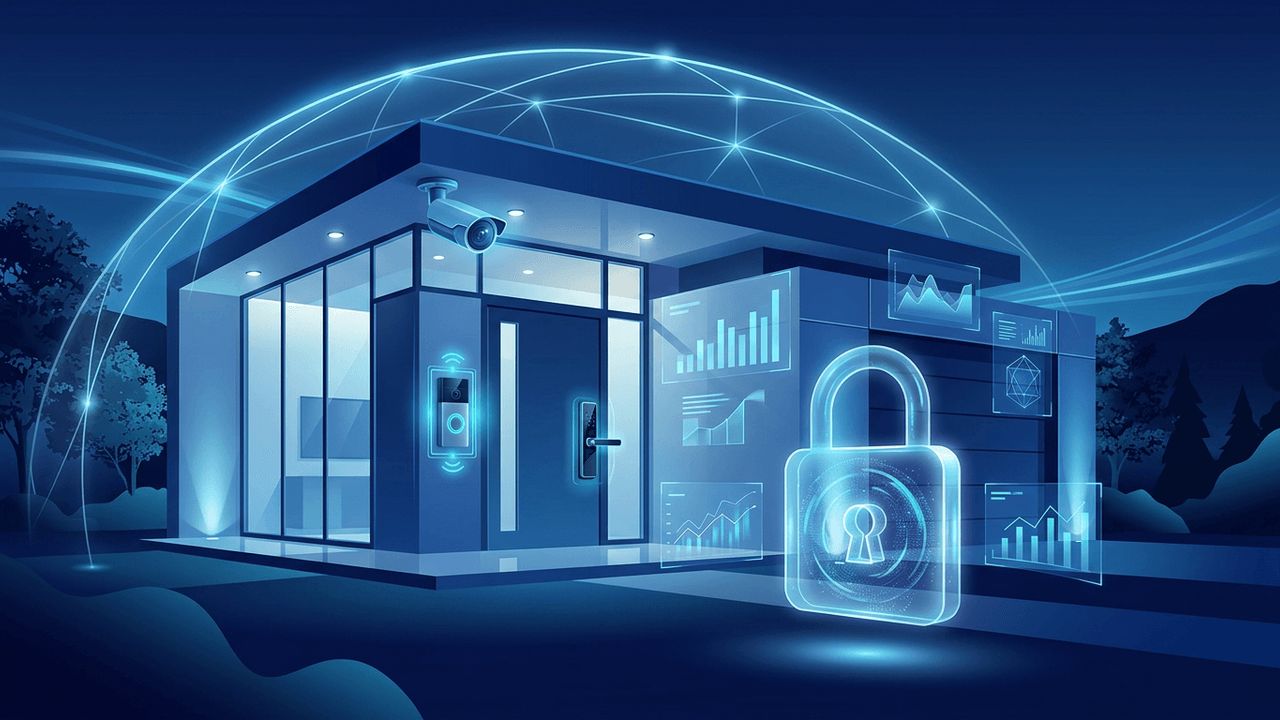
Home Security in a Suburban London Borough
Bexley sits in an unusual security position. It is quieter than inner London, with a large share of owner-occupied semi-detached and detached housing, but it also carries the characteristics that opportunist crime tends to favour: rear alleyways, side gates, detached garages, garden outbuildings and long residential roads with predictable daily rhythms. Add the borough's excellent rail links, which move people in and out quickly, and it becomes clear why residents take security seriously.
The good news is that the technology has improved dramatically. Systems that once required professional monitoring contracts now offer app-based control, video verification and cloud storage. The challenge for homeowners is separating genuinely robust installations from cheap kit sold on convenience alone.
Ten Home Security Companies Serving Bexley
1. Bexley Secure Systems A borough-focused installer offering graded intruder alarms, CCTV and access control for both residential and small commercial clients. Their strength is professional design: a proper walk-through survey, zoned detection and correctly sited sensors rather than a one-size box.
2. Danson Alarm Services Long-standing local specialists in monitored alarm systems with police-response capability where eligibility allows. They handle takeover of existing panels, which is useful for buyers inheriting an ageing system in a period property.
3. Sidcup Smart Home Security Focused on integrated smart security: video doorbells, smart locks, indoor and outdoor cameras and automation tied into wider home systems. A good fit for households that want everything controlled from a single app with no monthly monitoring commitment.
4. Welling CCTV Solutions Camera specialists working across domestic and light commercial sites. Their emphasis on high-resolution recording, proper night-time performance and correct field-of-view planning matters more than raw megapixel claims, and they advise on GDPR-compliant positioning where cameras overlook shared space.
5. Crayford Locksmiths & Security Physical security first. Insurance-approved locks, reinforced door and window hardware, patio door security and emergency lockout response. Since a large share of break-ins still exploit weak physical points, this remains the highest-value upgrade for many homes.
6. Erith Fire & Security A combined life-safety and security provider covering intruder alarms alongside fire detection, emergency lighting and extinguisher servicing. Particularly relevant for HMOs, flats above shops and small business premises in the borough.
7. Bexleyheath Home Protection Residential specialists known for wireless alarm installations that avoid disruptive cabling in finished homes. They typically pair perimeter contacts with internal motion detection and external sounders, and offer self-monitoring or professional monitoring options.
8. Thames Gateway Security Group A larger regional operator serving Bexley with commercial-grade capability: access control, intercom systems, gated entry for private roads and multi-site monitoring. Often chosen by residential blocks and managing agents.
9. North Kent Monitoring Services Focused purely on the monitoring layer, connecting new or existing alarm systems to a certified alarm receiving centre with keyholder and escalation protocols. A sensible route for homeowners who already have hardware but no response plan.
10. Foots Cray Security Installations A smaller independent installer with a strong reputation for aftercare, servicing and honest advice about what a property actually needs. Their approach tends to favour fewer, better-placed devices over large device counts.
What Actually Deters Intruders
Security professionals consistently point to layering. Visible deterrence comes first: external lighting, a maintained frontage, a clearly signed alarm and cameras at approach points. Physical resistance comes second: British Standard locks, laminated or secure glazing, solid door frames, secured side gates and locked outbuildings.
Detection is the third layer, and this is where sensor placement matters far more than sensor quantity. Entry points, hallways and stairwells give the best coverage. The fourth layer is verification and response, meaning the ability to confirm an event via video and escalate it quickly, whether through a monitoring centre or a nominated keyholder.
Systems that fail usually fail at the human layer. Alarms that are never armed, cameras recording to a drive nobody checks, and false alarms that train neighbours to ignore the siren all undermine otherwise good hardware.
Industry Trends to Understand
Video verification has become the dominant development. Rather than an unexplained alarm activation, homeowners and monitoring centres now receive a short clip, which reduces false dispatches and speeds genuine response. Cloud storage with local backup is increasingly standard, protecting footage even if a recorder is stolen.
AI-based analytics have also improved practically. Distinguishing a person from a cat, a vehicle from a shadow, or loitering from a passer-by cuts nuisance notifications significantly. Meanwhile, cyber security has become part of the conversation: connected cameras and locks need firmware updates, strong unique passwords and two-factor authentication, because a poorly secured device is a network vulnerability as much as a security asset.
How to Choose Well
Look for installers with recognised industry certification, since insurers frequently require professionally installed and certificated systems for policy discounts or higher-value cover. Ask whether the alarm meets relevant grading standards for your property type, and confirm whether monitoring is included, optional or absent.
Get clarity on ongoing costs. Monitoring fees, cloud storage subscriptions, annual servicing and battery replacement all recur. Ask what happens if you stop paying: some systems degrade to almost nothing without a subscription, which is important to know before signing.
Check contract length and whether equipment ownership transfers to you. Ask about response times for faults, and confirm that any camera scheme respects neighbours' privacy, since overlooking a neighbouring garden or public footpath brings data-protection responsibilities in the UK.
Final Thoughts
Effective home security in Bexley is rarely about buying the most expensive system. It is about honest assessment of how a specific property could be approached, then layering deterrence, physical resistance, detection and response accordingly. The borough is well served by both traditional alarm engineers and modern smart-home installers, so the practical step is to book two or three surveys, compare their reasoning rather than just their prices, and choose the company that explains why each device is where it is.
Want your brand featured in front of decision-makers? Publish a guest post or get a link insertion in our guides through AAMAX's guest post and link insertion service.
Helpful Links
 SponsoredAAMAX — Full-Service Digital Agency
Write for Us
Share your expertise with our readers. We welcome guest contributions from industry specialists.
Pitch your idea