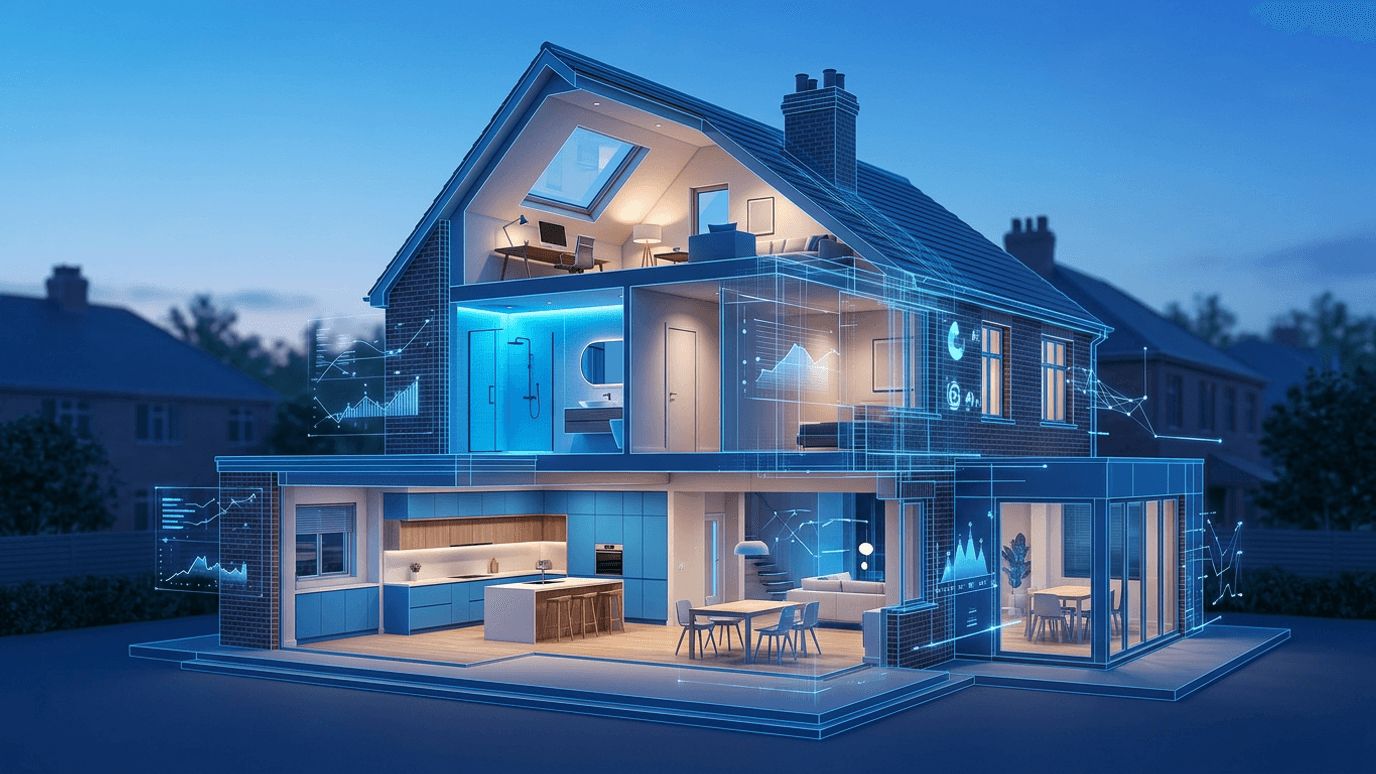
Renovation in a Mixed Housing City
Swansea offers one of the most varied housing landscapes in Wales, and that variety shapes the renovation market. Terraced streets in Uplands, Brynmill and Sandfields date largely from the late Victorian and Edwardian periods, bringing solid walls, lime plaster, sash windows and chimney breasts. Sketty, Killay and West Cross are dominated by mid-century semis with generous plots ideal for extensions. The Gower has stone cottages and rural properties, often with conservation sensitivities. Around SA1 and the Marina, apartments and newer builds demand a different, more contained style of refurbishment.
Successful renovation companies in the city understand that these property types cannot be approached identically. Sealing a solid-wall Victorian terrace with modern impermeable materials, for example, is a well-documented route to damp problems, whereas the same approach on a cavity-wall semi is perfectly appropriate.
The Top 10 Home Renovation Companies in Swansea
1. Bay Renovations Swansea — A full-service contractor handling whole-house refurbishments, extensions and loft conversions. Known for structured project management, staged payment schedules tied to milestones, and clear communication throughout longer builds.
2. Gower Building & Restoration — Specialists in period and rural properties across the Gower and Mumbles, with expertise in stonework, lime mortar and render, timber repair and sympathetic modernisation of older homes.
3. Swansea Kitchen & Bathroom Studio — Focused specifically on the two rooms with the greatest impact on value and daily life. Services typically span design, supply, plumbing, electrics, tiling and installation under one contract, which reduces coordination risk.
4. Uplands Property Renovations — A team concentrating on period terraced housing, including damp resolution, replastering, sash window restoration, chimney works and layout reconfiguration within tight footprints.
5. Marina Interior Refurbishments — Apartment and new-build specialists working within the constraints of managed buildings, lift access, noise restrictions and shared services. Strong on contemporary finishes and space-efficient design.
6. Valley Home Improvements — Covering Morriston, Clydach, Llansamlet and the Swansea Valley, this contractor handles extensions, conversions, re-wiring, heating upgrades and complete internal refits for family homes.
7. Swansea Loft & Extension Co. — Focused on adding usable space: rear and side extensions, dormer and hip-to-gable loft conversions, garage conversions and structural openings, with in-house coordination of structural calculations and building control.
8. Heritage Craft Builders Wales — A conservation-minded firm experienced with listed buildings and properties in conservation areas, offering breathable construction methods, traditional joinery and careful reinstatement of original features.
9. EcoRenovate Swansea — Specialists in retrofit and energy performance: insulation upgrades, airtightness improvements, ventilation strategy, heat pump readiness and window replacement designed to reduce running costs without creating moisture problems.
10. Sketty Design & Build — A design-and-build practice combining architectural drawings, planning submissions and construction in a single contract, which suits homeowners who want one accountable party from concept to completion.
Planning Your Renovation Budget
Renovation costs in Swansea sit below London and the South East but have risen substantially in recent years alongside material and labour inflation. The most reliable approach is to build a budget in three layers: the core scope, a defined allowance for finishes such as tiles, sanitaryware and kitchen units, and a contingency of at least ten to fifteen per cent. Older properties almost always reveal surprises once floors and plaster come up — failed lintels, historic damp, redundant pipework, unsafe wiring — and a contingency is what keeps a project moving rather than stalling.
Costs are also driven heavily by decisions many homeowners underestimate: moving a kitchen or bathroom significantly increases plumbing and drainage work, structural openings require calculations and steel, and bespoke joinery costs several times more than standard units. Agreeing specifications before work starts prevents the incremental changes that quietly inflate final invoices.
Permissions and Regulations
Many Swansea projects proceed under permitted development, but not all. Extensions beyond certain dimensions, alterations to front elevations, work in conservation areas and anything affecting a listed building require formal consent from the local authority. Separately, building regulations apply to structural alterations, new drainage, electrical work, insulation, ventilation and fire safety including escape routes from loft conversions. Reputable contractors handle these submissions as part of the project and will produce completion certificates at handover — documentation that becomes important when the property is eventually sold.
Realistic Timelines
A single bathroom refit typically takes one to two weeks; a kitchen replacement two to four. A rear extension usually spans two to four months from groundworks to finishing, while a full whole-house renovation on a Victorian terrace commonly runs four to eight months. Swansea's rainfall affects programmes where roofs are opened up or groundworks are exposed, so scheduling external phases for the drier months reduces delays. Lead times for windows, kitchens and specialist materials should be ordered early, as these frequently determine the critical path rather than labour availability.
Avoiding Common Pitfalls
The most frequent renovation failures in the city are predictable. Choosing the cheapest quote without comparing scope often means items have simply been omitted. Beginning demolition before a design is finalised leads to expensive rework. Applying cement render or non-breathable paint to solid-wall properties traps moisture and causes damp that is then misdiagnosed as rising damp. Skipping written contracts and payment schedules removes any protection if a project stalls. And underinvesting in the invisible essentials — wiring, heating, insulation, drainage — while overspending on visible finishes leaves a home that looks renovated but performs poorly.
Trends in Swansea Renovation
Open-plan kitchen-dining spaces at the rear of terraced homes remain the single most requested project, usually combined with bi-fold or sliding doors to reclaim previously unused garden access. Home offices and multifunctional rooms have become standard rather than optional. Energy retrofit is the fastest-growing category, driven by running costs and future resale expectations. There is also a clear shift toward retaining and restoring original features — fireplaces, floorboards, cornicing and stained glass — rather than stripping them out, as buyers increasingly value character alongside modern performance.
Final Thoughts
Renovating well in Swansea depends less on budget size than on matching the right company to the right property. The ten firms above span heritage restoration, extensions and loft conversions, kitchen and bathroom specialists, apartment refurbishment, energy retrofit and complete design-and-build delivery. Clear scope, written contracts, sensible contingency and a contractor with demonstrable experience of your specific property type are what turn an ambitious plan into a finished home that performs for decades.
Want your brand featured in front of decision-makers? Publish a guest post or get a link insertion in our guides through AAMAX's guest post and link insertion service.
Helpful Links
 SponsoredAAMAX — Full-Service Digital Agency
Write for Us
Share your expertise with our readers. We welcome guest contributions from industry specialists.
Pitch your idea