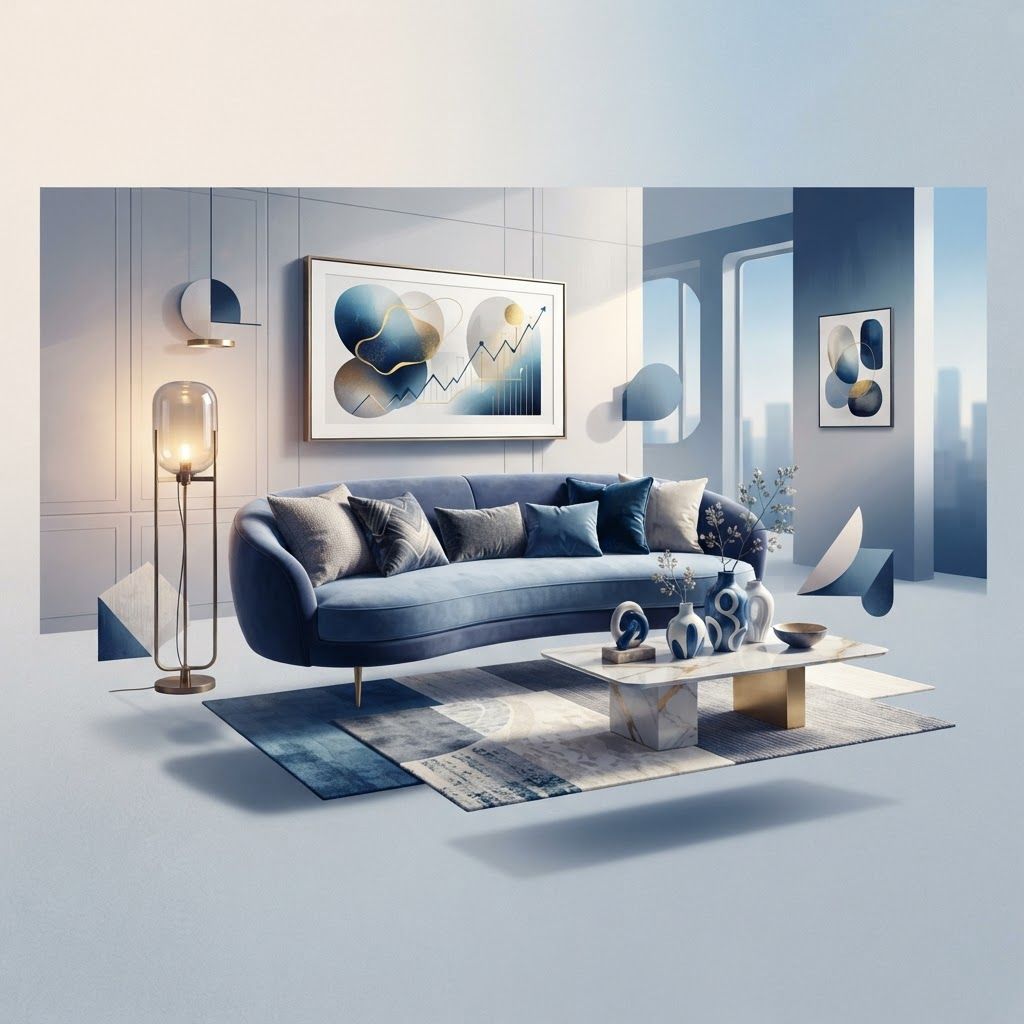
A Distinctive Local Interiors Character
Tameside's housing stock gives its interiors scene an unusual richness. Stone-built cottages in Mossley and Carrbrook, long rows of Victorian terraces in Ashton-under-Lyne and Hyde, interwar semis in Denton and Audenshaw, converted mill apartments along the canal corridor, and modern estates on former industrial land all coexist within a few miles. Each demands a different decorative approach, and local brands have adapted accordingly.
There is also a strong making tradition here. The borough's textile heritage never entirely disappeared, and it survives today in upholstery workshops, curtain makers, weavers and furniture restorers. Shoppers increasingly want provenance, durability and repairability rather than disposable furnishing, and the businesses profiled below reflect that shift towards considered, longer-lasting decor.
The Ten Best Home Decor Brands in Tameside
1. Tame Valley Interiors is a full-service furnishing brand offering sofas, dining furniture, lighting and accessories alongside an in-house design consultation. Its appeal lies in curation: rather than presenting endless choice, the showroom is arranged into coherent schemes so customers can see how pieces work together in realistic room proportions.
2. Ashton Home Furnishings is a long-standing town-centre retailer known for practical family furniture at accessible prices. Ranges are chosen for resilience, with washable covers, hard-wearing dining surfaces and generous storage, and the delivery team will assemble and position items rather than leaving boxes in the hallway.
3. Mill Loft Reclaimed Furniture works with timber salvaged from the region's industrial buildings, producing dining tables, benches, shelving and kitchen islands with genuine character. Each piece is finished to a hard-wearing standard, and the brand documents the origin of the timber, which resonates strongly in the mill apartments it often furnishes.
4. Hyde Curtain & Blind Company designs and manufactures made-to-measure window treatments. Its measuring service handles the awkward realities of local housing, including deep Victorian bays, stone mullions and sloping loft conversions, and it advises on thermal linings that make a measurable difference in older properties.
5. Stalybridge Ceramics Studio produces small-batch vases, lamp bases, planters and tableware in glazes inspired by the surrounding moorland and reservoir landscape. The studio also runs workshops, which has built a loyal following among customers who value knowing exactly who made the object on their shelf.
6. Denton Upholstery & Textiles reupholsters and restores furniture while also producing new cushions, headboards and window seats. Reviving a well-built frame rather than replacing it is both more sustainable and often better value, and the workshop's fabric library covers everything from heavy wool weaves to performance velvets.
7. Droylsden Lighting Studio specialises in decorative lighting, from statement pendants and wall lights to table lamps and shades. Staff advise properly on scale, hanging height, bulb temperature and dimming compatibility, details frequently overlooked when lighting is bought online.
8. Mossley Country Home caters to the rural-edge aesthetic with painted furniture, wool throws, natural stoneware, botanical prints and traditional ironmongery. The look is warm and unfussy, suiting the stone cottages and converted barns on the borough's eastern hillsides.
9. Dukinfield Rug & Flooring Gallery stocks wool rugs, runners, natural fibre matting and decorative flooring, offering a home trial service so customers can assess colour under their own lighting. Underlay advice and edge binding for bespoke sizes are handled in house.
10. Audenshaw Wall Art Collective represents local artists and printmakers, selling framed prints, canvases and original works alongside a bespoke framing service. Its rotating exhibitions give buyers access to regional talent without travelling into central Manchester.
Trends Shaping Tameside Interiors
Warm minimalism continues to dominate, but with more texture than the stark schemes of a decade ago. Layered neutrals, ribbed and fluted timber detailing, boucle and wool upholstery, and matt rather than gloss finishes give rooms depth without visual clutter. Deep, saturated colour is returning in smaller doses, particularly in snugs, dining rooms and hallways where a bolder tone feels considered rather than overwhelming.
Multifunctional space is the second major theme. With home working now permanently embedded, decor increasingly has to accommodate a desk in a bedroom or a workspace within a living room. Sliding screens, closable cabinet desks, acoustic panelling and clever lighting zones allow a single room to change use through the day. In smaller terraced properties, this flexibility is not a luxury but a necessity.
Sustainability has moved from a marketing claim to a purchasing criterion. Buyers ask about timber sourcing, foam content, fabric composition and whether covers and cushions can be replaced individually. Reclaimed and restored furniture has consequently shifted from a budget option to an aspirational one, which explains the strength of the borough's salvage and upholstery businesses.
Buying Decor That Lasts
Measure before you fall in love with a piece. Note doorway widths, stair turns and ceiling heights, since Victorian terraces frequently defeat large sofas that would fit comfortably in the room itself. Ask about frame construction, seat filling and whether replacement parts are available in a few years' time.
Consider light. North-facing rooms flatten cool greys, while the strong afternoon light on west-facing hillside properties will fade unprotected fabrics and timber finishes over time. Always take samples home and view them in the actual room at different points in the day rather than deciding under showroom lighting.
Finally, build a scheme gradually. Buying an entire room in one transaction rarely produces a space with personality. Investing first in the pieces you use most, such as seating, lighting and window treatments, then adding art, textiles and ceramics over time, tends to yield a more characterful and durable result.
Making Your Choice
For a complete scheme with professional guidance, choose a full-service interiors brand. For character and sustainability, look to reclaimed furniture and upholstery specialists. For finishing touches that make a room feel personal, the borough's ceramics studios and art collectives are genuine assets. Across all ten brands profiled here, the common thread is craftsmanship and honest advice, which is ultimately what separates a well-decorated home from a merely furnished one.
Want your brand featured in front of decision-makers? Publish a guest post or get a link insertion in our guides through AAMAX's guest post and link insertion service.
Helpful Links
 SponsoredAAMAX — Full-Service Digital Agency
Write for Us
Share your expertise with our readers. We welcome guest contributions from industry specialists.
Pitch your idea