Preston's Manufacturing Heritage and Modern Hardware Industry
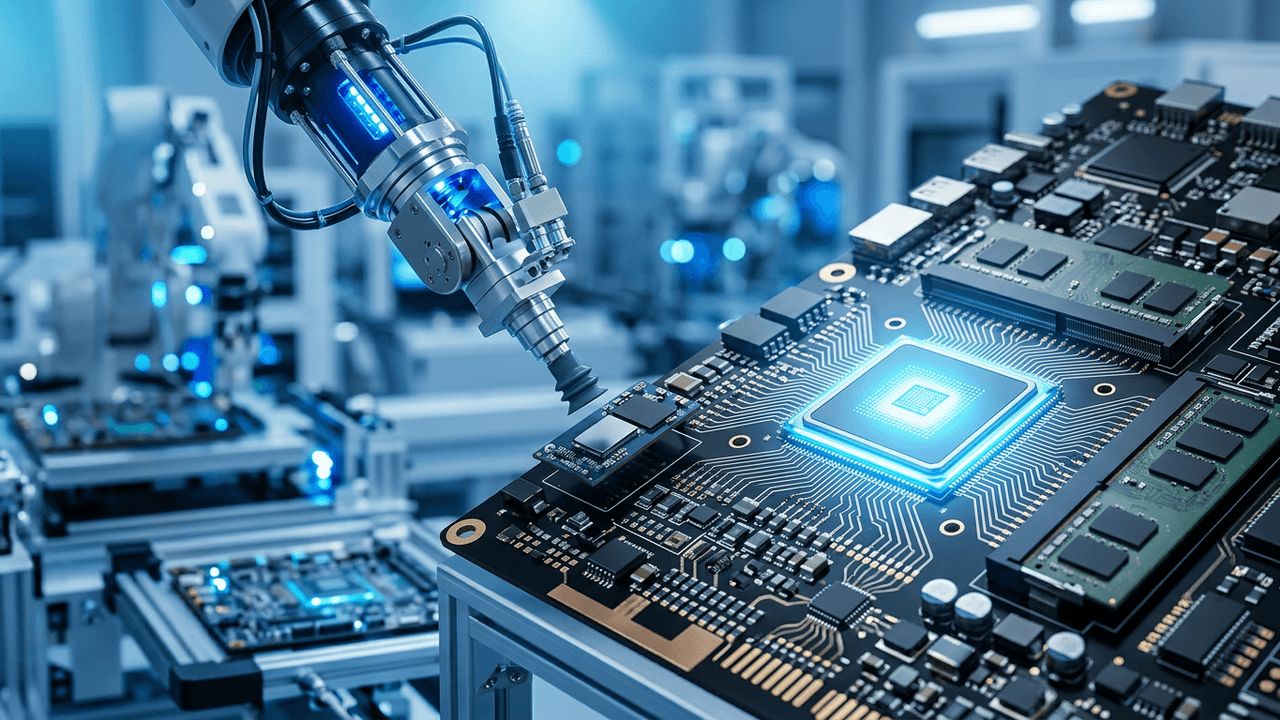
Lancashire's industrial history gives Preston an unusual advantage in hardware. The region retains a deep base of precision engineering, tooling, machining and electronics assembly capability developed around aerospace and heavy industry. That infrastructure supports a modern hardware sector spanning electronics design, contract manufacturing, industrial enclosures, instrumentation and connected devices.
For product companies, proximity matters more in hardware than in software. Being able to visit a factory, inspect a first article and resolve a tolerance issue in person shortens development cycles considerably. Preston's manufacturers benefit from that dynamic, particularly for low and medium volume production where offshore manufacturing offers limited savings once freight, tooling and quality risk are counted.
1. Ribble Electronics Manufacturing
Ribble Electronics Manufacturing provides printed circuit board assembly and box build services, handling surface mount and through-hole work with automated optical inspection. It supports clients from prototype through to volume production, and its design-for-manufacture reviews frequently reduce assembly cost before production begins.
2. Northgate Precision Engineering
Northgate Precision Engineering specialises in machined components and assemblies to tight tolerances, serving aerospace, instrumentation and industrial equipment customers. Its metrology capability and documented inspection processes support the traceability requirements of regulated supply chains.
3. Guild Industrial Systems
Guild Industrial Systems manufactures control panels, industrial enclosures and electromechanical assemblies. Its work includes wiring, testing and certification for equipment destined for factory and utility environments where robustness and safety compliance are paramount.
4. Fishergate Instruments
Fishergate Instruments designs and produces measurement and monitoring instruments, including sensors and data logging equipment. Its calibration facilities and long product support commitments appeal to clients who require repeatability over many years of service.
5. Avenham Connected Devices
Avenham Connected Devices builds IoT hardware, combining embedded electronics, wireless connectivity and enclosure design. It handles regulatory testing, certification and firmware provisioning, providing a route to market for companies whose expertise lies in software or service delivery rather than hardware.
6. Broadgate Metal Fabrication
Broadgate Metal Fabrication provides sheet metal work, laser cutting, forming and finishing for equipment housings, brackets and structural components. Rapid turnaround on prototype parts makes it a common choice during iterative development.
7. Deepdale Cable Assemblies
Deepdale Cable Assemblies produces custom cable harnesses, connector assemblies and looms. Its testing regime, including continuity and high-voltage verification, addresses a component category that causes a disproportionate share of field failures when poorly made.
8. Cottam Product Engineering
Cottam Product Engineering offers hardware design services covering mechanical design, electronics schematics, thermal analysis and prototyping. Clients use it as an outsourced engineering department, taking concepts to production-ready documentation.
9. Winckley Contract Manufacturing
Winckley Contract Manufacturing manages full production programmes, coordinating component sourcing, assembly, testing, packaging and logistics. Its supply chain management has become particularly valuable given the volatility in electronic component availability in recent years.
10. Preston Additive Manufacturing
Preston Additive Manufacturing provides industrial 3D printing in polymers and metals, supporting prototyping, tooling, jigs and low-volume end-use parts. It advises on part consolidation and design changes that make additive production economically sensible rather than simply possible.
Trends in Hardware Manufacturing
Supply chain resilience has become a strategic priority, with manufacturers holding broader approved component lists and designing for part substitution. Reshoring interest continues, driven by lead time certainty and total cost analysis rather than unit price alone. Automation and digital shop-floor systems are improving traceability, allowing individual units to be linked to specific batches, operators and test results. Sustainability requirements are influencing material selection, repairability and end-of-life planning, particularly for products sold into public sector or large corporate procurement. Additive manufacturing has settled into a well-understood role for tooling, fixtures and complex low-volume parts.
How to Select a Hardware Manufacturing Partner
Match volume expectations carefully, as a manufacturer optimised for high-volume runs will price small batches unattractively and vice versa. Review quality systems, certifications and inspection documentation, and ask how non-conformances are recorded and resolved. Discuss component sourcing responsibility and how obsolescence will be handled over the product's life. Request a design-for-manufacture review before finalising your design, since changes made early cost far less than those made after tooling. Finally, visit the facility: little reveals more about a manufacturer than seeing how the floor is organised.
From Prototype to Production
Bringing hardware to market involves stages that software teams often underestimate. Early prototypes prove concept and typically use off-the-shelf development boards and printed enclosures. Engineering prototypes introduce custom circuit boards, thermal management and mechanical design closer to the final product. Pre-production units validate manufacturing processes, test fixtures and assembly instructions, and are used for regulatory testing including electrical safety, electromagnetic compatibility and any wireless approvals required. Only then does volume production begin, with first article inspection confirming that parts match documentation.
Each stage costs more to correct than the one before, which is why Preston's better manufacturers push for design reviews early. Component selection deserves particular attention: choosing parts with multiple sources and long expected availability prevents redesign when a single supplier discontinues a chip. Planning test fixtures alongside the product also pays for itself quickly, since manual testing becomes a bottleneck at even modest volumes.
Final Thoughts
Preston's hardware manufacturers combine traditional engineering strength with modern electronics and additive capability. For companies developing physical products, the region offers the significant advantage of manufacturing partners close enough to visit regularly, backed by the precision engineering culture that Lancashire's industrial history created and continues to sustain.
Want your brand featured in front of decision-makers? Publish a guest post or get a link insertion in our guides through AAMAX's guest post and link insertion service.
Helpful Links
 SponsoredAAMAX — Full-Service Digital Agency
Write for Us
Share your expertise with our readers. We welcome guest contributions from industry specialists.
Pitch your idea