

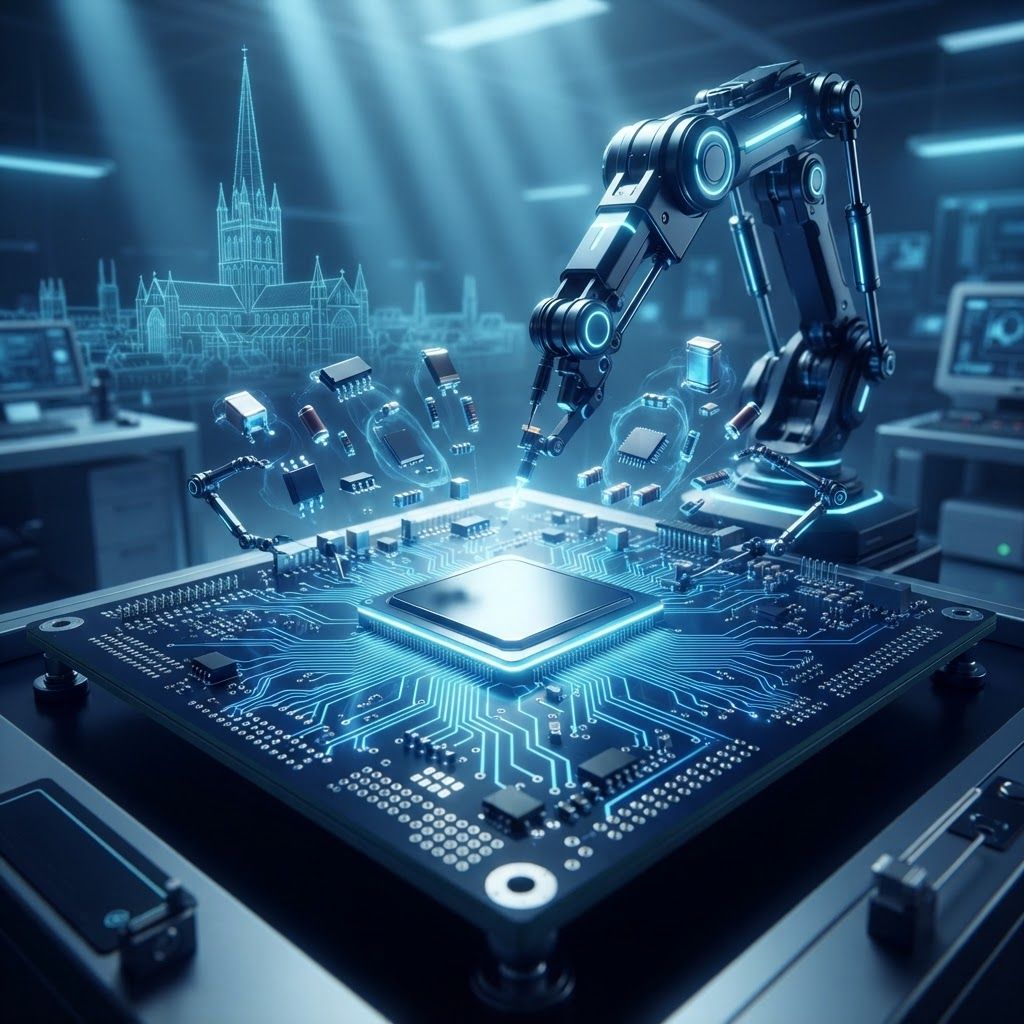
Norwich Manufacturing: A Quiet Industrial Strength
Norwich is better known for insurance, research and creative industries than for hardware, yet the city and its surrounding region sustain a genuinely capable manufacturing base. Norfolk has a long engineering heritage in agricultural machinery, food processing equipment and precision instruments, and that foundation has evolved into modern electronics assembly, sensor design, energy technology and specialist contract manufacturing.
Several factors support the sector. The offshore wind industry along the East Anglian coast has created substantial demand for engineering, fabrication and monitoring equipment. Agriculture continues to drive innovation in machinery, sensing and automation. The research institutes at Norwich Research Park require bespoke scientific instrumentation. And a skilled regional workforce, trained through local colleges and long-established engineering employers, keeps the capability alive.
What to Look For in a Hardware Manufacturing Partner
Selecting a manufacturer involves different considerations from selecting a software supplier, and the consequences of a poor choice are harder to reverse.
Quality management systems come first. Recognised quality standards, documented traceability of components and materials, and disciplined change control are essential. For products entering regulated markets, evidence of appropriate sector-specific accreditation is a baseline requirement.
Design capability determines how much value a partner can add. Some manufacturers build precisely to supplied drawings; others offer design for manufacture input that reduces cost and improves reliability before tooling is committed. Understanding which you are buying prevents expensive misunderstanding.
Supply chain resilience has become critical. Component shortages have taught manufacturers hard lessons about single-sourcing, and a good partner will discuss alternative components, lifecycle risk and inventory strategy openly.
Finally, consider scale fit. A manufacturer geared to high-volume production may not serve a prototype run well, and a prototyping specialist may struggle to scale. Honest conversations about volume expectations avoid disappointment on both sides.
The Top 10 Hardware Manufacturers in Norwich
1. Lotus Cars Engineering Supply Network
Norfolk's most famous engineering name anchors a substantial regional supply chain of precision component manufacturers, composites specialists and toolmakers. Suppliers serving this network operate to demanding automotive tolerances, and their capability is available to other sectors requiring high-specification engineering.
2. Norwich Electronics Assembly Specialists
The city supports contract electronics manufacturers offering surface mount and through-hole assembly, testing and box build. These providers serve product companies that need reliable low to medium volume production without establishing their own facilities, with the advantage of local oversight during production runs.
3. Precision Instrumentation Makers for Norwich Research Park
Scientific research generates constant demand for custom instrumentation, sample handling equipment and environmental control apparatus. Manufacturers serving Norwich Research Park have developed genuine expertise in one-off and small-batch precision builds to exacting specifications.
4. Agricultural Machinery Manufacturers of Norfolk
Norfolk's arable and horticultural industries support manufacturers of specialist cultivation, harvesting, grading and handling machinery. Their products combine heavy engineering with increasingly sophisticated electronic control and sensing, reflecting the shift toward precision agriculture.
5. Offshore Wind Component Fabricators
East Anglia's offshore wind sector has stimulated regional fabrication, cable handling equipment and monitoring hardware manufacture. Suppliers in this category are accustomed to harsh marine environments, rigorous certification and demanding project schedules.
6. Food Processing Equipment Engineers
With Norfolk a major food production region, manufacturers of hygienic processing, packing and conveying equipment form an important cluster. Stainless fabrication, washdown-rated electronics and food safety compliance are core competencies here.
7. Sensor and IoT Device Developers
A growing group of Norwich businesses design and manufacture connected sensing devices for agriculture, environmental monitoring and building management. These teams typically combine electronics design, embedded firmware and cloud connectivity, offering complete product development.
8. Custom Enclosure and Sheet Metal Fabricators
Practical hardware projects depend on enclosures, brackets and panels. Norfolk supports capable sheet metal, laser cutting and powder coating operations that provide fast turnaround for product developers and machine builders alike.
9. Cable Assembly and Wiring Harness Producers
Often overlooked, cable assembly specialists are essential to machinery, marine and renewable energy manufacturing. Regional providers offer bespoke harnesses, control panels and looms built to drawing with full testing documentation.
10. Prototyping and Additive Manufacturing Workshops
Completing the list, Norwich hosts prototyping workshops combining computer-controlled machining, additive manufacturing and rapid tooling. These facilities allow product developers to iterate physical designs quickly before committing to production investment, and they work closely with local design consultancies.
Trends Reshaping Local Manufacturing
Automation adoption is accelerating among Norfolk manufacturers responding to labour availability pressures, with collaborative robotics and vision inspection becoming common in medium-sized operations.
Electrification and energy efficiency are influencing both what is made and how. Manufacturers are redesigning products for lower power consumption while investing in on-site generation and heat recovery to control operating costs.
Reshoring interest has grown following years of supply chain disruption. Businesses that once manufactured exclusively overseas are placing at least a portion of production regionally to reduce lead times and improve responsiveness, which benefits capable local suppliers.
Digital integration is the fourth shift, with connected machinery, production monitoring and predictive maintenance increasingly expected even in traditional engineering environments.
Getting the Best from a Manufacturing Relationship
Invest properly in specification. Ambiguous drawings and informal requirements cause most disputes, so clear tolerances, materials, finishes, testing criteria and acceptance procedures pay for themselves. Visit the facility before committing, and speak to production staff rather than only sales representatives.
Agree how engineering changes will be handled and priced, since some change is inevitable. Build in first-article inspection and be realistic about lead times for components with long procurement cycles. Treat the manufacturer as a design contributor rather than an order taker, and the resulting product will usually be cheaper and more reliable.
Conclusion
Norwich and Norfolk offer a broader hardware manufacturing capability than their reputation suggests, spanning precision automotive engineering, electronics assembly, scientific instrumentation, agricultural machinery and renewable energy equipment. For product companies, the regional advantage is access to skilled engineering with the practical benefit of being able to stand on the shop floor and see the work happening.
Want your brand featured in front of decision-makers? Publish a guest post or get a link insertion in our guides through AAMAX's guest post and link insertion service.
Helpful Links
 SponsoredAAMAX — Full-Service Digital Agency
Write for Us
Share your expertise with our readers. We welcome guest contributions from industry specialists.
Pitch your idea

