

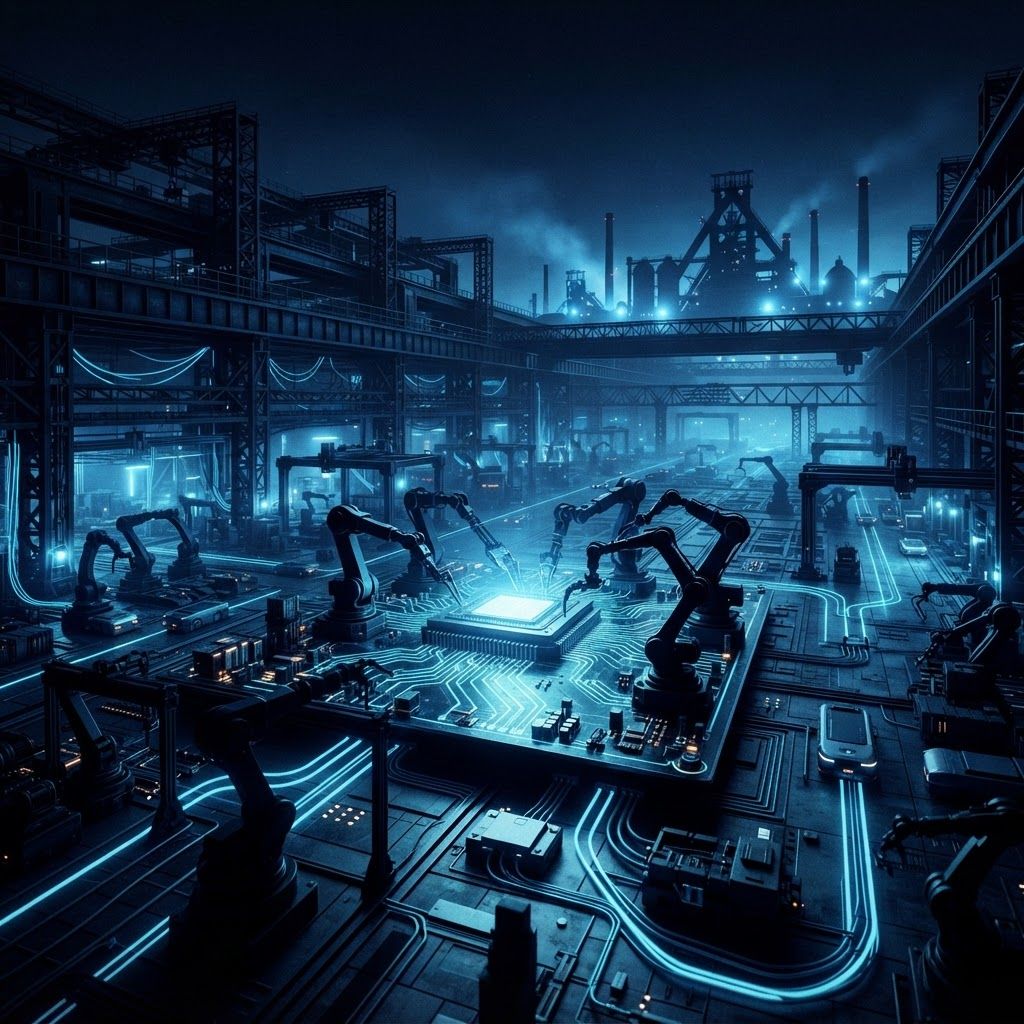
A Manufacturing Heartland in Transition
Few places in Britain carry a manufacturing identity as strongly as Neath Port Talbot. The steelworks silhouette is inseparable from the landscape, and generations of engineering knowledge have accumulated in the surrounding communities. What has changed is the shape of that industry. Alongside heavy metals production sits a growing layer of precision engineering, electronics assembly, renewable energy componentry and advanced materials work.
This diversification has been deliberate. Supply chains that once served a single dominant sector have learned to serve several, and the skills base has proved adaptable. A workshop that once fabricated structural steel may now produce components for offshore wind, rail infrastructure or automated handling equipment.
The Capabilities That Define Modern Local Manufacturing
Contemporary hardware manufacturing in the borough rests on several core capabilities. Computer numerical control machining delivers the tolerances demanded by aerospace, medical and automotive supply chains. Sheet metal fabrication and welding remain foundational, supported by increasingly sophisticated automation. Electronics assembly, including surface mount production, supports control systems and instrumentation. Additive manufacturing has moved from prototyping into low volume production of complex geometries.
Alongside these sit the quality systems that make them commercially viable. Certification to recognised quality standards, full material traceability, coordinate measuring inspection and documented process control are now entry requirements for most serious supply chains rather than differentiators.
Ten Hardware Manufacturers Serving Neath Port Talbot
1. Port Talbot Steel Fabrication. A heavy fabrication operation producing structural assemblies, platforms and bespoke steelwork for construction, energy and infrastructure clients. Its strength lies in handling large scale components that smaller workshops cannot accommodate.
2. Baglan Precision Engineering. A machining specialist working to tight tolerances across aerospace, medical and instrumentation sectors. Multi axis capability and rigorous inspection documentation make it a fit for regulated supply chains.
3. Afan Electronics Assembly. Providing surface mount and through hole assembly, testing and box build services. The firm serves control system manufacturers, instrumentation developers and industrial equipment producers requiring reliable low to medium volume electronics.
4. Neath Sheet Metal Works. Laser cutting, forming, punching and welding of enclosures, panels and brackets. Rapid turnaround and prototype friendly minimum quantities make it popular with product developers.
5. Margam Renewable Components. Manufacturing structural and mechanical components for wind, solar and marine energy installations. This firm exemplifies the borough's pivot towards the low carbon supply chain.
6. Skewen Automation Systems. Designing and building bespoke machinery, conveyors, jigs and automated handling equipment for production environments. Its work typically combines mechanical fabrication with control engineering.
7. Coastal Plastics and Composites. Injection moulding, vacuum forming and composite layup for housings, guards and lightweight structural parts, serving clients who need non metallic components alongside metal assemblies.
8. Cimla Toolmaking. A traditional toolroom producing dies, moulds, jigs and fixtures. Toolmaking skills have become scarce nationally, and firms retaining them hold considerable strategic value for local manufacturers.
9. Valleys Additive Manufacturing. Industrial three dimensional printing in polymer and metal, supporting rapid prototyping, spare part production and complex geometries that conventional machining cannot achieve economically.
10. Swansea Bay Contract Manufacturing. A full service partner handling design for manufacture, supply chain coordination, assembly and final testing for clients who prefer a single point of accountability across a whole product.
Technology Reshaping the Factory Floor
Digitalisation is the dominant trend. Machine monitoring, digital work instructions and connected quality systems give managers visibility that was previously available only through manual reporting. Overall equipment effectiveness has become a common management language rather than a specialist metric.
Automation continues to expand, but its character has changed. Rather than large fixed installations, manufacturers increasingly deploy collaborative robots for specific repetitive tasks, which can be redeployed as product mix changes. This suits the high mix, lower volume work that characterises much of the local sector.
Energy management has risen sharply up the agenda. With energy a major input cost in metals and processing, manufacturers are investing in monitoring, heat recovery, efficient drives and on site generation. These investments serve both cost control and the carbon reporting demanded by larger customers.
Skills and Workforce
The most frequently cited constraint across the borough is skilled labour. Experienced machinists, welders, toolmakers and controls engineers are in short supply as an older generation retires. Manufacturers responding effectively have rebuilt apprenticeship programmes, partnered with local colleges and created structured progression from shop floor to technical roles. Those that have not often find capacity limited by people rather than machinery.
Choosing a Manufacturing Partner
When selecting a supplier, look beyond machine lists. Ask about inspection procedures and whether measurement equipment is calibrated and traceable. Ask how non conformances are recorded and corrected. Ask about realistic lead times during busy periods, not just ideal conditions. Request a factory visit, since a well organised, clean and visibly managed workshop is a reliable indicator of process discipline.
For product developers, engaging a manufacturer early pays substantial dividends. Design for manufacture reviews routinely identify changes that reduce cost significantly without affecting function, and these savings are far harder to capture once a design is frozen.
Final Thoughts
Neath Port Talbot retains genuine industrial depth, combining heavy fabrication capacity with precision engineering, electronics and emerging additive capability. For businesses seeking a manufacturing partner, the borough offers a rare combination of practical experience, competitive cost and geographic accessibility. The manufacturers thriving here are those investing simultaneously in digital systems, energy efficiency and the next generation of skilled workers.
Want your brand featured in front of decision-makers? Publish a guest post or get a link insertion in our guides through AAMAX's guest post and link insertion service.
Helpful Links
 SponsoredAAMAX — Full-Service Digital Agency
Write for Us
Share your expertise with our readers. We welcome guest contributions from industry specialists.
Pitch your idea

