

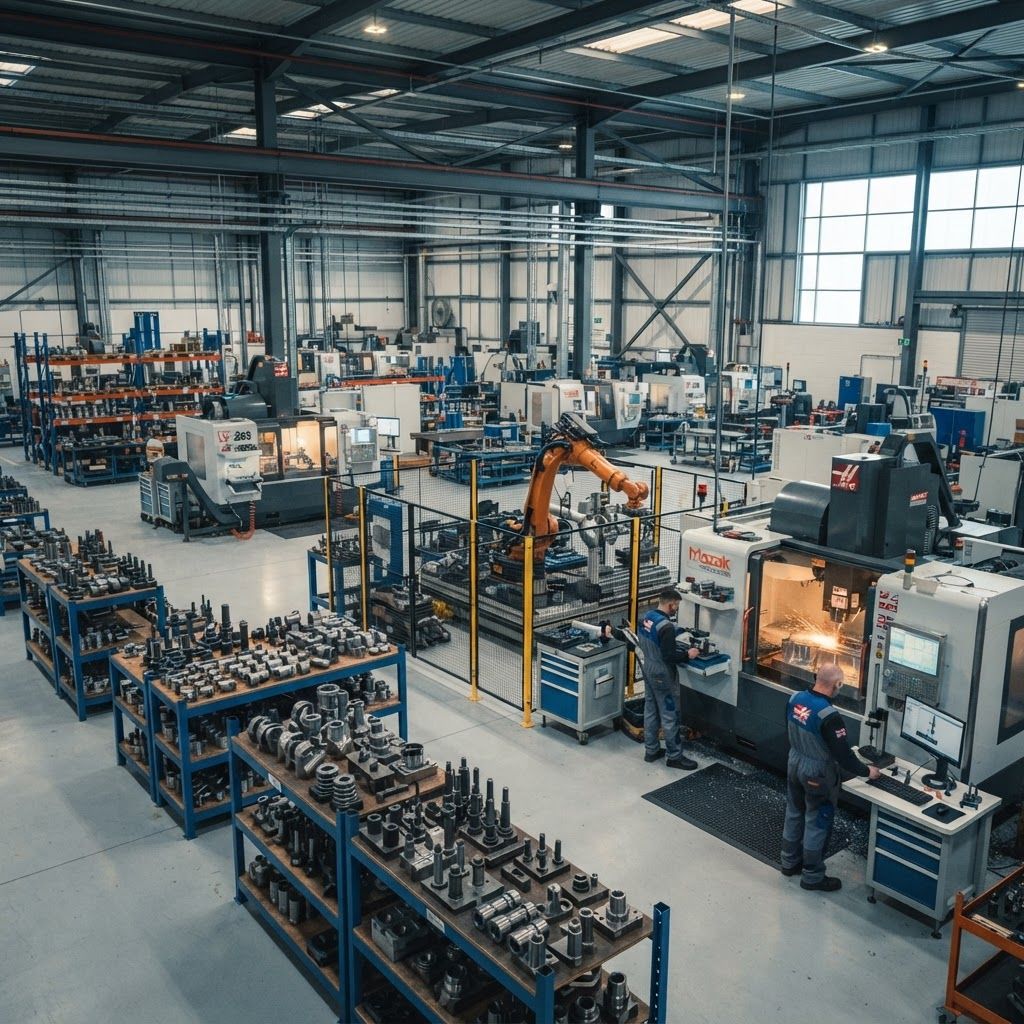
Manufacturing in Delaware's Capital Region
Dover's manufacturing identity is often overshadowed by the state's corporate and financial reputation, which does the sector a disservice. Kent County supports a meaningful industrial base, benefiting from position along the mid-Atlantic corridor, access to port infrastructure, a favorable business climate, and proximity to major population centers within a few hours' drive.
The manufacturers operating here span aerospace components, electronic assemblies, precision machining, industrial equipment, food processing machinery, and specialty fabrication. Many serve defense, agricultural, and healthcare supply chains, sectors that reward reliability and documented quality over lowest possible cost. That orientation has shaped a manufacturing community focused on certification, traceability, and long-term customer relationships.
What Defines Quality Manufacturing
In hardware production, capability claims mean little without evidence. Serious manufacturers maintain formal quality management systems, document process controls, calibrate measurement equipment on defined schedules, and retain traceability records linking finished goods to raw material lots. Buyers in regulated industries verify these systems through audits before placing significant orders.
Engineering support increasingly distinguishes top manufacturers from commodity suppliers. Design for manufacturability review, where production engineers examine a customer's drawings and suggest changes that reduce cost or improve yield, frequently saves more than the price difference between competing quotes. Manufacturers offering this collaboration retain customers far longer than those who simply build to print.
The Ten Leading Hardware Manufacturers Serving Dover
1. Diamond State Precision Manufacturing. A precision machining operation serving aerospace and defense supply chains, distinguished by tight tolerance capability and comprehensive documentation practices that satisfy demanding audit requirements.
2. First State Electronics Assembly. Provides printed circuit board assembly and electromechanical integration, with capability spanning prototype runs through moderate volume production. Strong in low-volume, high-mix work that larger contract manufacturers decline.
3. Kent Industrial Fabrication. Specializes in structural steel, sheet metal, and custom enclosures for industrial and agricultural equipment, with in-house finishing and welding certification.
4. Delmarva Automation Systems. Builds custom automation equipment and material handling systems for food processing and packaging operations across the peninsula, an industry with distinctive sanitation and durability requirements.
5. Bayshore Plastics and Molding. Delivers injection molding and thermoforming for consumer, medical, and industrial applications, with tooling design support that helps customers control unit costs.
6. Capitol Component Technologies. Produces specialized connectors, wiring harnesses, and cable assemblies, serving transportation, defense logistics, and industrial equipment markets.
7. Atlantic Sensor Works. Manufactures instrumentation and sensing devices for agricultural, environmental, and process monitoring applications, combining electronics production with field-durable packaging.
8. Blue Hen Machine Company. A long-established job shop offering turning, milling, and fabrication with a reputation for accommodating urgent repair and replacement part requests that keep regional operations running.
9. Tidewater Equipment Manufacturing. Produces agricultural implements and material handling equipment tailored to Delmarva farming operations, with strong aftermarket parts and service support.
10. Sentinel Enclosure Systems. Focuses on protective enclosures, racks, and thermal management hardware for electronics and telecommunications deployments, including outdoor-rated designs suited to coastal conditions.
Trends Transforming Regional Manufacturing
Automation adoption continues steadily, driven less by labor cost than by labor availability. Manufacturers across Kent County report persistent difficulty filling skilled positions, making robotic cells and automated inspection attractive for tasks that are repetitive or physically demanding.
Reshoring has produced tangible benefits for regional producers. Supply chain disruptions in recent years convinced many buyers that geographic proximity carries real value, and manufacturers positioned within a day's freight of major East Coast markets have gained inquiries they would not have received previously.
Digital integration is spreading through production floors. Machine monitoring, digital work instructions, and integrated quality data collection improve throughput visibility and reduce the paperwork burden that once accompanied documented quality systems.
Selecting a Manufacturing Partner
Visit the facility. Photographs and capability statements convey limited information compared to walking a production floor, observing organization and housekeeping, and speaking with the people operating equipment. Manufacturers confident in their operations welcome visits.
Discuss capacity honestly. A shop that is ideal for your part but already running near capacity may struggle with your schedule. Understanding current loading and how your work would be prioritized prevents delivery disappointments later.
Evaluate communication during quoting. A manufacturer who asks thoughtful questions about tolerances, finishes, intended use, and expected volumes is engaging with your requirements. One who returns a price quickly with no questions may be making assumptions that surface as problems during production.
Workforce and Training in the Region
The most significant constraint on manufacturing growth around Dover is not demand or capital but skilled labor. Machinists, welders, electronics technicians, maintenance mechanics, and quality inspectors are all in short supply, and the average age of experienced tradespeople in many shops continues rising. Retirements over the coming decade will remove decades of accumulated process knowledge from the regional workforce.
Local manufacturers have responded with increasing seriousness. Apprenticeship programs, partnerships with Delaware Technical Community College, and paid training pathways have expanded meaningfully. Several Kent County shops now recruit directly from high school technical programs, offering structured progression from entry-level positions into skilled trades with wages competitive against alternatives requiring four-year degrees.
This investment produces a secondary benefit for customers. Manufacturers with stable, well-trained workforces deliver more consistent quality and better schedule reliability than those relying heavily on temporary labor. When evaluating a potential supplier, asking about employee tenure and training programs reveals a great deal about likely performance.
The Future of Hardware Production in Kent County
Manufacturing in Dover's region faces the same workforce pressures affecting the entire sector, but it holds structural advantages: location, business climate, established supply relationships, and a base of firms accustomed to demanding customers. Continued investment in automation and technical training will determine how effectively the region converts those advantages into growth over the coming decade.
Want your brand featured in front of decision-makers? Publish a guest post or get a link insertion in our guides through AAMAX's guest post and link insertion service.
Helpful Links
 SponsoredAAMAX — Full-Service Digital Agency
Write for Us
Share your expertise with our readers. We welcome guest contributions from industry specialists.
Pitch your idea

