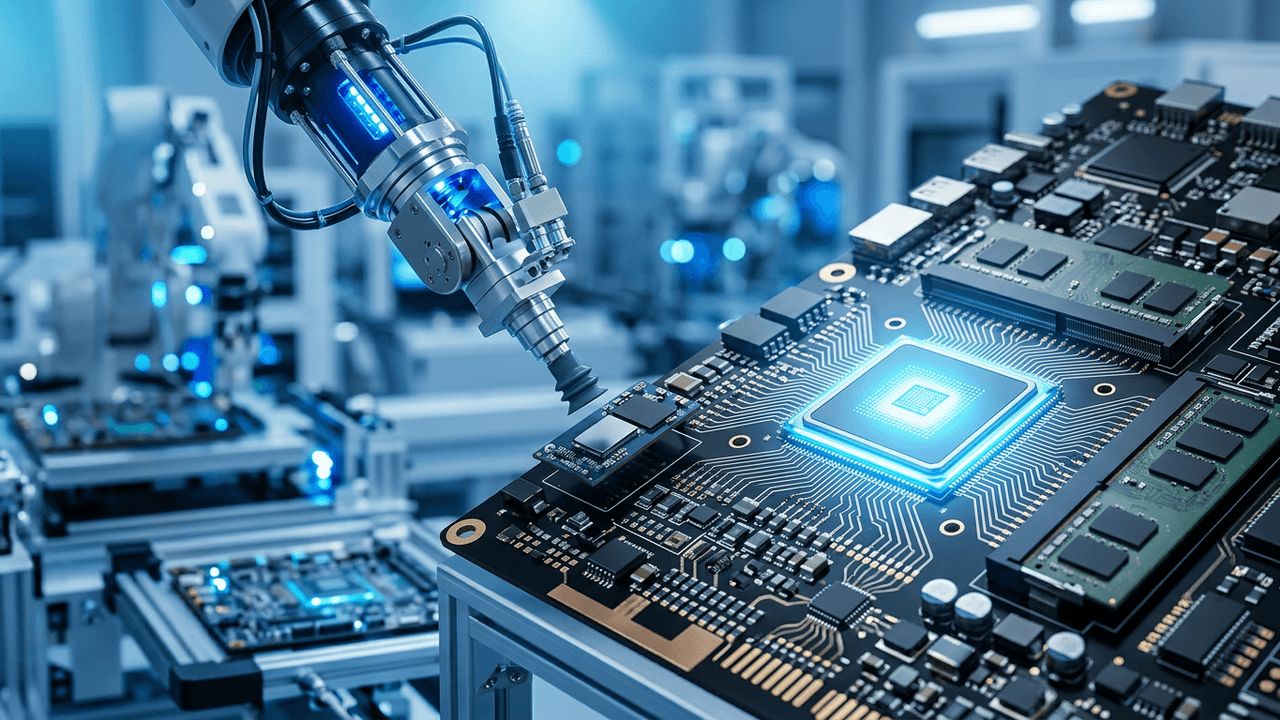
Manufacturing in Dacorum Today
Dacorum's industrial history is often overshadowed by its reputation as a commuter and distribution area, but the borough retains a real and technically sophisticated manufacturing base. The story runs back through the post-war expansion of Hemel Hempstead as a new town, which drew engineering, aerospace-adjacent and instrumentation businesses to purpose-built industrial estates. Many of those companies evolved rather than disappeared, moving up the value chain into precision work, low-volume specialist production and electronics.
The modern profile is characterised by high-mix, lower-volume manufacturing where engineering support matters more than unit price. Local firms typically compete on tolerance, traceability, responsiveness and the ability to help customers design a product that can actually be made. Proximity to the motorway network and to London's research and design community reinforces that positioning, since it allows engineers to visit a factory floor and iterate quickly, which is impossible when production sits several time zones away.
How These Manufacturers Were Assessed
Selection considered engineering capability, quality management maturity, breadth of in-house processes, willingness to support new product introduction, and evidence of investment in equipment and skills. Apprenticeship and training activity was also weighed, since a manufacturer's ability to sustain a skilled workforce says a great deal about its long-term reliability.
1. Chiltern Precision Engineering
Chiltern Precision Engineering operates multi-axis machining centres producing tight-tolerance components for instrumentation, medical device and industrial customers. Its inspection facility includes coordinate measuring equipment and full first-article reporting, which is essential for regulated supply chains. The firm is known for taking on genuinely difficult geometries that others decline.
2. Maylands Electronics Assembly
Maylands Electronics Assembly provides surface-mount and through-hole assembly, test and box-build services. It supports prototype runs through to modest production volumes, and its design-for-manufacture reviews routinely save clients money before the first board is built. Traceability down to component batch level is standard, reflecting the expectations of its industrial customers.
3. Grand Union Sheet Metal Works
Grand Union Sheet Metal Works covers laser cutting, punching, forming, welding and finishing for enclosures, brackets and fabricated assemblies. Its integrated finishing capability shortens lead times considerably compared with fabricators that subcontract powder coating. Clients in equipment manufacturing and construction products form its core market.
4. Berkhamsted Instrument Company
Berkhamsted Instrument Company designs and builds measurement and control instrumentation for laboratory, environmental and process applications. Its work spans mechanical, electronic and firmware disciplines in house, allowing it to deliver complete products rather than subassemblies. Calibration and long-term service support are significant parts of the offering.
5. Gade Valley Plastics
Gade Valley Plastics offers injection moulding, tooling and vacuum forming, alongside advice on material selection and part consolidation. It has invested in recycled and bio-derived polymer processing, responding to customers whose own environmental reporting now scrutinises component materials. Tooling design remains the firm's technical strength.
6. Ashridge Connected Devices
Ashridge Connected Devices develops and manufactures internet-connected hardware, integrating sensors, wireless communications and cloud telemetry. It manages certification, radio compliance and firmware update infrastructure, which are the areas where inexperienced device projects most often stall. Its customers include equipment makers adding remote monitoring to existing product lines.
7. Boxmoor Toolmaking and Automation
Boxmoor Toolmaking and Automation builds jigs, fixtures, special-purpose machines and small automation cells. Its work is highly bespoke, typically commissioned when a manufacturer needs to eliminate a manual bottleneck. Engineers work directly with production staff on site, which produces solutions people actually use.
8. Tring Cable and Harness
Tring Cable and Harness manufactures wiring looms, cable assemblies and control panels to customer drawings and recognised workmanship standards. It handles both low-volume prototype harnesses and repeat production, with electrical testing on every assembly. Vehicle conversion, industrial equipment and broadcast customers feature prominently.
9. Northchurch Composites
Northchurch Composites produces lightweight structural components in carbon and glass fibre for sports equipment, transport and specialist industrial uses. It offers layup design support and non-destructive inspection, and its low-volume flexibility appeals to customers whose annual requirement is measured in hundreds rather than thousands.
10. Hemel Contract Manufacturing Group
Hemel Contract Manufacturing Group provides full contract manufacturing including procurement, kitting, assembly, packaging and logistics. It acts as an outsourced operations function for companies that prefer to concentrate on design and sales, and its inventory management and supplier qualification processes are geared to that responsibility.
Standards and Certification
Serious manufacturers maintain a documented quality management system, typically aligned to recognised international standards, with environmental and health and safety management often certified alongside. Sectors add their own requirements: medical devices, aerospace and automotive each impose additional documentation, traceability and process control obligations. Buyers should verify not merely that a certificate exists but that its scope covers the processes they intend to use, since partial scope is a common and consequential misunderstanding.
Trends Reshaping Local Manufacturing
Reshoring continues, driven less by cost than by lead-time risk and the desire for closer engineering collaboration. Automation is being adopted incrementally through collaborative robots and vision inspection rather than wholesale line replacement, which suits high-mix production. Energy efficiency has become a live commercial issue affecting both quoting and equipment investment. Additive manufacturing is now embedded in tooling, fixturing and prototyping workflows, shortening development cycles substantially.
Selecting a Production Partner
Visit the factory before committing; the condition of a shop floor communicates more than any brochure. Ask about capacity utilisation and how your job would be scheduled during a busy period. Request evidence of process capability rather than a general quality assurance. Discuss tooling ownership explicitly, as this determines whether you can move production later. Finally, involve the manufacturer during design rather than after it, since the cheapest savings are always found before drawings are frozen.
Final Thoughts
Dacorum's manufacturers offer a valuable combination of technical capability and geographic accessibility for organisations that need to stay close to production. The right partner depends on whether your priority is tolerance, volume flexibility, multidisciplinary product development or complete operational outsourcing. In every case, early engagement and a physical visit remain the two most reliable predictors of a successful relationship.
Want your brand featured in front of decision-makers? Publish a guest post or get a link insertion in our guides through AAMAX's guest post and link insertion service.
Helpful Links
 SponsoredAAMAX — Full-Service Digital Agency
Write for Us
Share your expertise with our readers. We welcome guest contributions from industry specialists.
Pitch your idea