

A Manufacturing Tradition Reinvented
Carmarthenshire's industrial history runs deeper than its rural image suggests. The south of the county around Llanelli was once a global centre of tinplate production, and the engineering skills that supported that industry did not vanish when the works closed. They dispersed into precision engineering, fabrication, electronics assembly and equipment manufacture, forming the base of a manufacturing sector that remains a significant employer today.
Modern hardware manufacturing in the county clusters around the business parks at Cross Hands, Dafen and Llanelli, with additional activity spread across smaller industrial units serving agricultural and construction markets. What unites these operations is a shift toward higher value, lower volume production: bespoke equipment, specialist components and complete systems rather than commodity output that would be produced more cheaply elsewhere.
What Gets Manufactured Here
Agricultural machinery and equipment represents a natural specialism. Livestock handling systems, feeding equipment, trailers, slurry handling and specialist attachments are designed and built locally by manufacturers who understand Welsh farming conditions directly. Steep ground, wet weather and mixed farm sizes create requirements that mass-market equipment often fails to meet.
Precision engineering and machining serves aerospace, automotive, medical and energy clients across the UK. CNC turning and milling, sheet metal fabrication and welded assemblies produced to tight tolerances form a substantial part of the county's manufacturing output, much of it invisible in the final products it contributes to.
Electronics and control systems form a growing category. Enclosure assembly, control panel building, sensor systems and industrial computing hardware are produced for machinery builders and process industries, increasingly incorporating connectivity for remote monitoring.
Food processing equipment, renewable energy components, and modular construction products complete the picture, reflecting the sectors where Wales has both demand and policy support.
The Ten Hardware Manufacturers Defining the County
Llanelli Precision Engineering represents the CNC machining specialists producing components to aerospace and medical tolerances, typically operating multi-axis machining centres with full inspection and traceability documentation.
Cross Hands Fabrication Works exemplifies the structural and sheet metal fabricators. Laser cutting, forming, welding and finishing capability under one roof allows them to deliver complete assemblies rather than parts.
Tywi Agricultural Systems stands for the agricultural equipment manufacturers designing and building livestock handling and feeding systems, with the significant advantage of testing prototypes on nearby working farms.
Dafen Electronics Assembly covers the electronics manufacturing services providers handling circuit board assembly, cable harnesses, control panel building and final product integration for equipment builders.
Sir Gar Control Systems reflects the manufacturers of industrial control and automation hardware, producing panels, sensor arrays and monitoring equipment for process industries and utilities.
Amman Valley Machine Tools represents the specialist machinery builders producing bespoke production equipment for food processing, packaging and materials handling applications.
Coastal Renewables Manufacturing stands for the manufacturers supplying components to the wind, solar and marine energy sectors, an area where Welsh industrial policy has driven genuine investment.
Pembrey Industrial Products covers the manufacturers of durable industrial goods: enclosures, frameworks, guarding, conveyor components and similar products where robustness matters more than aesthetics.
Gwendraeth Toolmaking reflects the toolmakers and moulders producing jigs, fixtures, dies and moulds. This is highly skilled work and the firms holding these capabilities are strategically important to everyone else in the supply chain.
Carmarthen Prototype Engineering represents the low-volume and prototyping specialists combining additive manufacturing with conventional machining to produce first articles and short runs quickly.
Trends Reshaping Local Manufacturing
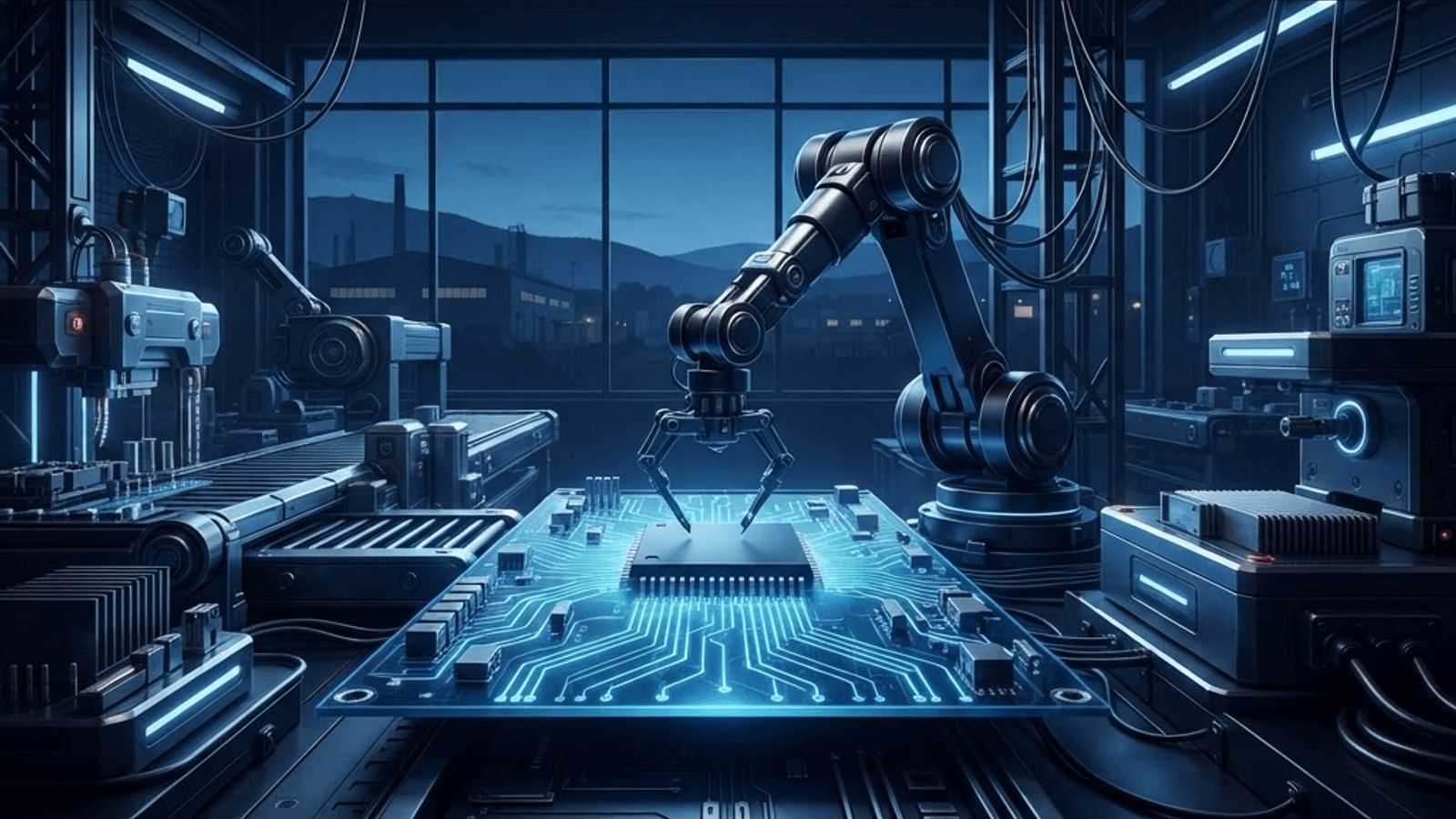
Automation has been adopted selectively rather than wholesale. Collaborative robots handling loading, welding and inspection tasks make sense at Carmarthenshire's typical volumes, whereas full production line automation rarely does. The result is a hybrid model where skilled operators work alongside automated cells, which suits both the economics and the available workforce.
Digital manufacturing practice has advanced considerably. Computer-aided design flowing directly to machine programmes, digital work instructions on the shop floor and electronic quality records have replaced paper systems in most serious operations, improving both consistency and traceability.
Reshoring has provided genuine tailwinds. Supply chain disruption taught many UK buyers that the lowest unit price is not the lowest total cost, and manufacturers who can deliver reliably from a UK location have won work back from overseas competitors. Shorter lead times and easier communication carry real value.
Sustainability requirements now influence orders. Customers ask about energy sources, material recyclability and waste handling, and manufacturers who can document their environmental performance are increasingly favoured in tenders. Several county operations have invested in on-site renewable generation partly for this reason.
Skills remain the binding constraint. Experienced machinists, toolmakers and welders are scarce, and the manufacturers thriving are those running apprenticeship programmes rather than competing for a limited pool of experienced staff.
Choosing a Manufacturing Partner
Visit the facility. Manufacturing quality is visible in how a workshop is organised, how material is stored, whether inspection equipment is calibrated and how staff talk about their work. A tour tells you more than any capability statement.
Ask about quality management specifically. Certification to recognised standards matters, but so does the practical detail: what gets inspected, how it is recorded, what happens when something fails and how corrective action is tracked. Ask to see a non-conformance record.
Discuss capacity honestly. A manufacturer running at full capacity will struggle with your urgent order regardless of good intentions. Ask about current utilisation and how they handle demand peaks.
Clarify design responsibility early. If the manufacturer contributes to the design, establish who owns the resulting intellectual property and who carries responsibility if the design proves inadequate in service.
The Outlook for Hardware Production
Carmarthenshire manufacturing will not compete on volume or unit cost with overseas production, and the successful firms have stopped trying. Their future lies in engineering-led work where design input, flexibility, quality documentation and responsiveness matter more than price per piece. The county's combination of retained industrial skills, reasonable operating costs and improving infrastructure supports that position well, and the manufacturers investing in both automation and apprenticeships are the ones most likely to be here in twenty years.
Want your brand featured in front of decision-makers? Publish a guest post or get a link insertion in our guides through AAMAX's guest post and link insertion service.
Helpful Links
 SponsoredAAMAX — Full-Service Digital Agency
Write for Us
Share your expertise with our readers. We welcome guest contributions from industry specialists.
Pitch your idea

