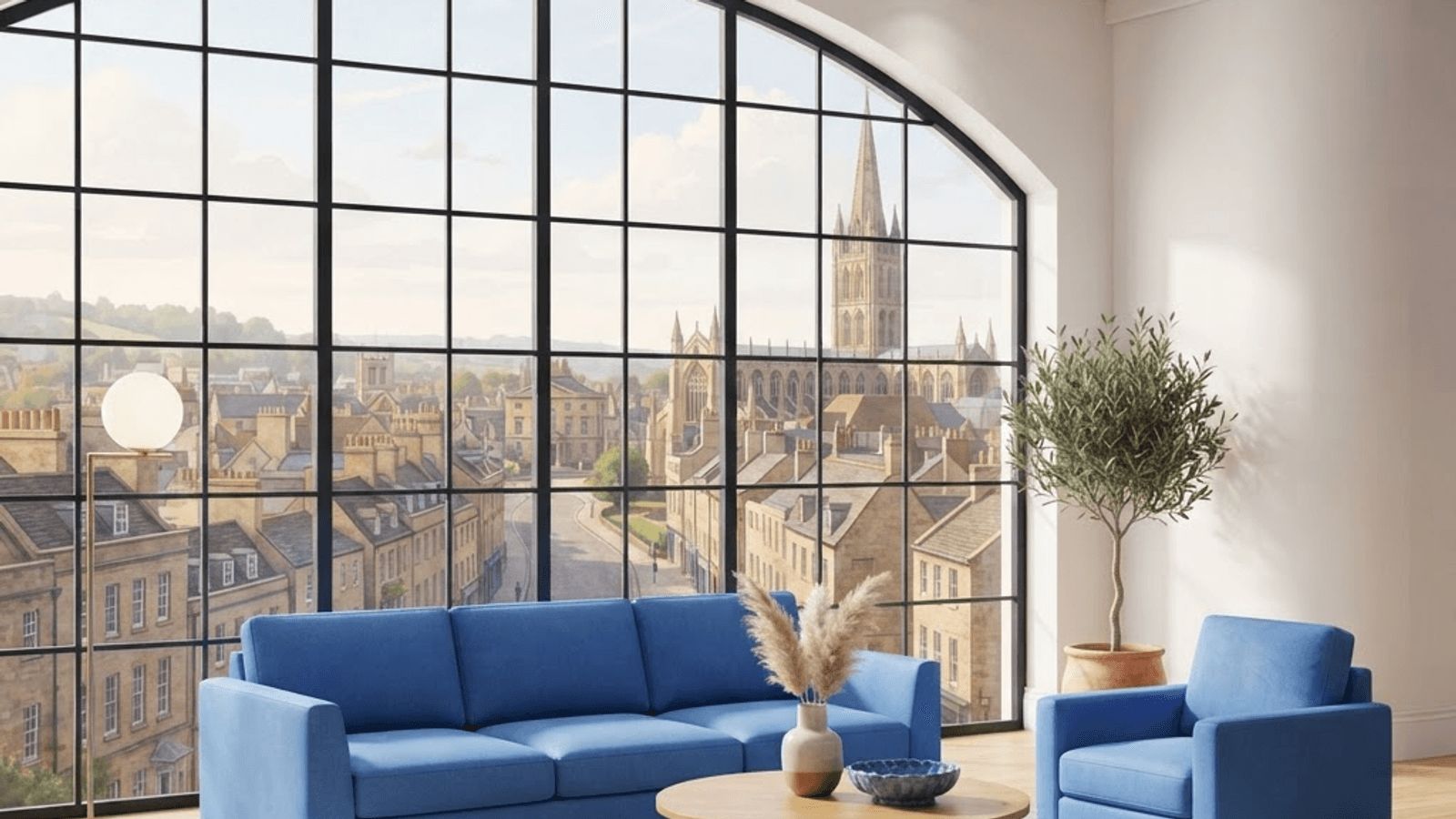
Furnishing a Home in Norwich
Norwich has an unusually varied housing stock, and that shapes how the city shops for furniture. Terraced Victorian homes in the Golden Triangle, converted warehouses near the river, new-build estates on the northern and southern edges, and period cottages in the surrounding villages all demand different solutions. A sofa that works in a high-ceilinged Victorian front room may be impossible to manoeuvre up a narrow staircase in a city-centre flat. Local retailers understand this, and the best of them ask about access, ceiling height and floor type before they discuss fabric.
The city's furniture market spans four categories: large national showrooms clustered on the retail parks, established regional family retailers with strong reputations across East Anglia, independent design studios serving a design-conscious audience, and a deep antiques and reclamation trade that reflects Norfolk's long history of country house sales.
The Top 10 Furniture Stores in Norwich
1. Aldiss is one of the most trusted names in Norfolk furniture retailing. As a long-established regional department store group, it offers extensive sofa, bedroom and dining ranges with the practical advantages of local delivery teams, room-of-choice placement and a genuine local reputation to protect.
2. Furniture Village brings a large showroom format to Norwich with strong coverage of upholstery, beds and dining. Its appeal is the ability to sit on twenty sofas in an afternoon, combined with structured finance options and clear delivery scheduling on made-to-order pieces.
3. DFS remains the highest-volume sofa retailer in the city. Its strength is customisation at accessible price points — frame, fabric, cushion filling and configuration can be specified, and the guarantee structure on frames and springs is clearly communicated.
4. Oak Furnitureland serves customers who want solid hardwood rather than veneer. For dining tables, sideboards and bedroom furniture intended to last decades, the emphasis on solid timber construction and no-flat-pack delivery resonates strongly with Norfolk buyers.
5. IKEA collection points and planning services supply the city's flat-pack demand. While the nearest full store sits outside Norwich, the click-and-collect infrastructure and online kitchen and wardrobe planning tools mean IKEA remains a dominant force in local furnishing, particularly for students, renters and first-time buyers.
6. Norwich Sofa Company and local upholstery specialists offer something the national chains cannot: bespoke frames built to fit awkward period rooms, and reupholstery of existing furniture. For a well-made older sofa, reupholstering is frequently cheaper and better than replacing.
7. Jarrold deserves a place for its curated homeware and furniture offer. As an independent department store with deep Norwich roots, it stocks design-led pieces and accessories that lift a room, with staff who can advise on coordinating textiles, lighting and finishes.
8. The antiques dealers of Elm Hill and Tombland collectively represent one of Norwich's genuine advantages. Georgian chests, Victorian dining chairs, mid-century Scandinavian pieces and country farmhouse tables circulate constantly, often at prices below equivalent new furniture and with far better construction quality.
9. Reclamation and architectural salvage yards around the city serve renovators. Original doors, fireplaces, floorboards, ironmongery and industrial furniture are in high demand as period property owners restore rather than replace, and salvage buying keeps character intact.
10. Emmaus Norwich and charity furniture warehouses complete the list with real social value. These operations offer tested, refurbished furniture at low prices while funding local causes, and they have become a first stop for students, families setting up homes and anyone furnishing on a tight budget.
How to Judge Furniture Quality
Construction beats appearance. On upholstery, ask about the frame material — kiln-dried hardwood outlasts softwood and chipboard by a wide margin — and about the suspension system, with serpentine springs or hand-tied springs preferable to elastic webbing alone. Check seat cushion filling: high-resilience foam with a fibre or feather wrap holds shape better than plain low-density foam.
On case goods, look for solid timber or high-quality plywood rather than particleboard with a printed finish. Open a drawer and check for dovetail or dowelled joints and a solid drawer base. Doors should align and stay closed. Weight is a crude but reliable indicator.
Fabric durability is measured in rub counts, and a rating suitable for general domestic use is the minimum for a family sofa. If you have pets, ask about tight-weave fabrics and removable, washable covers.
Delivery, Access and Lead Times
Norwich's older housing makes access planning essential. Measure doorways, stairwell turns, ceiling heights and any tight corners before ordering, and ask whether the retailer offers a pre-delivery survey. Reputable stores will happily supply exact packed dimensions rather than just finished sizes.
Made-to-order upholstery commonly takes eight to twelve weeks, and longer for bespoke work. Build that into renovation timelines rather than assuming stock availability. Ask explicitly whether delivery includes assembly, room-of-choice placement and packaging removal, as these vary widely between retailers.
Sustainability and the Second-Hand Shift
Furniture is one of the heaviest categories in household waste, and Norwich shoppers have responded. Demand for solid wood, repairable construction and second-hand pieces has grown steadily, supported by the city's strong antiques and charity retail sectors. Certified timber sourcing, low-emission finishes and take-back schemes for old mattresses and sofas are increasingly common questions at the point of sale, and the better retailers now answer them without hesitation.
Final Thoughts
The best approach in Norwich is to mix sources. Buy the high-use items — sofa, bed, mattress — new from a retailer with a strong guarantee and local delivery. Buy character pieces such as dining tables, chests and bookcases from the antiques and salvage trade, where quality per pound is exceptional. Use flat-pack and charity retail to fill gaps affordably. Done well, that combination produces a home that looks considered rather than catalogue-ordered, and it usually costs less.
Want your brand featured in front of decision-makers? Publish a guest post or get a link insertion in our guides through AAMAX's guest post and link insertion service.
Helpful Links
 SponsoredAAMAX — Full-Service Digital Agency
Write for Us
Share your expertise with our readers. We welcome guest contributions from industry specialists.
Pitch your idea