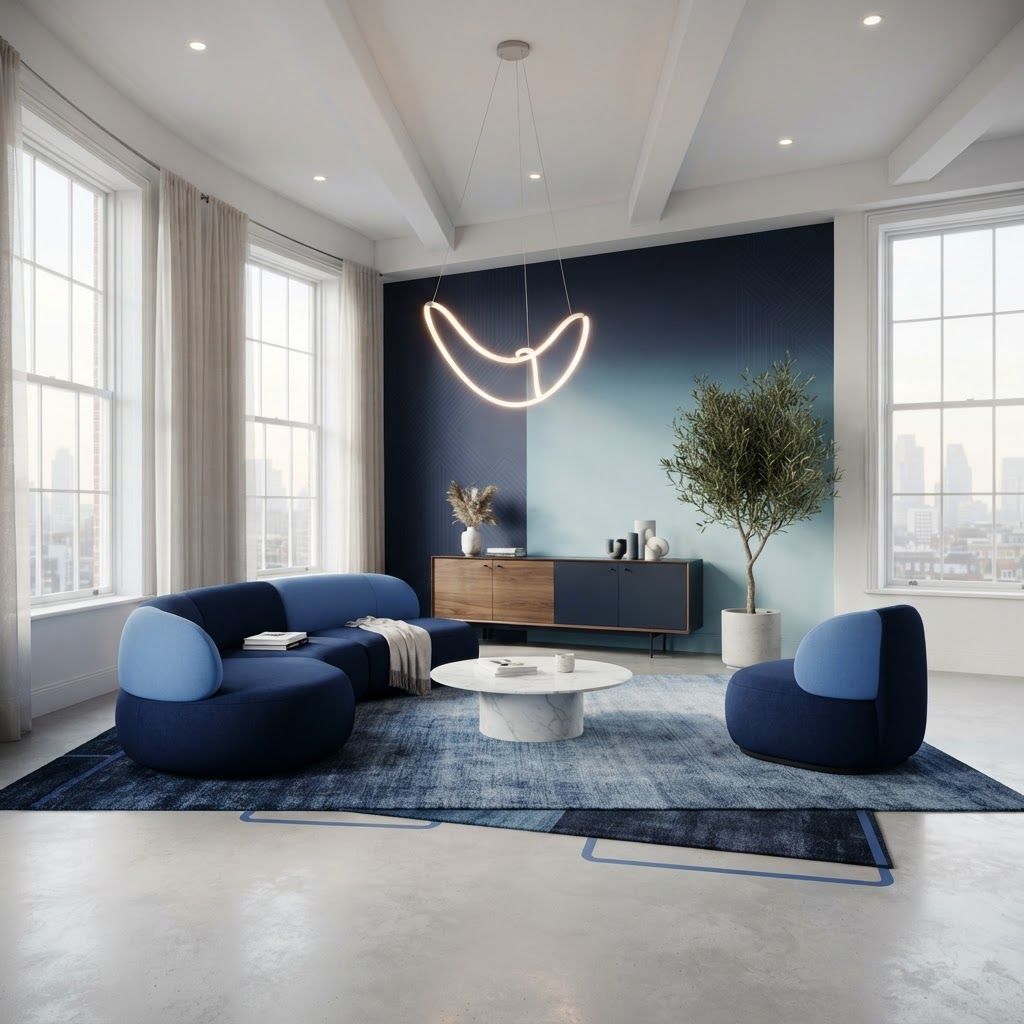
Furnishing Islington Homes
Islington's housing stock is a furnishing challenge in the best sense. Much of the borough consists of Georgian and Victorian terraces, mansion blocks and conversions, alongside significant post-war estate housing and newer developments around City Road and the canal. The result is a population dealing simultaneously with generous ceiling heights and awkwardly narrow staircases, elegant proportions and very limited floor area.
This produces specific buying priorities that differ from suburban markets. Scale matters enormously, because an oversized sofa dominates a Victorian front room and cannot always be manoeuvred into a first-floor flat regardless of how it looks in a showroom. Modularity, flat-pack delivery and self-assembly become practical virtues rather than compromises. Storage integration is prized. And because many residents rent or move within the borough, furniture that can be disassembled and relocated retains real value.
Design Directions Popular in the Borough
Two aesthetics dominate. The first is restrained mid-century influenced design: tapered legs, walnut or oak veneer, low profiles and muted upholstery, which suits period rooms without competing with original cornicing and fireplaces. The second is contemporary minimalism in neutral tones with concealed storage, which suits newer flats where every centimetre counts.
Sustainability has become mainstream rather than niche. Solid wood over particleboard, FSC certified timber, natural fibre upholstery and reupholstery of good frames are all increasingly common priorities. Islington's strong secondhand and vintage market supports this directly, and buying an older well-made frame and recovering it frequently produces a better result than a new equivalent at similar cost.
Ten Furniture Retailers and Categories Worth Knowing
1. IKEA. Practical dominance is deserved. For small-space living, IKEA's storage systems, modular wardrobes and compact sofa ranges are engineered around exactly the constraints Islington flats impose. Flat-pack delivery solves narrow staircase problems, and the availability of replacement parts extends useful life considerably.
2. Habitat. A brand with genuine design heritage and a strong fit for the borough's aesthetic. Habitat's strength is delivering considered, colourful contemporary design at accessible pricing, particularly in occasional furniture, lighting and textiles that shift a room's character quickly.
3. Made-to-order upholstery specialists. Several British sofa makers offer bespoke dimensions, which for Islington homes is often the deciding advantage. Being able to specify a sofa 15 centimetres shorter or with removable arms for delivery access turns an impossible room into a workable one.
4. Heal's. Positioned at the premium end, Heal's offers solid timber construction, designer collaborations and furniture intended to last decades. For a dining table or bed frame bought once rather than repeatedly, the quality difference over budget alternatives is tangible.
5. John Lewis. Reliable across the full furnishing range, with particular strength in beds, mattresses and upholstery. Long guarantees, in-store comparison and a measured approach to faults make it a low-risk choice for significant purchases.
6. Loaf. Specialising in comfort-led upholstery and beds, Loaf has found a strong audience among Islington buyers wanting relaxed, generously padded pieces. Its clear delivery access guidance is unusually useful for London properties.
7. Dwell and similar contemporary specialists. Compact contemporary furniture retailers serve the borough well with space-efficient dining sets, extendable tables and slim-profile storage designed explicitly for urban flats rather than scaled down from larger pieces.
8. Camden Passage and Islington antique furniture dealers. One of the borough's genuine assets. Antique dealers here supply Georgian, Victorian and mid-century pieces in solid timber, often at prices comparable to new veneered furniture. These pieces suit period rooms naturally, hold their value and can be restored indefinitely.
9. Reclaimed timber and independent makers. Small workshops producing bespoke shelving, alcove cabinetry and dining tables from reclaimed timber are particularly valuable in Islington, where fitted solutions for irregular chimney breast alcoves solve problems no off-the-shelf product addresses.
10. Secondhand and charity furniture outlets. Islington's affluent donor base means charity and reuse outlets frequently carry high-quality furniture at modest prices. Alongside them, local reuse schemes and consignment platforms make it realistic to furnish a flat substantially without buying new.
Buying Strategy That Works
Measure the route, not just the room. Record doorway widths, staircase turns, ceiling height at the turn and any awkward landings. Most furniture delivery failures in London are access failures, and every reputable retailer publishes dimensions specifically so this can be checked.
Plan around fixed features. Victorian rooms have chimney breasts, alcoves, tall skirting and sash windows. Furniture that respects these rather than fighting them will look considerably better and use the space more efficiently.
Prioritise the pieces used most. A high-quality mattress, a comfortable sofa and a solid dining table justify real investment because they are used daily for years. Occasional furniture can safely be inexpensive or secondhand.
Finally, judge construction rather than finish. Solid timber frames, corner blocked joints, sprung seat bases and removable washable covers indicate furniture that will still be serviceable in fifteen years. In a borough where good furniture is regularly passed on rather than discarded, that longevity is the most useful specification of all.
Want your brand featured in front of decision-makers? Publish a guest post or get a link insertion in our guides through AAMAX's guest post and link insertion service.
Helpful Links
 SponsoredAAMAX — Full-Service Digital Agency
Write for Us
Share your expertise with our readers. We welcome guest contributions from industry specialists.
Pitch your idea