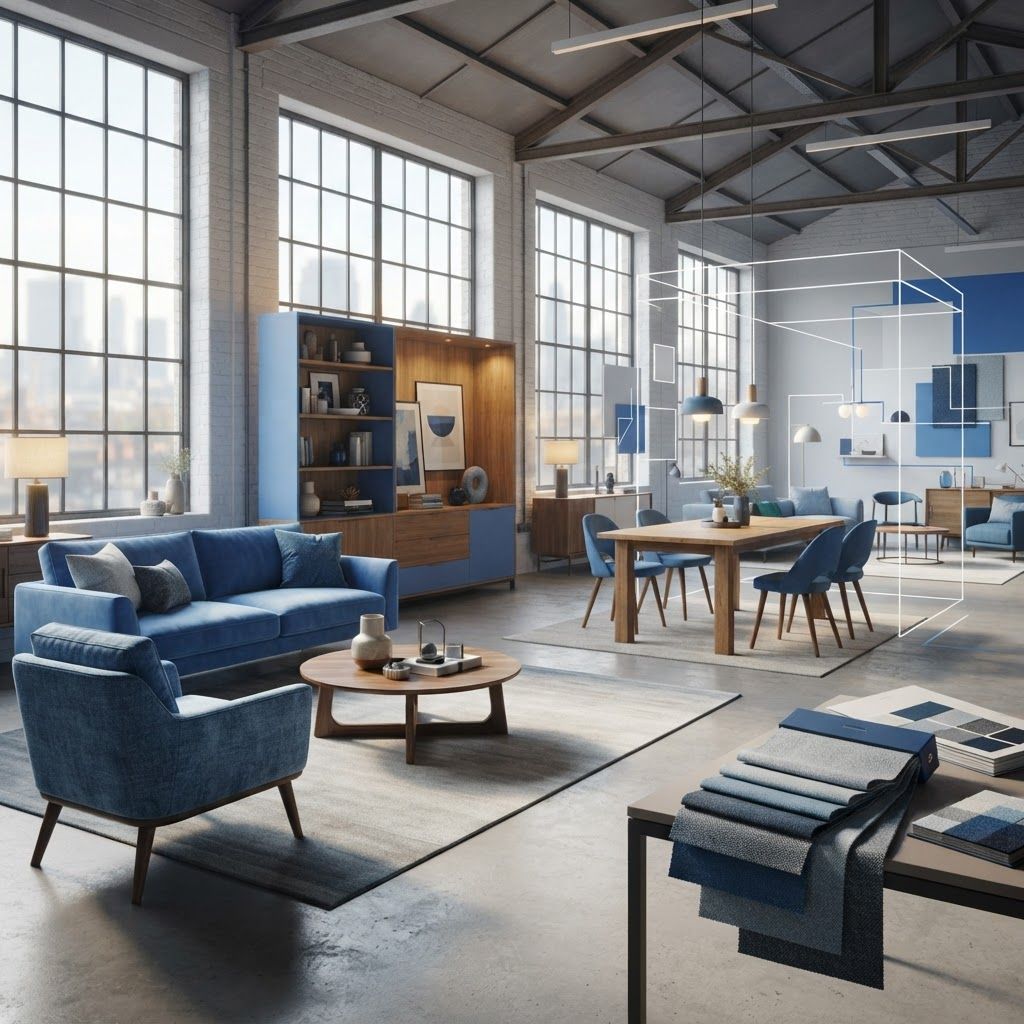
Furnishing Homes in Hammersmith and Fulham
Furniture shopping in this borough is defined by its housing stock. Fulham and Brook Green are dominated by Victorian and Edwardian terraces with narrow hallways, awkward chimney breasts, high ceilings and rooms that were never designed for modern furniture proportions. Hammersmith adds mansion blocks with tight communal stairwells. Riverside developments at Fulham Reach and Imperial Wharf offer open-plan layouts with a completely different set of requirements, including full-height glazing that limits wall space.
The practical consequence is that access and dimensions matter as much as design. A sofa that will not turn the corner of a Victorian staircase is worthless regardless of how well it photographs. The retailers below have been assessed on quality, range, and crucially on how well they handle delivery and fitting into genuinely difficult London properties.
1. IKEA
IKEA remains the most practical starting point for many borough households, particularly renters and first-time buyers. The value proposition is straightforward: coherent design at low prices, with modular systems that adapt to irregular rooms. The PAX wardrobe and BESTÅ storage systems are especially useful in Victorian properties because they can be configured around alcoves and chimney breasts. Flat packaging solves the access problem that defeats many rigid-build competitors, and planning tools allow layouts to be tested before purchase.
2. Habitat
Habitat occupies a useful middle ground, offering more design distinctiveness than budget retailers without premium pricing. Upholstery, occasional furniture and lighting are the strongest categories, with a colour and material palette that suits period properties better than starkly contemporary ranges. Scale is often more compact than mainstream alternatives, which is a genuine advantage in smaller Fulham reception rooms and second bedrooms.
3. Heal's
Heal's brings serious design credibility and a long-standing commitment to craftsmanship. The range covers upholstery, solid timber dining and bedroom furniture, and lighting from established and emerging designers. Made-to-order upholstery with a wide fabric choice allows pieces to be specified to exact dimensions, which addresses period property constraints directly. Prices are high, but construction quality and timber selection support decades of use rather than years.
4. Made-to-Measure Joinery Workshops
The borough supports a number of bespoke joinery businesses, and for period properties they are frequently the correct answer rather than a luxury. Alcove cupboards, bookcases fitted around chimney breasts, window seats with storage, understairs solutions and wardrobes built to irregular ceiling heights all recover space that standard furniture wastes. Costs are comparable to premium retail once the space efficiency is accounted for, and the results are dimensionally perfect.
5. DFS
DFS serves the mainstream upholstery market with a wide sofa range, extensive fabric and leather options and interest-free finance that makes larger purchases manageable. The practically important feature for this borough is the availability of modular and split-frame designs that can be carried through tight doorways and reassembled in the room. Delivery teams are experienced with London access problems, and the option to order individual modules helps in awkward layouts.
6. Loaf
Loaf has built a distinctive position around comfort-first furniture with a relaxed, unfussy aesthetic. Deep sofas, upholstered beds and generously proportioned armchairs form the core range. The brand is realistic about access, offering slim-frame and modular options and providing detailed dimension guidance including the critical diagonal measurements. Fabric performance ratings are published clearly, which helps households with children and pets choose sensibly.
7. The Conran Shop
The Conran Shop caters to buyers seeking design-led pieces with genuine provenance, including modern classics and contemporary international designers. Furniture, lighting, kitchenware and accessories are curated to a consistent standard, and staff can advise credibly on materials and maker background. It functions as much as a reference point for interior direction as a place to buy, and single statement pieces sourced here often anchor an entire room.
8. Wayfair and Online Furniture Specialists
Online-only retailers give borough shoppers access to an enormous catalogue at competitive prices, which is valuable when searching for unusual dimensions. The trade-offs are real: you cannot assess upholstery comfort or timber quality from photographs, and returning a bulky item is genuinely inconvenient. The sensible approach is to use online sources for storage, desks, side tables and shelving where dimensions are the main variable, and to buy seating in person.
9. Fulham Antiques and Vintage Furniture Dealers
Antique and vintage dealers around Fulham Road and the surrounding area offer something modern retail cannot: furniture built to proportions that match the borough's period housing, using timber quality unavailable at any sensible modern price. Victorian chests, Edwardian bookcases and mid-century Danish pieces frequently cost less than new equivalents while holding or increasing in value. Dealers can usually arrange restoration and reupholstery, and pieces are already proven to fit through period doorways.
10. Secondhand and Charity Furniture Outlets
The borough has an active secondhand furniture market, including charity outlets and reuse schemes that collect and resell donated pieces. Quality is variable but genuinely good finds are common in an area with high residential turnover. For renters, students and anyone furnishing a first flat, this is the most economical route, and it keeps substantial volumes of usable furniture out of waste streams. Many outlets offer local delivery for a modest fee.
Practical Advice Before You Buy
Measure the route, not just the room. Record doorway widths, hallway turning space, stairwell dimensions, ceiling height at the turn and lift internal dimensions where relevant. Then compare against the diagonal depth of the item, which is the measurement that actually determines whether it will pass a corner. Reputable retailers publish this figure; ask for it if they do not.
Check what delivery includes. Kerbside delivery is a serious problem for a third-floor flat with no lift. Confirm whether the service covers room of choice, assembly and packaging removal, and whether there is a surcharge for restricted access.
For upholstery, sit on it. Seat depth, back height and cushion firmness are entirely personal and cannot be assessed remotely. Ask about fabric durability ratings and whether covers are removable, which transforms long-term maintenance.
Trends Shaping Local Furniture Buying
Space efficiency dominates, with strong demand for extendable dining tables, storage beds, nesting tables and modular seating that adapts to changing needs. Home working has permanently increased demand for furniture that integrates a workspace without turning a room into an office.
Sustainability is influencing decisions through both secondhand buying and preference for solid timber and repairable construction over particleboard. Combined with the borough's strong antique and reuse sector, that shift is making longevity, rather than novelty, the central criterion for a growing number of local buyers.
Want your brand featured in front of decision-makers? Publish a guest post or get a link insertion in our guides through AAMAX's guest post and link insertion service.
Helpful Links
 SponsoredAAMAX — Full-Service Digital Agency
Write for Us
Share your expertise with our readers. We welcome guest contributions from industry specialists.
Pitch your idea