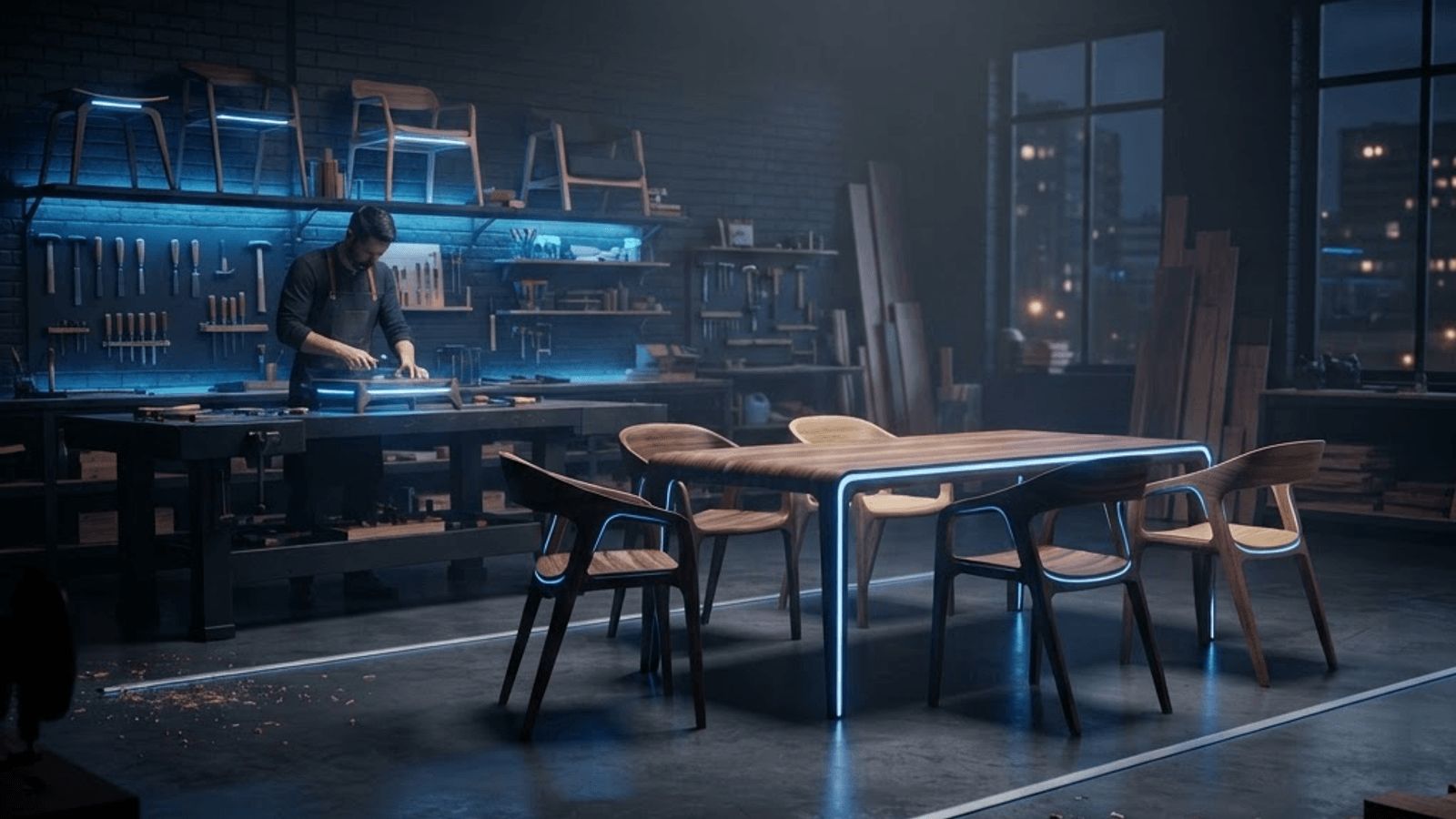
A Craft Tradition on the Sussex Coast
Furniture making in Sussex has deep roots. The county's historic access to timber, its network of market towns and its long tradition of skilled woodworking created a craft culture that has never entirely disappeared. In Worthing today, that tradition survives in workshops producing bespoke kitchens, fitted bedroom furniture, commercial seating, marine interiors and contemporary designer pieces.
What makes the local sector interesting is the balance between craft and production. Some businesses are genuinely artisanal, with makers working individual pieces by hand. Others operate computer-controlled machinery capable of consistent batch production. Many combine both, using machine precision for carcass work and hand skill for finishing and detail.
What Local Furniture Manufacturing Covers
Bespoke domestic furniture includes fitted kitchens, wardrobes, bookcases, media units and freestanding pieces made to individual specification. Contract and commercial furniture serves offices, schools, restaurants, hotels and healthcare settings, where durability and compliance matter as much as appearance.
Marine and boat interiors form a distinctive local niche given the coastal location, requiring space-efficient design, moisture resistance and secure fixing. Restoration and reupholstery extends the life of existing furniture, an increasingly popular option as consumers become more conscious of waste. Finally, component manufacturing supplies doors, drawer boxes, worktops and hardware to other makers and installers.
Top 10 Best Furniture Manufacturers in Worthing
1. Southdown Cabinet Makers — A bespoke furniture workshop producing fitted kitchens, libraries and freestanding pieces in solid timber and veneer. Widely respected for joinery quality, hand-applied finishes and careful attention to grain matching.
2. Coastline Marine Interiors — Specialists in boat and yacht interior furniture, working with moisture-resistant materials and space-efficient design. Its understanding of curved surfaces and secure marine fixing sets it apart.
3. Worthing Contract Furniture — Manufacturing commercial seating, tables and fitted units for hospitality, education and healthcare clients. Strong on fire compliance, durability testing and repeatable batch production.
4. Highdown Upholstery Works — Producing and reupholstering sofas, chairs and soft seating using traditional frame construction and modern foam specification. Valued for restoring quality older furniture to an excellent standard.
5. Adur Office Furniture Manufacturing — Supplying desks, storage, acoustic units and workplace furniture designed around modern hybrid working patterns. Ergonomics and cable management are handled thoughtfully.
6. Sussex Sustainable Furniture — Focused on responsibly sourced timber, reclaimed materials and low-impact finishes, with full chain-of-custody documentation for clients with environmental procurement requirements.
7. Channel Coast Joinery — Architectural joinery and furniture including reception desks, shopfitting elements, staircases and bespoke built-in units for commercial interiors.
8. Ferring Bedroom Furniture — Producing fitted wardrobes, dressing rooms and bedroom storage tailored to the awkward proportions common in older Worthing housing stock.
9. Chanctonbury Outdoor Furniture — Manufacturing garden and outdoor furniture engineered for coastal exposure, using weather-resistant timbers and corrosion-resistant fixings.
10. Goring Furniture Restoration — Specialising in antique restoration, French polishing, veneer repair and structural conservation of period furniture, combining traditional techniques with modern adhesives and materials where appropriate.
Trends in Furniture Manufacturing
Sustainability has become a decisive factor for many buyers. Certified timber, water-based finishes, formaldehyde-free boards and designs that can be repaired rather than discarded all influence purchasing decisions. Manufacturers who document their material sourcing win contracts that competitors cannot access.
Personalisation is expanding. Digital design tools allow customers to visualise bespoke configurations before committing, and computer-controlled machining makes one-off variations economically viable in a way that was impossible a generation ago.
Hybrid working has permanently changed office furniture demand. Fewer fixed desks, more collaborative settings, acoustic privacy pods and home office furniture now dominate commercial enquiries.
Space efficiency matters increasingly in residential work. Smaller modern apartments and the compact proportions of Victorian terraces both reward furniture designed precisely for the space available rather than bought off the shelf.
Finally, circularity is emerging. Take-back schemes, refurbishment services and design for disassembly are appearing in commercial contracts, particularly in the public sector.
Choosing a Furniture Manufacturer
Start by viewing completed work. Photographs help, but seeing and touching finished furniture reveals joinery quality, finish consistency and hardware choice in a way images cannot.
Discuss materials in detail. Solid timber, veneered board, laminate and painted finishes all behave differently over time and in different environments. A good maker will explain trade-offs honestly rather than simply agreeing with whatever you request.
Clarify the design process. Will you receive detailed drawings? How many revisions are included? Who is responsible for measurement accuracy? These questions prevent most disputes.
Understand lead times realistically. Bespoke furniture takes time, particularly for hand-finished work. Be sceptical of unusually short quoted timescales.
Check fire and safety compliance for commercial projects, where upholstery and materials must meet specific standards.
Finally, establish aftercare arrangements. Timber moves with humidity, doors need adjustment and finishes benefit from maintenance. A manufacturer who offers post-installation adjustment demonstrates confidence in their work.
The Case for Buying Locally
Commissioning furniture from a Worthing maker offers practical advantages. Measurements can be taken in person, samples viewed, progress inspected and installation handled by the people who built the piece. Problems get resolved directly rather than through distant customer service channels.
Coastal conditions also matter. Higher humidity near the sea affects timber movement and finish durability, and local makers specify accordingly. Furniture designed for a dry inland environment can behave unpredictably in a seafront apartment.
Conclusion
Worthing's furniture manufacturers offer a genuine alternative to mass-produced retail furniture. The combination of craft skill, modern machinery, local knowledge and direct client relationships produces pieces that fit precisely, last considerably longer and can be repaired rather than replaced. For kitchens, fitted storage, commercial interiors, marine work or restoration, the local options are well worth exploring before defaulting to a national retailer.
Want your brand featured in front of decision-makers? Publish a guest post or get a link insertion in our guides through AAMAX's guest post and link insertion service.
Helpful Links
 SponsoredAAMAX — Full-Service Digital Agency
Write for Us
Share your expertise with our readers. We welcome guest contributions from industry specialists.
Pitch your idea