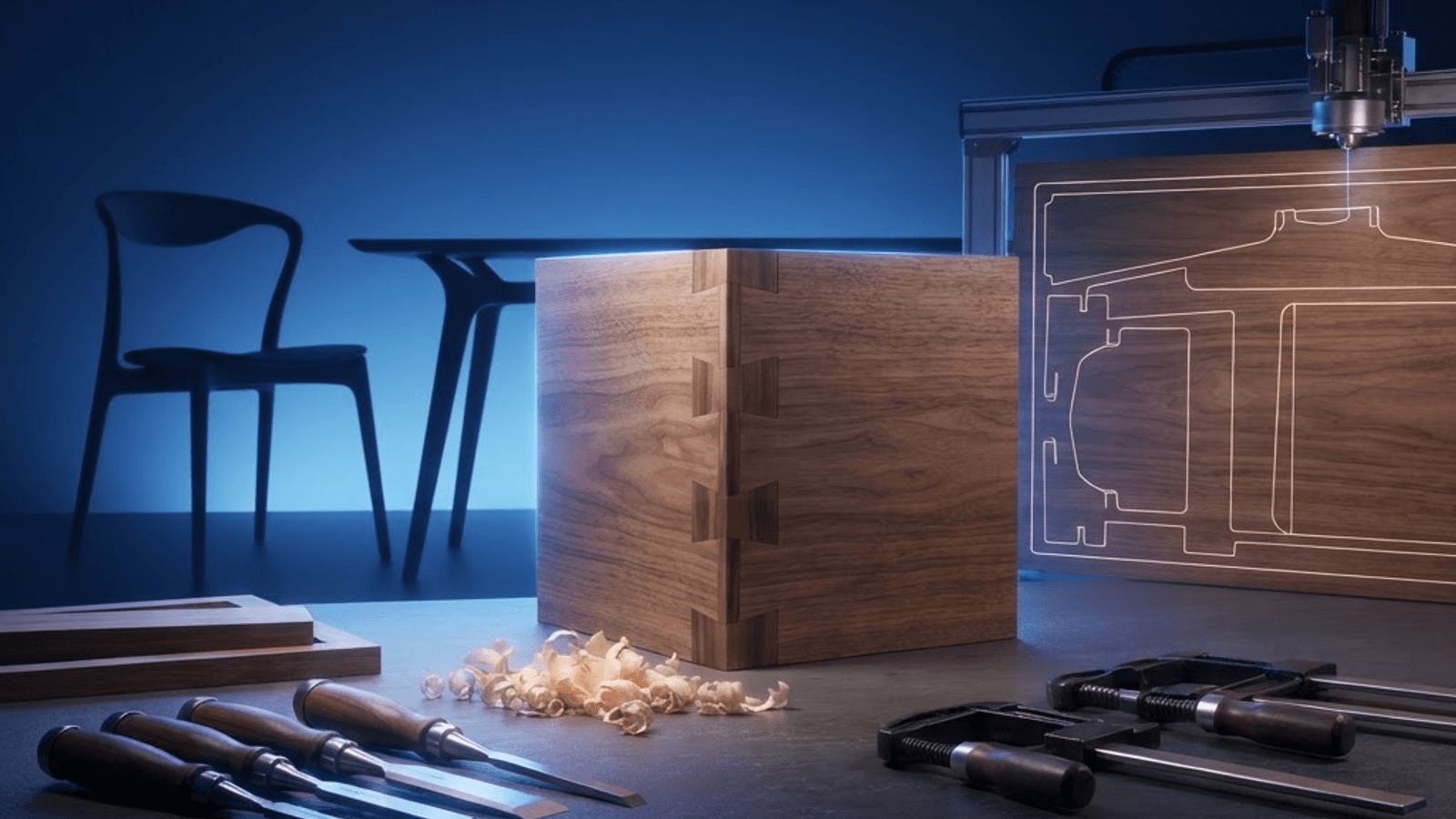
Furniture Making in St. Helens Today
Furniture manufacturing is one of the more visible and accessible industries in St. Helens, because much of it serves people directly. Walk through the borough's industrial estates and you will find workshops producing fitted kitchens, bedroom furniture, shop fittings, office desking, school furniture, care-home seating and bespoke joinery for hospitality venues. It is a sector where a family workshop of six people and a factory of sixty can both thrive, serving different parts of the same market.
The North West has a long furniture tradition, supported historically by timber imports through the Mersey and by a dense population of manufacturers, retailers and installers. St. Helens benefits from that ecosystem: board suppliers, edge-banding and hardware distributors, upholstery fabric sources and finishing specialists are all within easy reach, which shortens lead times and makes small-batch manufacture viable.
Craft Meets Digital Manufacturing
The most significant change in furniture making over the past two decades has been the arrival of CNC machining and digital nesting software in even modest workshops. A maker can now design in 3D, generate cutting files, machine panels to sub-millimetre accuracy and produce a flat-pack set of parts that assembles precisely. This has raised baseline quality across the industry and made genuinely bespoke furniture affordable at prices that once bought only mass-produced units.
Traditional skills have not been displaced so much as concentrated where they add most value: solid timber work, hand finishing, curved and shaped components, veneer matching, upholstery and on-site fitting. The best manufacturers combine both, using machines for repeatable accuracy and craftspeople for the parts that machines handle badly.
The Ten Leading Furniture Manufacturers in St. Helens
1. Ravenhead Bespoke Furniture — A design-and-make workshop producing one-off pieces and fitted furniture in solid timber and veneered board. Its work spans domestic commissions such as libraries, media walls and staircases, and commercial pieces for hospitality interiors. Detailed drawings and material samples before manufacture make it a reliable choice for clients who need certainty.
2. Mersey Kitchens & Interiors — Manufactures fitted kitchens, utility rooms and bedroom furniture from its own CNC-equipped facility, supplying both direct clients and trade installers. Building rather than merely assembling bought-in carcasses lets it deviate from standard sizes, which is invaluable in the borough's older terraced and Victorian housing where nothing is square.
3. Sutton Contract Seating — Produces upholstered seating for hospitality, healthcare and public settings: banquette seating, dining chairs, lounge furniture and care-environment seating with wipe-clean and fire-compliant specifications. Contract furniture must survive punishing use, so frame construction and foam specification matter more than appearance.
4. Haydock Office Furniture — Manufactures desking, storage, meeting tables and reception furniture for commercial fit-out projects. Hybrid working has reshaped demand toward collaborative settings, acoustic booths and reconfigurable layouts, and the firm's flexible manufacturing has adapted to those smaller, more varied orders.
5. Newton Shopfitting & Display — Builds retail counters, display units, slatwall systems, illuminated joinery and full shop interiors. Retail projects run to brutal deadlines and are often installed overnight, so manufacturing accuracy and installation planning determine success far more than raw production capacity.
6. Rainford Timber Products — Focuses on solid hardwood and softwood furniture: dining tables, benches, garden furniture and structural timber pieces. Its emphasis on responsibly sourced timber and traditional jointing appeals to buyers seeking longevity and repairability rather than disposable furniture.
7. Earlestown Beds & Upholstery — Manufactures divans, headboards, sofas and upholstered furniture, including reupholstery of existing pieces. Reupholstery has grown notably as customers weigh cost and sustainability against replacement, and the skill involved in stripping, reframing and recovering a frame is considerable.
8. Thatto Heath Joinery Works — A joinery manufacturer producing doors, staircases, window frames, panelling and architectural woodwork alongside furniture. The overlap between architectural joinery and furniture making means firms of this type often handle whole-interior projects coherently, which reduces coordination risk for contractors.
9. Merseyside Educational Furniture — Supplies and manufactures classroom tables, storage, science laboratory furniture, library shelving and nursery furniture for schools and colleges. Educational furniture is tightly specified for safety, height ranges and durability, and summer-holiday installation windows require exceptional scheduling discipline.
10. St. Helens Furniture Restoration — Restores, repairs and refinishes antique and contemporary furniture, including French polishing, veneer repair, structural reglueing and colour matching. As interest in period pieces and sustainable reuse grows, restoration workshops have become a valued part of the furniture economy rather than a nostalgic sideline.
How to Judge Furniture Quality
Look first at construction. For carcass furniture, ask about board thickness, edge-banding method, whether backs are grooved in or pinned on, and what hardware is used — quality hinges and runners cost more but define how furniture feels after five years. For solid timber, ask how the wood was dried and how movement has been allowed for; solid tops fixed rigidly across the grain will eventually split.
For upholstery, ask about frame material and jointing, suspension type, foam density and fabric abrasion rating. Contract environments require fire-compliant specifications, and any manufacturer supplying commercial seating should provide that documentation without hesitation.
Finish quality is where cheap manufacture usually reveals itself. Examine sample pieces for consistent colour, smooth edges, even sheen and properly sealed cut edges — especially inside cabinets and on undersides, where corners are cut.
Materials, Sustainability and Lead Times
Responsible timber sourcing has become an expectation. Ask about chain-of-custody certification for timber and board, and about the adhesives and finishes used, since low-emission water-based finishes are now widely available. Manufacturers that recycle offcuts, use recycled-content board and design for repair rather than replacement are increasingly favoured by both public-sector buyers and environmentally aware households.
On timescales, be realistic. Genuine bespoke furniture requires design time, material lead times and workshop scheduling; a rushed programme produces compromises. Ask for a written schedule covering design approval, material ordering, manufacture and installation, and clarify who is responsible for site surveys, because a single measurement error can waste an entire run of panels.
Why Buying Locally Makes Sense
Furniture is bulky, easily damaged in transit and frequently needs adjustment on site. Those three facts make a nearby manufacturer genuinely advantageous. You can visit the workshop, inspect materials, see work in progress and resolve problems in person. Aftercare is simpler, spare components remain available, and a local maker's reputation depends on word of mouth across the borough. For homeowners, businesses and contractors across St. Helens, that combination of accountability and craft is difficult to replicate through a distant supplier or an online catalogue.
Want your brand featured in front of decision-makers? Publish a guest post or get a link insertion in our guides through AAMAX's guest post and link insertion service.
Helpful Links
 SponsoredAAMAX — Full-Service Digital Agency
Write for Us
Share your expertise with our readers. We welcome guest contributions from industry specialists.
Pitch your idea