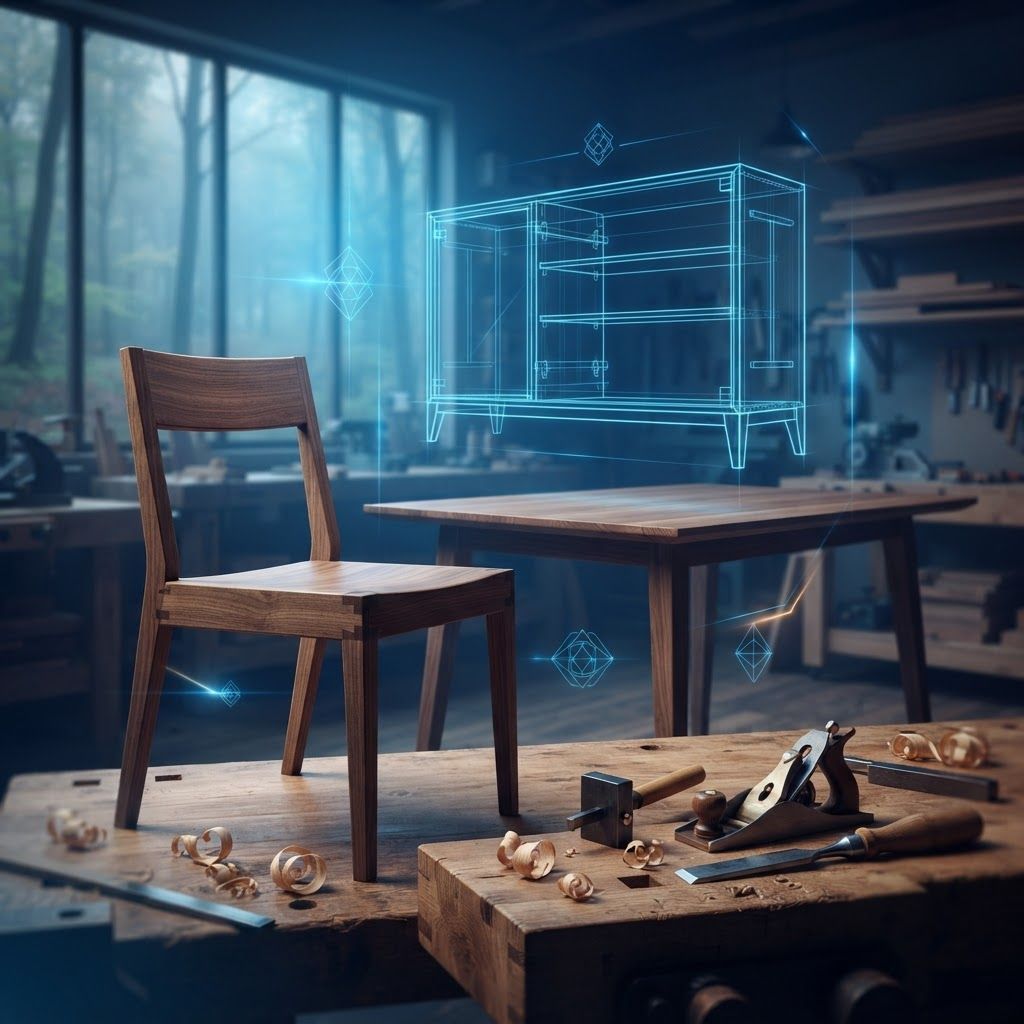
A District with Genuine Furniture Heritage
Furniture making in and around the Chilterns has a long and well-documented history. The beech woodlands that cover the hills supplied the chair-making trade for generations, and the bodgers who turned chair legs in the woods became part of local folklore. High Wycombe, just beyond the district boundary, grew into one of Britain's great furniture towns on the strength of that timber.
South Oxfordshire inherited both the skills and the timber culture. Today the district supports bespoke cabinetmakers, kitchen manufacturers, contract furniture producers, antique restorers and designer-makers working in solid hardwood. Demand is strong, driven by period property renovation across the Chilterns and Thames Valley, high-value new build, and a hospitality sector that wants distinctive interiors.
The Main Types of Local Furniture Manufacturing
Bespoke fitted furniture is the largest commercial category, covering kitchens, bedrooms, libraries, boot rooms and media walls made to measure for individual properties. Freestanding furniture makers produce tables, seating, beds and casework, often in oak, walnut, ash or elm sourced regionally.
Contract and commercial furniture forms a third segment, supplying offices, laboratories, schools, restaurants and hotels. Restoration and conservation work is the fourth, serving the district's substantial stock of antique and period furniture in historic houses, colleges and private collections.
The Leading Furniture Manufacturers and Makers
1. Bespoke Kitchen Manufacturers in the Chilterns
Workshops producing handmade kitchens in painted hardwood and solid timber serve clients across Henley, Watlington, Goring and the surrounding villages. Their work includes in-frame cabinetry, hand-cut dovetail drawers, integrated appliance housings and stone or timber worktop coordination, typically with full design, survey and installation service.
2. Fine Cabinetmakers and Designer-Makers
Independent cabinetmakers producing one-off commissioned pieces represent the craft heart of the district. Their output ranges from dining tables and desks to sculptural cabinets, and many are members of professional guilds that certify standards of design and construction.
3. Joinery Companies Serving Period Property Renovation
Specialist joiners manufacture staircases, panelling, doors, windows and built-in furniture for listed and conservation area properties. This work requires matching historic mouldings, using appropriate timber and, frequently, working within consent conditions imposed by conservation officers.
4. Contract Furniture Manufacturers for Commercial Interiors
Producers supplying reception desks, meeting tables, laboratory benching and breakout seating serve the business parks at Milton and Harwell along with schools and healthcare facilities. Durability, fire compliance and consistent repeat manufacture define this segment.
5. Upholstered Furniture Workshops
Makers of sofas, armchairs, banquette seating and headboards combine frame construction with traditional and modern upholstery. Hospitality clients along the Thames rely on them for seating that meets commercial fire regulations while suiting the character of historic buildings.
6. Antique Restoration and Conservation Specialists
Restorers working on eighteenth and nineteenth century furniture undertake veneer repair, French polishing, marquetry, gilding and structural consolidation. Their approach favours minimal, reversible intervention that preserves original material and patina, which is what distinguishes conservation from simple refurbishment.
7. Garden and Outdoor Furniture Producers
Manufacturers working in oak, sweet chestnut and other durable timbers produce benches, tables, planters and garden structures. Sustainably sourced local hardwood and traditional jointing give these products considerable longevity in British weather.
8. Reclaimed and Sustainable Timber Furniture Makers
Studios building furniture from reclaimed beams, salvaged floorboards and locally milled storm-felled trees have grown in popularity. The appeal combines environmental credentials with genuine character, and many makers can document the origin of each board they use.
9. CNC and Digital Fabrication Furniture Producers
Businesses using computer-controlled routing and nesting software produce precisely cut components for flat-pack and modular furniture, shop fitting and exhibition stands. Digital manufacture allows economical short runs and complex geometries that hand methods would make prohibitively expensive.
10. Ecclesiastical, School and Institutional Furniture Makers
Specialists producing pews, choir stalls, lecterns, library furniture and college fittings serve the region's many churches and educational institutions. This work blends traditional craftsmanship with modern accessibility and safety requirements.
Trends in Furniture Manufacturing
Sustainability is now central to purchasing decisions. Buyers ask about FSC or PEFC certified timber, water-based and low-emission finishes, formaldehyde-free boards and repairability. Makers using local hardwood and offering lifetime repair enjoy a clear advantage, and the shift away from disposable furniture has been marked.
Demand for multifunctional and space-efficient furniture continues to grow as home working becomes permanent for many. Integrated home offices, hidden desks, cable management and adaptable storage are frequently requested in domestic commissions.
Digital design tools have also changed client relationships. Three-dimensional visualisation and virtual walkthroughs let customers approve designs confidently before manufacture, reducing costly changes and helping smaller workshops compete with showroom-based retailers.
Finally, timber price volatility and hardwood availability remain operational concerns. Makers have responded by widening the species they work with, buying and air-drying timber in advance, and designing to use boards more efficiently.
How to Choose a Furniture Manufacturer
Look at completed work in person wherever possible. Photographs conceal a great deal, and examining drawer construction, door alignment, finish quality and the crispness of mouldings tells you immediately whether standards match the price.
Clarify exactly what is included: design, survey, materials, finishing, delivery, installation, and any building work such as electrics or plumbing coordination. For fitted furniture, confirm who is responsible for making good walls and floors after installation.
Discuss timber specification openly, including species, whether solid or veneered, moisture content and finish type. Ask about lead times honestly, since good workshops are usually booked well ahead, and be cautious of any maker promising a bespoke commission unusually quickly.
Finally, confirm guarantee terms and aftercare. Solid timber moves with seasonal humidity, and a reputable maker will explain this and offer post-installation adjustment as part of the service.
Final Thoughts
South Oxfordshire's furniture manufacturers combine an authentic Chilterns woodworking heritage with contemporary design and digital precision. Whether the requirement is a handmade kitchen, a commissioned dining table, museum-standard restoration or durable commercial seating, the district offers craftsmanship of real quality within easy reach.
Want your brand featured in front of decision-makers? Publish a guest post or get a link insertion in our guides through AAMAX's guest post and link insertion service.
Helpful Links
 SponsoredAAMAX — Full-Service Digital Agency
Write for Us
Share your expertise with our readers. We welcome guest contributions from industry specialists.
Pitch your idea